Potty training readiness: skills to notice and skills to teach
A nursery form asks about toileting, while a relative says their child was dry much earlier. It is easy to turn a useful skill into a family deadline. Instead, think about the chain your child is learning: noticing a body signal, reaching the bathroom, managing clothes, sitting comfortably and asking for help. Some links may be established while others need teaching. You can introduce the routine without waiting for a perfect checklist. You also do not need to force a child to sit until something happens. The useful question is what support will make the next small step possible.

Read age advice as guidance, not a finishing line
Current NHS advice encourages starting potty learning between 18 months and two and a half years, without waiting for a child to request it spontaneously. The AAP emphasises developmental skills, including body awareness and following simple directions. The practical overlap is gentle teaching with support tailored to the child. These sources do not promise an identical completion date. Children with developmental or physical support needs may benefit from an adapted plan. If you have delayed because your child has not asked, familiarisation can be a reasonable starting point; if you feel pushed to finish by Friday, reconsider whether the timetable fits the child and household.
NHS — Potty training your child
Notice which parts already work
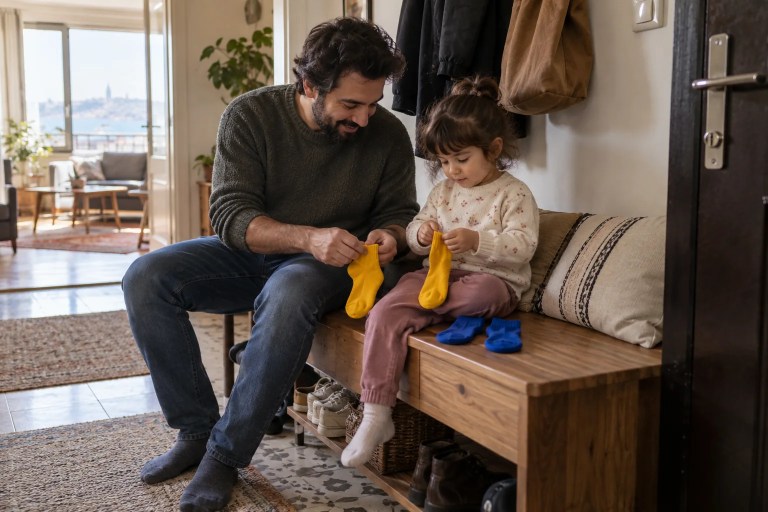
Does your child notice a wet nappy, communicate with a word or gesture, get to the bathroom with help or assist with loose trousers? These observations are useful for planning, not a pass-or-fail exam. A child who reports an accident afterwards has communicated something worth acknowledging. “Thanks for telling me; let us change” keeps the conversation available. Choose neutral words for urine, stool and body parts. Avoid making wetness a sign of being naughty or babyish. If nursery and home use different languages, share the particular word or gesture the child recognises. They do not need an impressive vocabulary before adults can make the routine understandable.

AAP — The Right Age to Potty Train
Make the bathroom easier to use
A potty should sit securely. A child toilet seat needs stable support for the feet, rather than leaving legs dangling. Check slippery floors, accessible cleaning chemicals and unstable stools. Clothes that are easy to lower reduce one avoidable hurdle.
A short practice sequence
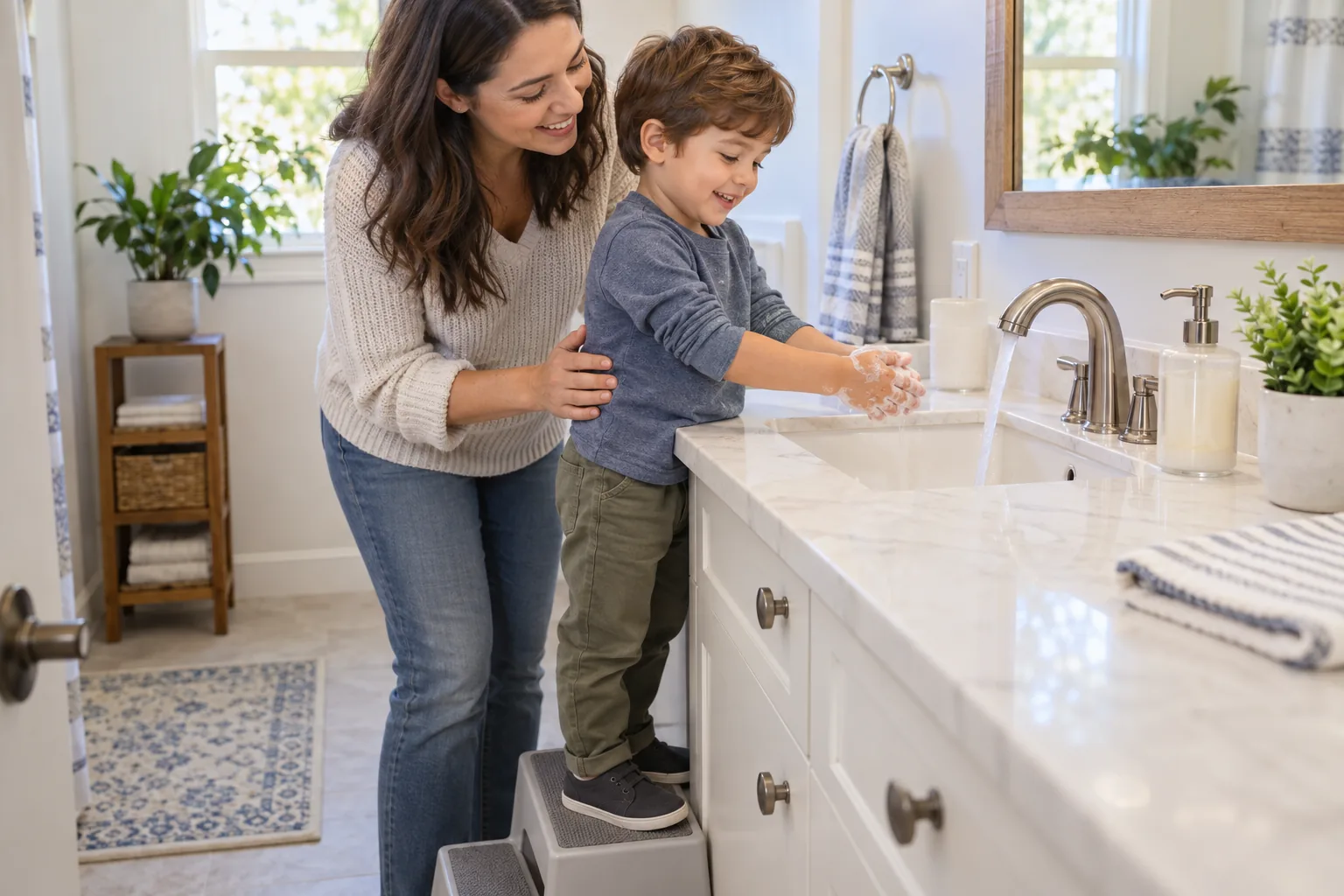
Walk to the bathroom, help with clothing, offer comfortable sitting, then show cleaning and handwashing. Keep practice calm rather than making a long vigil out of it.
A phrase that leaves room to learn
“Your body is learning. You can tell me when you need help.” Briefly naming what is happening during an ordinary nappy change can also connect a body sensation with a familiar action. Preserve privacy; practice does not need to be photographed or shared.
AAP — Potty Training Readiness
Coordinate home, childcare and outings
Choose a few natural opportunities, such as waking up and before leaving home, rather than asking about the toilet every few minutes. Tell childcare staff how your child communicates, what clothing help they need and how you want accidents handled. For an Istanbul outing, carry spare clothes and a separate bag for wet items; finding the toilet before it becomes urgent can reduce stress. Do not make every trip an examination. Notice participation, handwashing and asking for help as well as dry clothes. If an accident happens, make the change brief and matter-of-fact, then return to the day instead of repeatedly revisiting it.
Did you know?
The AAP describes toileting as a combination of physical and thinking skills. Remembering where the potty is and recognising a body signal are different jobs. A child may manage clothing while still learning when to ask for help; one successful step does not make every accident deliberate. AAP — The Right Age to Potty Train
When to seek support
Contact a clinician for painful urination, fever, hard painful stools, persistent withholding or an unexpected loss of established skills. Inability to pass urine or severe abdominal pain may need urgent assessment. Children with additional developmental or mobility needs deserve an adapted plan rather than an assumption that they cannot learn.
Frequently asked questions
Must my child ask to use a potty before we begin?
No. Gentle introduction and supported practice do not require a spontaneous request. Read a suitable book, explain the equipment and offer a calm opportunity. Persistent fear or pain should prompt a closer look and, when needed, professional advice rather than more force.
Is staying dry for two hours the deciding sign?
It is one useful observation, not the whole process. Communication, reaching the bathroom and managing clothes also matter. A child may be ready to practise one part while needing help with another. Use observations to choose support, not to announce a rigid verdict.
Should we stop night nappies at the same time?
Night-time dryness develops separately and often follows daytime learning. Using protection during sleep does not erase daytime skills. Do not restrict fluids severely or turn sleep into a test. Ongoing night-time concerns can be discussed separately with a health professional.
Can my child help clean up an accident?
A small age-appropriate task, such as fetching clean trousers, can be ordinary participation. It should not become prolonged punishment or humiliation. Keep the child comfortable and change wet clothes promptly. The adult remains responsible for hygiene and for making the experience manageable.
What if my child holds in stool?
Hard, painful stools and withholding need assessment for constipation. Longer forced sitting can make the bathroom feel more threatening. Ask a clinician about an appropriate plan; food and water alone are not enough for every child. Do not improvise medicine, enemas or a restrictive diet.
Is a potty better than a toilet seat?
Either can work if the child feels secure and has appropriate foot support. Choose something stable, accessible and easy to clean. A costly musical product is not a guarantee of faster learning. If movement or balance is difficult, ask about equipment suited to the child’s needs.
Can we begin while travelling or moving house?
Big changes can make consistency harder, so avoid a demanding completion deadline during a busy journey. Familiar words, books and handwashing practice can still continue. Choose a plan the caregivers can actually maintain; a simple shared approach is more useful than conflicting ambitious programmes.
When should I ask for advice about slow progress?
You may ask whenever you are concerned, particularly if practice brings persistent distress, there is pain or the family is stuck in conflict. Describe the steps that work and the steps that do not. This is more useful than a comparison with another child’s training date.
Related reading
- When a Child Struggles Socially
- When Should My Child Start Gymnastics? A Guide to Readiness and Classes
Sources
This article provides general information and does not replace an individual assessment.