When Should My Child Start Gymnastics? A Guide to Readiness and Classes
A child who loves balancing along a painted line may enjoy gymnastics, but that interest does not automatically mean they are ready for every class. Preschool movement play, recreational beginner gymnastics and a competitive training pathway ask different things of children. Start by deciding what your family wants: usually a safe introduction, enjoyable movement and a chance to discover whether the sport is appealing. You can make that decision without planning a sporting career.
Is there one best age?
There is no universal birthday that makes every child ready for gymnastics. The AAP sports-readiness guidance favours basic, playful movement for younger children and considers physical, social and cognitive readiness alongside age. A preschool group therefore should not simply be a demanding school-age lesson scaled down to smaller equipment.
Look for signs that the particular class is manageable. Can your child respond to a simple stop instruction, wait with support and tell an adult when something hurts? How do they cope with the group’s noise and separation arrangements? These are discussion points for a coach, not an entrance examination conducted at home. Some children need adaptations or additional support to participate safely.
Understand what is being offered
Preschool movement groups
Ask how much time children spend exploring simple movements and how much time they wait in lines. What happens when a child wants to watch? Are caregivers involved? A good description should explain the session’s purpose in ordinary language. The fact that children use a gym does not mean the programme should focus on technical tricks or comparisons.
Recreational beginner gymnastics
For an older beginner, ask how the coach introduces skills progressively and decides that a child is ready for the next step. Find out how new children join an existing group and what information parents receive. An entry-level class should make room for learning without assuming previous experience. Beginners do not need to show off a cartwheel to deserve instruction.
Competitive pathways
If a club discusses additional training or competition, ask about the time commitment, costs, rest, school life and the child’s wishes. A recreational enrolment does not oblige a family to accept that pathway. Revisit the decision as circumstances change. The child should be able to discuss discomfort or loss of enjoyment without fearing they have disappointed the adults.
Inspect the coaching environment
Watch the language used around mistakes. Does the coach explain and encourage another approach, or use humiliation? Ask about qualifications, safeguarding, first aid, equipment checks and incident reporting. Clarify how physical assistance is explained and how a child can raise a concern. No adult should require a child to tolerate pain to prove commitment.
For a concrete example of different programme categories, the University of Calgary lists preschool and recreational gymnastics separately. Its age bands are provider-specific, not a universal prescription. Use programme descriptions to generate questions for local organisers rather than copying a foreign timetable as a developmental rule.

Make participation sustainable in Istanbul
Look beyond the lesson price
Account for travel, changing time, equipment requirements and the effect on family evenings. A nearby class with suitable coaching may be easier to attend consistently than a distant one with impressive advertising. Ask about the language of instruction and how safety instructions are checked with children who are still learning Turkish or English.
Agree on a review point
After a short trial period, talk privately with your child. Ask which part they liked, which felt difficult and whether they want to return. Listen without correcting their answer. If pain, persistent fear or repeated exhaustion appears, pause and speak with the coach or a clinician as appropriate. Avoid practising technical skills at home from social-media demonstrations.
Did you know?
A flexible admission age and a readiness assessment are different things. A club may organise classes by age for practical reasons while adapting instruction within each group. Your child’s apparent flexibility also does not establish overall readiness. Enjoyment, communication, safe supervision and gradual teaching remain relevant even when a movement looks easy.
A separate family break at Filifu
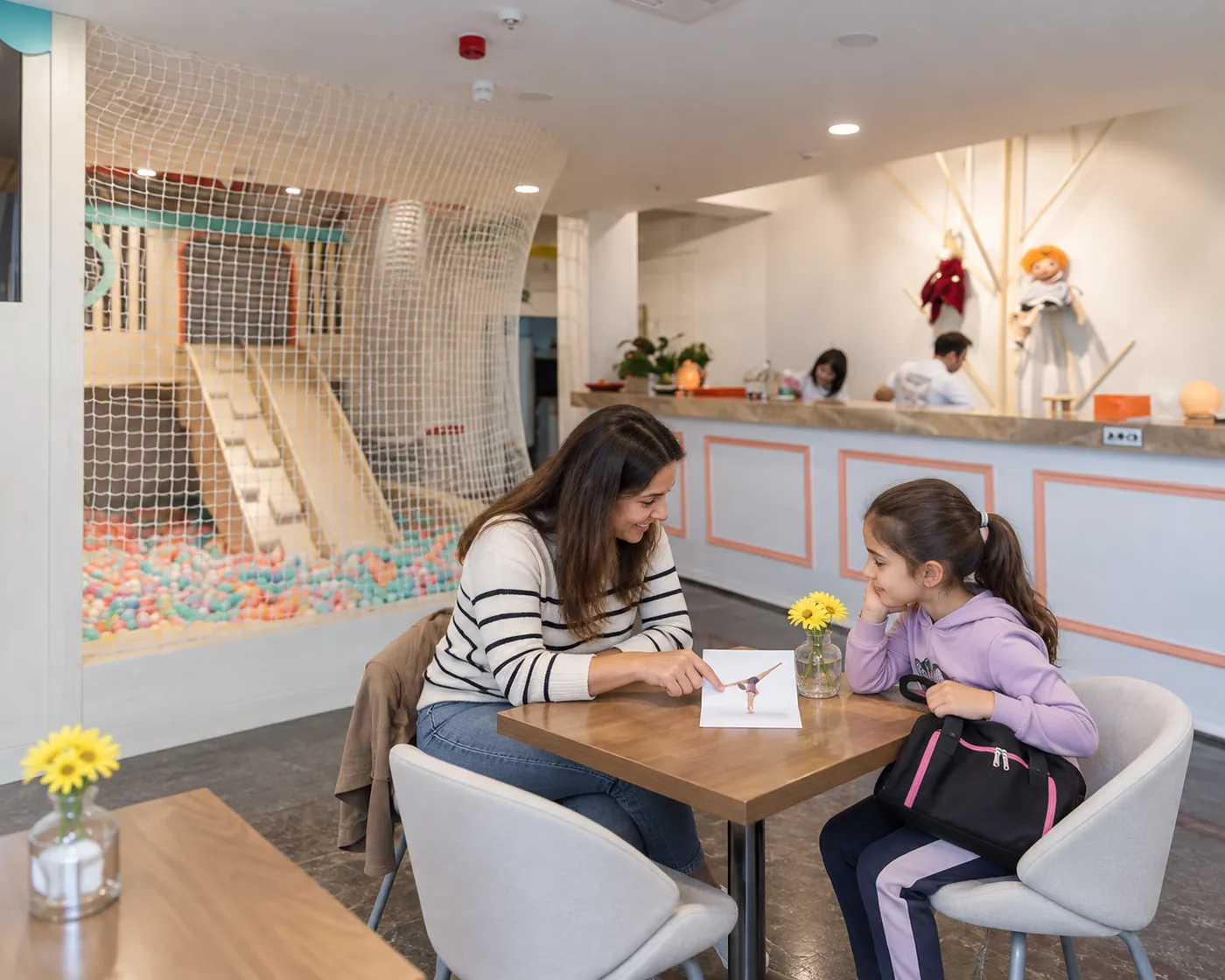
You might discuss a trial class over a relaxed family visit to Filifu Cafe. Check the cafe area and browse the family blog when planning the day. This is a suggestion for conversation and family time; it does not describe gymnastics instruction at Filifu or make its play supervisors responsible for coaching.

Frequently asked questions
Is preschool too early for gymnastics?
A playful, age-appropriate movement group may suit some preschoolers. The actual activities and supervision matter more than the name. Avoid treating preschool participation as intensive technical training.
Is age eight too late to begin?
It is not too late to explore recreational gymnastics. Ask for a suitable beginner group. Competitive pathways have different demands, but recreational enjoyment should not be judged by an elite athlete’s starting age.
Must my child be very flexible?
No special level of flexibility should be assumed for a beginner. A qualified coach can discuss appropriate participation. Do not force stretching to prepare for enrolment or ignore pain during practice.
How often should a beginner attend?
There is no schedule that fits every child and programme. Discuss session demands, recovery and family commitments with the coach, then review how your child responds. More sessions are not automatically better.
What if my child is nervous about joining?
Arrange to observe, meet the coach and understand the first session. Ask about gradual participation. Listen to the child’s worries rather than promising that they must finish a whole term regardless.
Can we practise gymnastics at the cafe or home?
Do not attempt technical skills, apparatus work or risky balancing in unsuitable spaces. Save coached gymnastics for an appropriate setting. A cafe visit can instead be a place to talk about the experience.