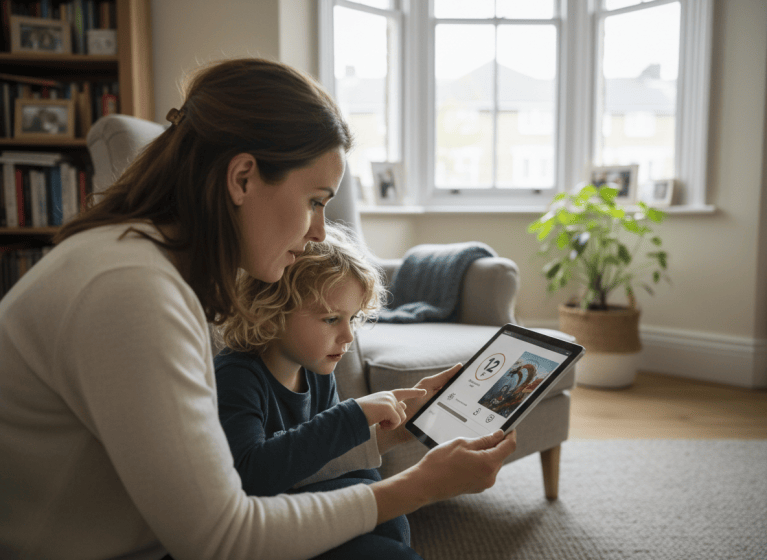
Screens at Meals and During Homework: Family Rules That Work
Phones at the table, videos during homework and constant notifications can make it hard for families to notice how screens fill the day. The goal is not to ban every device at all times; it is to protect space for meals, learning, rest and family conversation with clear, workable rules.

Make mealtimes a shared, calmer space
Choose meals that can be screen-free for the family, and apply the rule to adults as well as children. Silencing phones away from the table and turning off the television can make conversation easier. For young children, screens during meals may draw attention away from eating and hunger or fullness cues, but there is no single approach for every family. If a child has sensory, developmental or medical needs, ask their clinician for individualized advice.
Separate schoolwork screens from entertainment
If a device is needed for homework, decide which app or tabs are required before starting. Turn off notifications, close unrelated tabs and plan age-appropriate breaks. Saving entertainment for after a task rather than opening it between assignments may help some children stay focused. If homework does not need a device, place it out of sight.
Choose clear rules together and make them visible
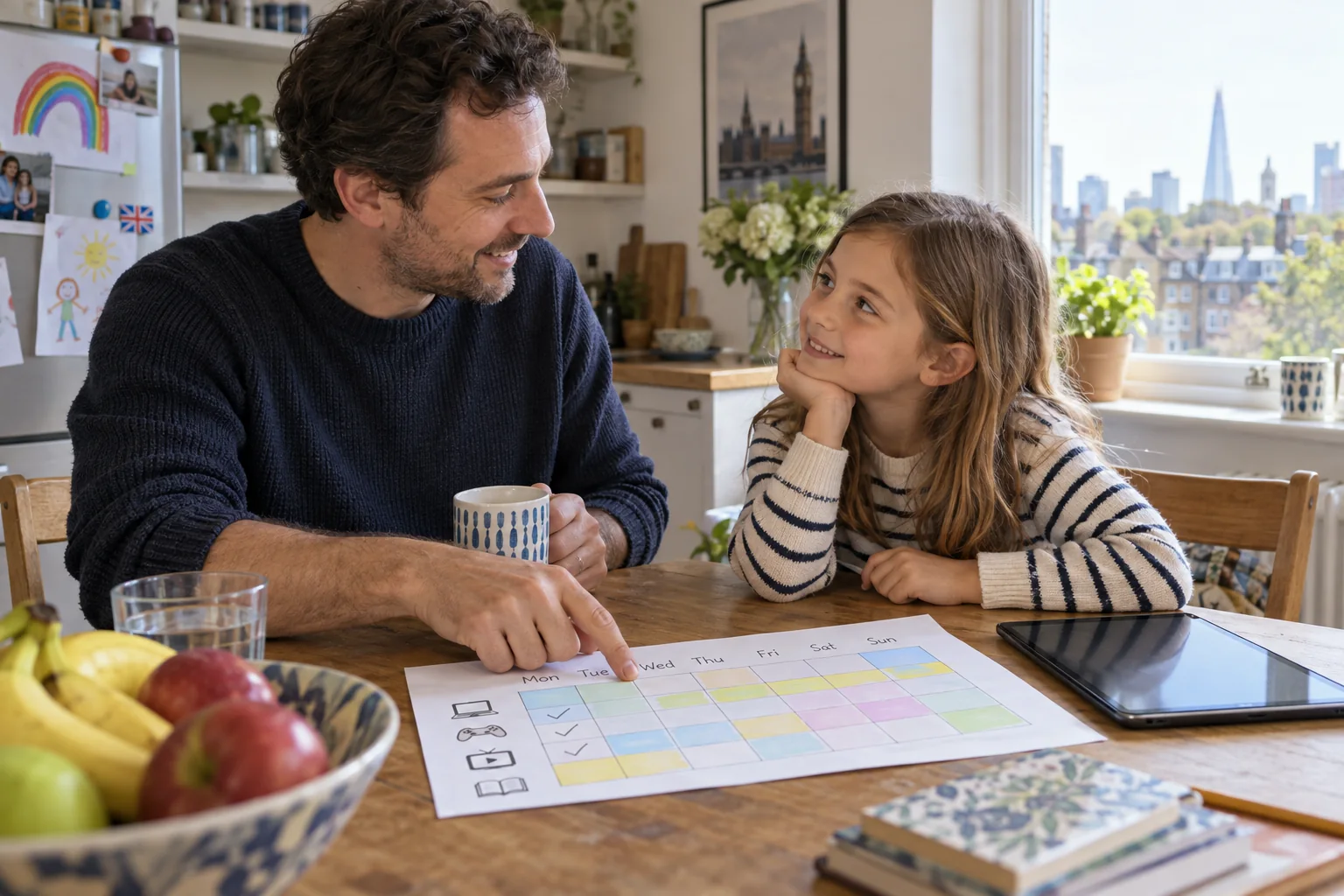
Instead of a broad ban, clarify situations: school-required device use, accessibility support or an important family call may need an exception. Create a short plan that includes the child’s ideas. Concrete steps such as when homework ends, where devices go and when the family eats can reduce conflict.
Adults can model the same habits
Adults can model the same habits by putting phones away during meals and muting their own notifications during homework time. If a rule slips one day, treat it as a chance to adjust rather than a failure. If homework takes a long time, discuss workload, instructions and attention supports with the teacher. Children also need time for offline play, movement and rest.

Review the plan when routines change
Adults can model the same habits by putting phones away during meals and muting their own notifications during homework time. If a rule slips one day, treat it as a chance to adjust rather than a failure. If homework takes a long time, discuss workload, instructions and attention supports with the teacher. Children also need time for offline play, movement and rest.
Did you know?
The American Academy of Pediatrics recommends that a family media plan address the digital habits of everyone at home and be reviewed as routines change.
Frequently asked questions
Should we always turn screens off during meals?
Many families can try making meals screen-free. Adapt the approach with a clinician if your child has specific support needs.
What if my child refuses a screen-free meal?
Explain the rule calmly, give advance notice and offer alternatives such as conversation or a small role in preparing the meal.
Is it wrong to use a tablet or computer for homework?
If a digital device is required, the device itself is not the problem. Define the task, reduce distractions and plan breaks.
Should the phone go in another room during homework?
Try it with your child. If the phone is not needed, muting it and placing it out of sight may support attention.
Should adults follow the screen-free meal rule too?
Yes. A shared, fair rule works better when adults model putting devices away.
Can music or videos play during homework?
It depends on the child. If it distracts them, try turning it off; follow any specific school or clinician guidance.
How should I respond if a screen rule is broken?
Remind your child of the rule without shaming them, discuss what made it difficult and revise the plan together.
What if screens cause constant arguments at home?
Choose fewer, more concrete rules and hold a brief family check-in. Seek school or pediatric support if learning, sleep or relationships are affected.
How can I keep homework internet use safe?
Use only needed sites and apps, remind children not to share personal details, and encourage them to tell you if content feels uncomfortable.
Related guides
Family screen-time plan · Is my child ready for social media?
Sources
- American Academy of Pediatrics — How to Make a Family Media Plan
- American Academy of Pediatrics — Parents of Young Children: Why Your Screen Time Matters, Too
- World Health Organization — Guidelines for children under 5
This article offers general information; consult a clinician for individualized advice.