Nightmares vs Night Terrors in Children: How Parents Can Help
A child who wakes crying after a frightening dream needs reassurance, but a nightmare and a night terror are different sleep events. The timing, the child’s awareness and what they remember can help parents respond calmly without trying to diagnose the cause.
Nightmare or night terror: what is the difference?
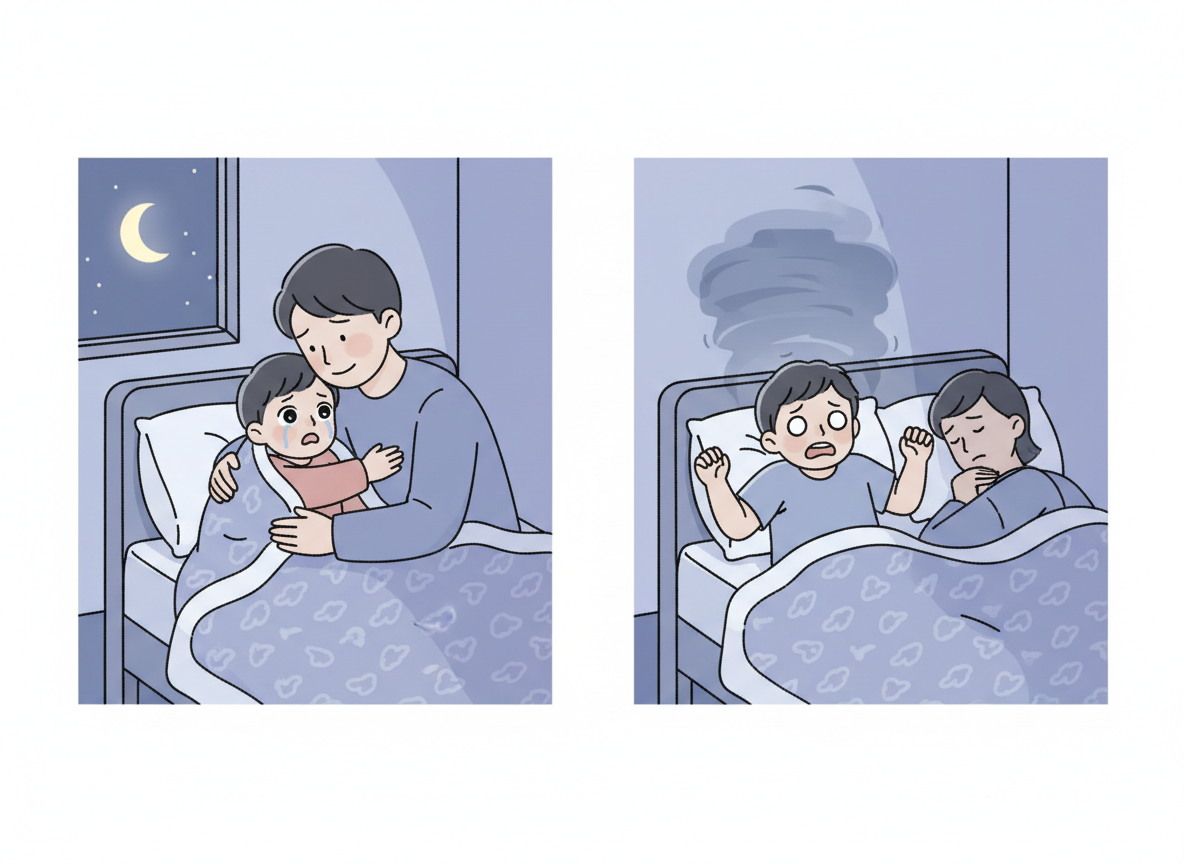
After a nightmare, a child is usually awake
Nightmares often happen later in the night. A child wakes, seeks comfort and may recall parts of the dream. Listen without dismissing the fear, remind them they are safe now and avoid pressing for details they do not want to share.
During a night terror, a child usually remains asleep
Night terrors often occur in the first part of the night during deep sleep. A child may scream, sweat, move around or have open eyes while not fully awake. They may not recognize a caregiver and often have no memory of the episode in the morning. This differs from a nightmare and does not by itself mean a psychological disorder.
How to respond
After a nightmare
Stay calm, offer comfort and let your child talk if they want to. A dim light or familiar comfort object may help. When they are ready, guide them back to bed and keep the bedtime routine predictable.
During a night terror
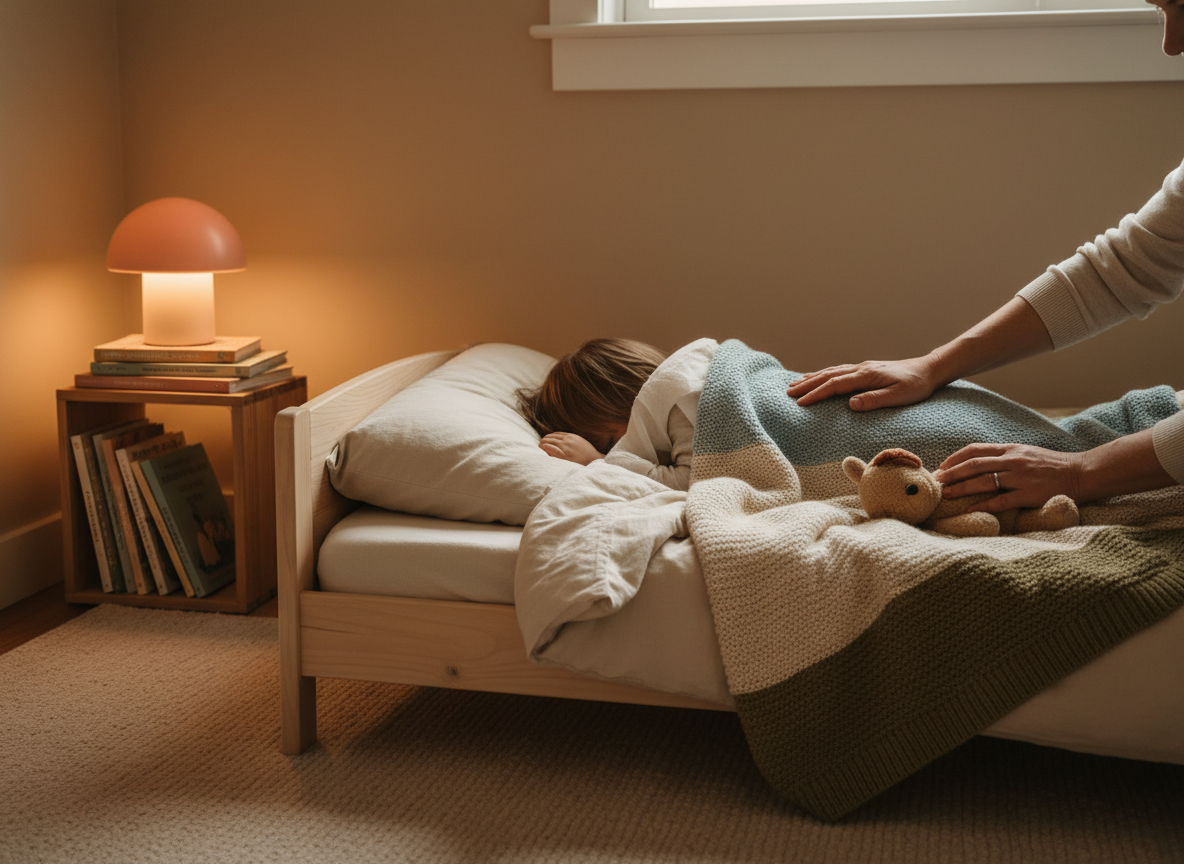
Stay nearby and move hard or sharp objects out of the way. Do not shake or forcefully wake your child; this may increase confusion or agitation. Gently guide them away from hazards and wait for the episode to pass.
Possible triggers and everyday sleep habits
Sleep loss, fever, travel, schedule changes and stress can coincide with night terrors, although a trigger is not always clear. Consistent bedtimes, a quiet wind-down and enough sleep for the child’s age support sleep overall. CDC sleep-duration guidance is a general reference, not an individualized prescription. If episodes recur, note the time, duration and any changes in routine.
When to contact a pediatrician
Ask a pediatrician if episodes are frequent, lead to injury, repeatedly disrupt sleep or cause marked daytime sleepiness or difficulty functioning. Seek advice if movements seem unusual or you are unsure what you witnessed. This article cannot assess an individual child.
Did you know?
A child experiencing a night terror may have their eyes open while remaining asleep. Not remembering the event the next morning is common and helps distinguish it from a nightmare.
Frequently asked questions
At what age can night terrors happen?
They are commonly described in young children but can occur during childhood. Nightmares can occur at different ages too.
Should I wake my child during a night terror?
Usually no. Stay close, make the area safe and wait calmly for the episode to end.
Will my child remember it?
They may remember a nightmare. Many children do not remember a night terror in the morning.
Does a nightmare mean my child has trauma?
One nightmare cannot establish that. If distressing dreams recur after a difficult event or daytime distress continues, discuss it with a pediatrician.
Can bedtime routines prevent episodes?
A calm routine supports sleep but cannot guarantee that nightmares or night terrors will never occur.
What should I record for a clinician?
Note the time, duration, frequency, fever, daytime tiredness and any recent schedule changes.
When should I seek urgent care?
Get prompt medical help for a significant injury, breathing difficulty or an unusual acute event.
Where can I read more parenting topics?
Visit the Filifu Child and Family Library and its general article archive.
Sources
- American Academy of Pediatrics / HealthyChildren: Nightmares and Night Terrors
- NHS: Night terrors and nightmares
- Mayo Clinic: Sleep terrors
- CDC: About sleep
Educational information only; it does not replace medical advice.
Make the advice work for your family
Start with one small step
Review what works after a week
A brief note of bedtime, wake time and evening routine can reveal patterns. Ask a pediatric professional if difficulties persist.