My child is lying: How to make telling the truth feel possible
Your child says the homework is finished, but the workbook is blank. Before deciding this is a character problem, ask what the statement helped your child escape: a difficult task, embarrassment, disappointment, or a conversation they did not know how to start. A useful response makes truth easier to tell while still addressing what happened. You can be clear about honesty without turning the kitchen table into a courtroom.

Start with the kind of untrue story you are hearing
A preschooler inventing a journey to the moon, a child misunderstanding a question, and a student hiding unfinished homework need different responses. Consider language, memory, age and context before assuming deliberate deception. AACAP describes several possible reasons for lying, including fantasy, avoiding consequences and protecting privacy; a single incident cannot establish a mental health diagnosis. AACAP: Lying and children
Describe the mismatch, not a fixed identity
Try “That does not match what I can see” rather than “You are a liar.” The first statement leaves space for a correction. If you did not witness the event, say what you do and do not know. Avoid claiming you can detect dishonesty from eye contact, fidgeting or a nervous smile. Those behaviours can reflect many things, especially when a child feels under pressure.
Use a short conversation instead of repeated testing
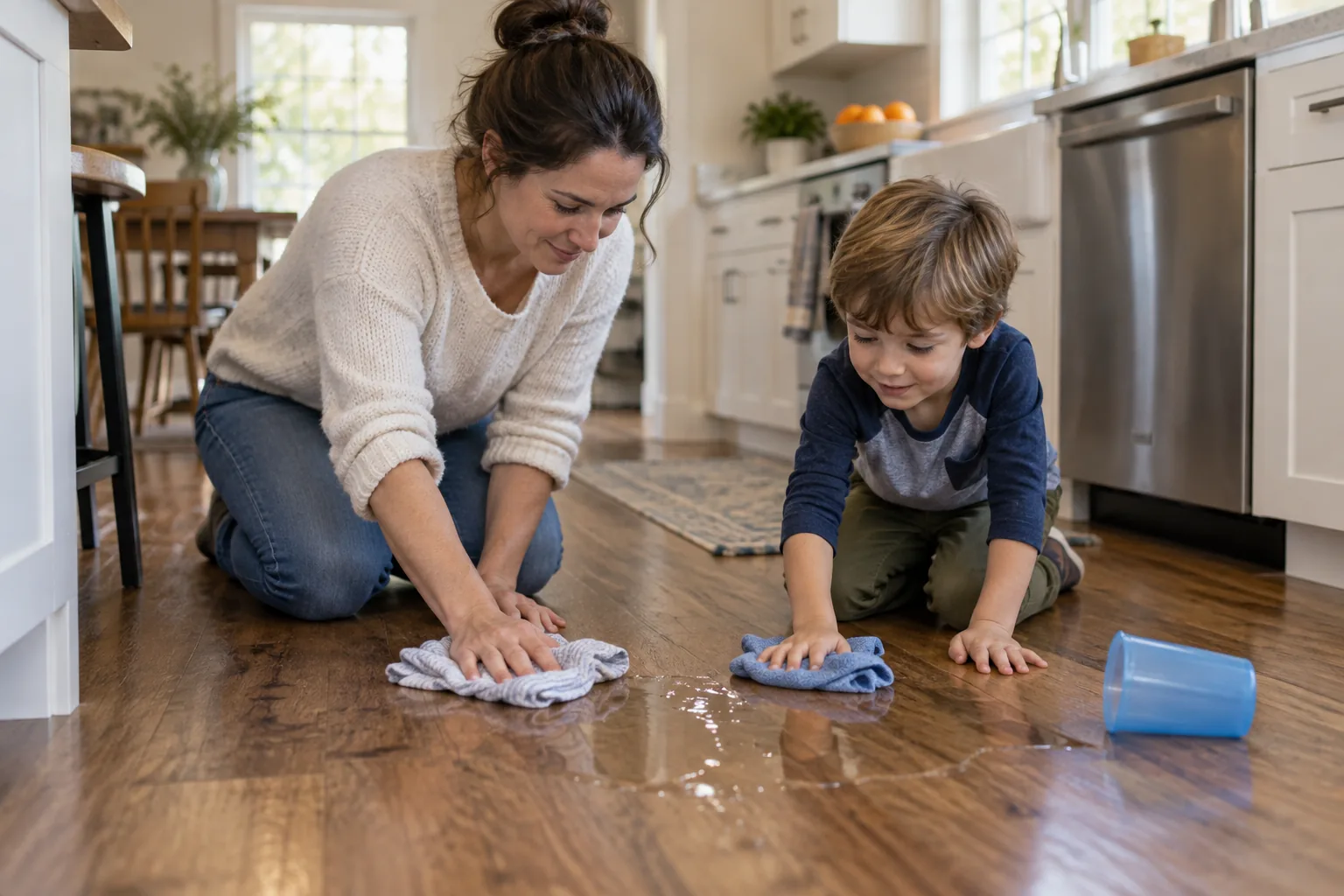
When you already know water spilled, asking “Did you do that?” repeatedly creates an unnecessary contest. Name the immediate task: “There is water on the floor; let us make it safe.” Later you can explain that telling you about a spill helps you respond. Raising Children Network recommends reducing avoidable opportunities to deny what is already evident and acknowledging children when they tell the truth. Raising Children Network: Children and lying
A repair-first script
“Thank you for telling me the marker got on the chair. We need to work out how to clean it. Next time, call me before trying another cleaning product.” This original example combines appreciation, repair and a safety limit. It does not promise that every consequence disappears. If you are too angry to speak calmly, take a brief pause while ensuring younger children remain supervised.
Look underneath the pattern without excusing harm
Keep a small record of repeated situations, not a dossier of your child’s faults. Does the story change around reading homework, visits, losing games, or asking for something? A child who struggles with reading may say a book was read because admitting difficulty feels worse. Sitting together for the first page tests a practical support; it is more informative than demanding a promise never to lie again.
If schoolwork is repeatedly hidden, speak privately with the teacher. Ask about task difficulty, attention, understanding and emotional stress. AACAP notes that recurring lying can sit alongside problems that deserve assessment. This does not mean every unfinished assignment points to a disorder. It means the response should investigate needs as well as behaviour. AACAP: Lying and children
For multilingual families in Istanbul, clarify the question in the child’s strongest language when necessary. “I was going to finish” can be heard as “I finished.” Ask for a simple sequence of events rather than assuming vocabulary confusion is a moral failing. Do not use a sibling as the judge or interpreter of a sensitive allegation.
Make honesty visible in adult behaviour
Children hear the lesson more clearly when adults practise it. If you forgot a booking, say that you forgot rather than blaming a message that never arrived. If you gave incorrect information, correct it out loud. The AAP emphasises modelling honesty and warns that fear of a harsh reaction can encourage concealment. That is one possible influence, not proof that a parent caused every dishonest statement. American Academy of Pediatrics: When children lie
Keep consequences proportionate, predictable and connected to what happened. Returning an item, helping repair damage, or making a new homework plan can teach responsibility. An unrelated month-long ban announced in anger often leaves the original problem unresolved. Notice progress specifically: “You told me before it became a bigger problem; that helped us sort it out.”
When secrecy requires protection, not a lesson
If a child describes bullying, threats, abuse or an adult demanding secrecy, listen seriously even if the child has previously invented ordinary stories. Do not dismiss the disclosure as another lie. Avoid repeated leading questions, protect immediate safety and seek appropriate professional or child-protection support. Children may conceal serious experiences because they fear the consequences of telling. Raising Children Network: Children and lying
Seek help from a paediatrician, school counsellor or child mental health professional when repeated dishonesty seriously affects school, relationships or home life, or accompanies theft, serious aggression or marked fear. If there is an immediate risk of harm, contact local emergency services; in Türkiye the emergency number is 112. No article can promise a fixed number of days until honesty becomes easy.
Did you know?
Correcting your own mistake is a practical honesty lesson. A parent saying “I got that wrong; here is the accurate version” demonstrates that changing a statement is possible without losing dignity. Adult modelling is part of the AAP’s guidance. American Academy of Pediatrics: When children lie
Frequently asked questions
Is lying normal at a particular age?
Untrue statements can appear in early childhood, but age does not tell you the intention behind an individual story. Separate fantasy, misunderstanding, forgetfulness and deliberate concealment. Development gives context; it does not replace looking carefully at the actual situation.
Should I punish every imaginary story?
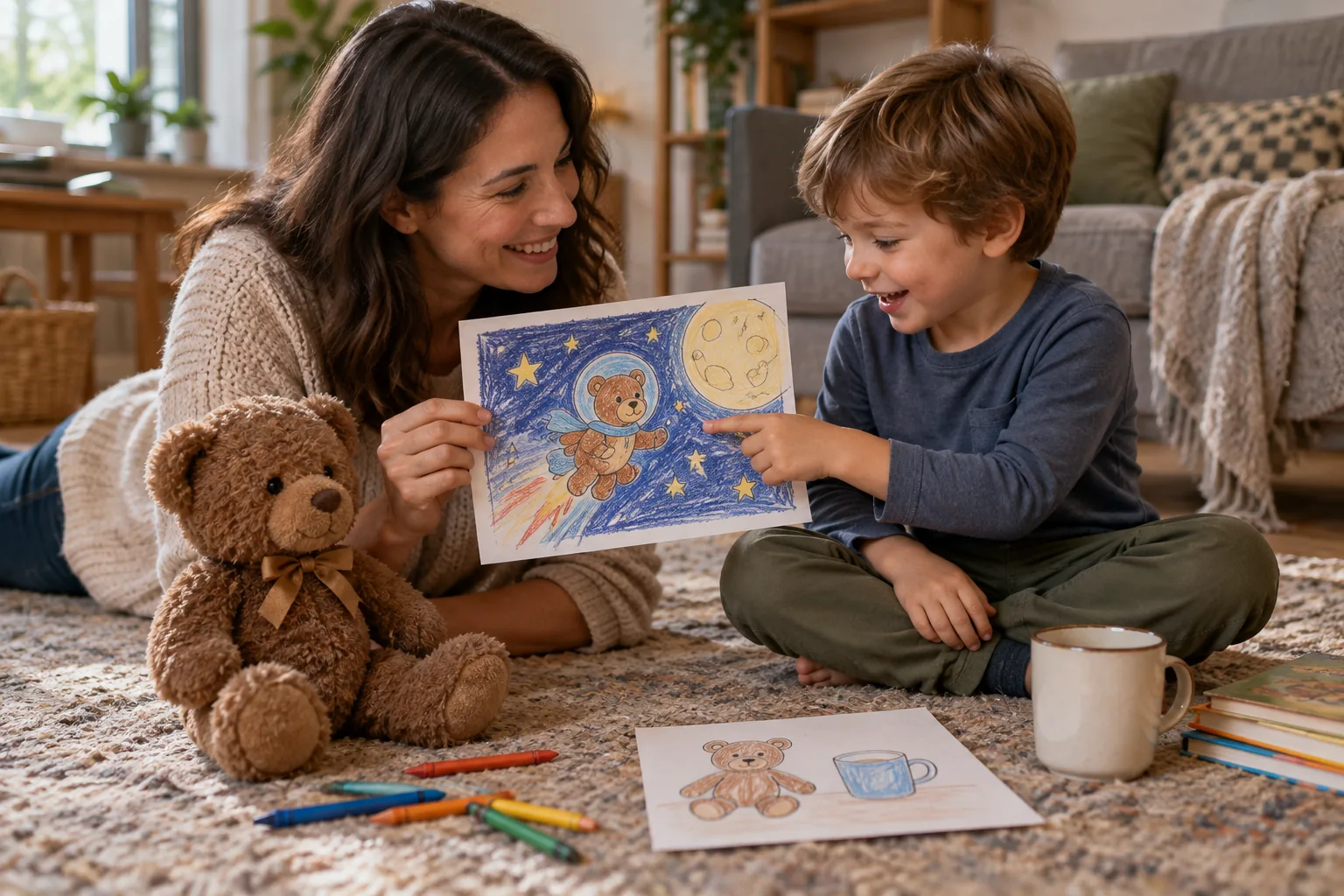
No. A story about a teddy visiting the moon can belong to pretend play. You might invite your child to draw that adventure, then ask separately about what really happened at nursery. Imagination can remain welcome while everyday facts stay clear.
Should I promise there will be no consequences?
Only make promises you can keep. A better commitment may be that you will listen without humiliation and help make things safe. Thanking a child for honesty can coexist with returning an item or repairing damage. Avoid a surprise penalty after promising complete immunity.
What if my child insists despite clear evidence?
State the facts calmly once and move to the necessary action. You do not need a dramatic confession to clean a spill or restore a safety rule. Return to the conversation later if needed, keeping the door open for correction rather than rehearsing the same interrogation.
Does avoiding eye contact prove a lie?
No. Anxiety, embarrassment and differences in communication can all affect eye contact. Focus on information you can verify and give time to answer. Treating body language as a lie detector risks accusing a truthful child and missing the actual problem.
How much privacy can an older child have?
Privacy and deception are not identical. Agree on information needed for safety, such as where they will be and how you can contact each other. They do not owe you every private thought. Explain limits clearly instead of using open-ended demands to know everything.
What if a sibling is blamed?
Listen separately and avoid recruiting either child as prosecutor. Say what is known, acknowledge uncertainty and organise any necessary repair. A fair process matters even when you cannot establish every detail. Repeated scapegoating is a reason to examine the wider sibling relationship.
When should we ask for professional help?
Ask when the pattern persists, disrupts daily life, or comes with safety concerns or other significant behaviour changes. Bring concrete examples of what happened before and after each event. Support aims to understand the child’s needs and family responses, not attach a permanent label.
Related reading
- When a Child Struggles Socially
- Helping your child find their voice in Istanbul: Turkish and the language of home
Sources
- AACAP: Lying and children
- American Academy of Pediatrics: When children lie
- Raising Children Network: Children and lying
For general information; this does not replace an individual assessment.