Helping your child find their voice in Istanbul: Turkish and the language of home
Moving to Istanbul can turn ordinary moments into language questions. Your child may hear Turkish at the bakery, English at school and another language during a call with grandparents. You might wonder when to introduce Turkish, whether to change the language you use at home, or how to help when your child wants to join a game but cannot find the words.
Start with a practical aim: help your child take part in the situations that matter to them while keeping family conversations comfortable. You do not need to turn your home into a classroom or replace the language of bedtime stories. A few familiar activities can give you a manageable starting point.
There is no fixed starting-age deadline for another language; older children can learn too. American Academy of Pediatrics and ASHA: multilingual children The ideas below focus on everyday family life, particularly with preschool and early school-age children. Choose activities that suit your child’s interests and abilities rather than treating an example as an age requirement.
Choose one daily situation that would feel easier with Turkish
Ask what your child wants to do
Instead of beginning with a long vocabulary list, think about one real moment. Perhaps your child wants to ask for water, say hello to a neighbour, understand whose turn comes next or tell an adult that they need help. For a child who can explain their preference, offer two concrete choices: “Would you like words for the playground or for choosing a snack?”
For a younger child, choose a situation you already share comfortably. The aim might simply be to recognise a greeting while you handle the conversation. Keep the activity small enough that you can stop without leaving a task unfinished. Your child should still be able to enjoy the bakery visit or the game when no new word is spoken.
An example to try this week
Suppose your family regularly buys bread on the way home. Before leaving, practise a short pretend visit with a toy basket. You say merhaba, meaning hello, and let your child decide whether to answer, wave or watch. At the real shop, greet the person yourself. Offer your child the opportunity to join, without announcing to everyone that they must perform.
Afterwards, ask about the bread, the walk or what caught their attention. You can mention the greeting if it comes naturally. The outing does not need to end with a test of what they remembered.
Keep your first phrase list useful and short
Build a small family list around requests your child might actually make. These examples are conversational starting points, not a complete language course:
- Merhaba. — Hello.
- Teşekkür ederim. — Thank you.
- Su istiyorum. — I would like water.
- Yardım eder misiniz? — Could you help me?
- Ben de oynayabilir miyim? — Can I play too?
- Bir daha söyler misiniz? — Could you say that again?
Pick one or two for the situation you chose. If you are unsure about pronunciation, ask a trusted Turkish-speaking adult or your child’s teacher to model the phrase. Listen together and use it in context. There is no need to practise every item before your next outing.
Make space for the language that feels like home
Using several languages does not itself cause language delay; speak with your child in the languages you use most comfortably. ASHA’s consumer affiliate CHSA: learning more than one language
Protect one ordinary family conversation
Choose a moment you want to keep relaxed: breakfast, the walk home, a bedtime story or a call with relatives. Use your home language for the conversation you would normally have. You can talk about who was kind, what tasted good or which toy needs fixing. The conversation does not have to become a comparison between languages.
If Turkish words appear, respond to the meaning before deciding whether any explanation is needed. For example, when your child names an object using a word from school, ask them to show you the object or tell you what happened. You can share the home-language word naturally, without stopping their story to demand a different answer.
A bedtime arrangement that stays simple
Keep two or three familiar picture books within reach and let your child choose one. Read or tell the story in the language you prefer. If they point to a picture and offer a Turkish word, you might say, “Yes, that’s the cat,” in your home language and continue. Some nights you may finish the book; other nights you may discuss one picture.

Give relatives an easy way to join
Before a video or voice call, choose one item your child might enjoy showing: a drawing, a toy or something from a recent walk. Tell the relative about the item in advance if that helps the conversation. A request such as “Ask about the little boat” is more inviting than a request to check how many words the child knows.
Keep the call flexible. The child can show the object, listen while you talk, or come back after a break. If a relative starts asking repeated translation questions, suggest telling a short family story instead. Familiar people can remain part of everyday life without taking on the role of language examiner.
Try three home activities before using the words outside
Activity one: a pretend neighbourhood shop
Place a few safe household objects or toy foods on a low table. Choose items large enough for your child’s age and abilities, and stay alongside them. One person runs the shop while the other chooses an item. You can begin in your home language, add a Turkish greeting, and change roles whenever your child wants.
Keep the scene predictable: greeting, choosing, handing over the item and saying thank you. Add a question only if it makes the game more enjoyable. A child interested in the toy cash register may prefer to handle the pretend payment while you do most of the talking.
What to prepare
Three objects and a basket are enough. Skip written labels if they would turn the game into a reading task. When you do use picture cards, choose clear pictures of familiar objects. Put the cards away when your child wants to move to a different game.

Activity two: a small journey made from toys
Use a toy vehicle, a few blocks and a figure to make a route from home to a pretend park. Ask your child where the vehicle should go. You might use dur for stop and hadi for let’s go, while keeping the rest of the conversation in the language you share most easily.
Let the story change. A toy might lose a shoe, the road might lead to a picnic, or the vehicle might decide to go home. Follow the idea rather than repeating your chosen words until the game becomes a drill. On the next real walk, the toy story may give you something familiar to talk about.
A version for a child who prefers movement
Mark a short pretend route with cushions placed safely on the floor. Walk it together and take turns choosing when to stop. Avoid obstacles or climbing arrangements that require skills your child does not yet have. The language can remain a small part of the shared play.
Activity three: choose and prepare a snack together
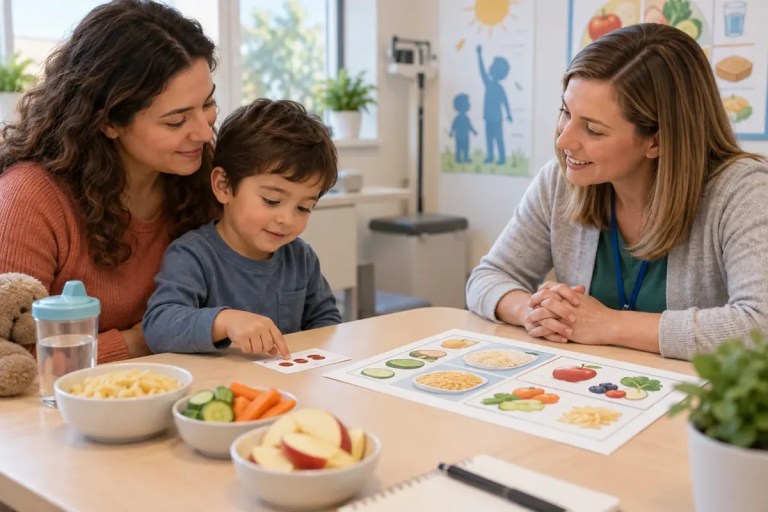
Offer two suitable snack options and let your child point to or name their choice. You can use elma for apple or muz for banana if these foods suit your family. Adults should manage knives and other kitchen hazards. The child might move prepared pieces onto a plate, carry a napkin or decide which cup to use.
Talk about what you are doing rather than asking a question about every object. For example, tell a short story about the shopping trip while arranging the food. If your child supplies a word, acknowledge it and continue preparing the snack. The shared task gives the conversation a purpose beyond producing correct answers.
End with the meal, not a score
Sit down and enjoy the snack together. You do not need a tally of new words or a photograph for a progress chart. If something was useful, write a private reminder for yourself, such as “keep both cup choices ready” or “use the same picture next time”.

Coordinate with nursery or school without adding another burden
Ask for the phrases used in one routine
Choose one question for the teacher: “Which words do you use when children put away their bags?” or “What do children usually say when asking to join a game?” A specific request is easier to act on than asking for a complete Turkish programme to follow at home.
Share a short description of your family’s languages and what your child enjoys. If there is a particular situation they find difficult, describe what you observed rather than assigning a label. “They stood beside the game and held my hand” gives the teacher something concrete to discuss.
Keep communication practical
Write down agreed next steps in plain language. You might use a familiar picture before drop-off, arrange a brief conversation at collection, or practise one routine in a pretend game. Review whether the arrangement is helpful before adding another activity. Ask the school directly about its services and language support; do not assume every setting offers the same options.
Plan family outings around enjoyment and choice
Choose a destination because it suits your family’s plans, then leave room for the conversations that happen there. Before a play outing, talk about what you expect to do and what your child can do if they want a break. You can offer a familiar phrase, but adults should remain available to communicate for them.
If you are considering Filifu Cafe in Maltepe, read the children’s play areas page, in Turkish, as part of planning the visit. Use the contact page, also in Turkish, to ask about current visit details that matter to your family.
During any outing, avoid recruiting staff or other children into an unexpected language test. A greeting may be enough; some visits may involve no Turkish from your child at all. Keep the emphasis on the actual experience: playing, spending time together or enjoying a break. Your home activities and conversations can continue on another day.
Keep a useful record when you have concerns
If communication worries you, arrange a conversation with an appropriate healthcare professional or speech-language specialist. Take examples from everyday life in the languages your child uses, rather than relying on one unfamiliar situation. Note what happened, who was present and what your child appeared to understand or communicate.
For example, record “asked grandmother for the red cup during breakfast” rather than “good language day”. If you are worried about a change in communication, describe the change and when you first noticed it. Bring school observations if available. A short factual record is easier to discuss than a long list of comparisons with other children.
Frequently asked questions
Should we wait for a particular birthday before introducing Turkish?
Build your decision around a useful shared situation and the support you can provide. A greeting during an outing or a word in a familiar game can be a starting point. Choose an activity that feels manageable rather than planning around a deadline.
Should we switch all our conversations at home to Turkish?
You can keep the family conversations described above in your home language and add Turkish where it is useful. Decide together which routines you want to preserve. If an arrangement makes ordinary conversation difficult, simplify it rather than maintaining it for the sake of a rule.
What if my own Turkish is limited?
Begin with a small phrase you have checked with a trusted speaker. You can learn it alongside your child and handle the rest of the interaction using whatever communication is available. Avoid pretending to know an expression when you are uncertain about its meaning.
Do we need picture cards or specialist toys?
No specialist materials are required for these activities. A familiar book, safe household objects and ordinary toys are enough. Choose large, clear pictures if you want cards, and leave out written labels when they do not serve the game.
What should I do if my child does not want to speak on an outing?
Speak for your child when needed and let them watch or participate in another way. Afterwards, discuss the experience without demanding a replay. You can offer a similar pretend game at home if they are interested.
How long should each activity last?
Let interest and the practical situation guide you. Stop when the snack is ready, the story reaches a natural pause or your child wants another activity. These are family routines, so you do not need to complete a fixed session.
Does a play-area visit count as a language lesson?
This article suggests ordinary family outings and home activities. It does not describe a language course at Filifu. For any organised teaching programme, ask its provider directly about the content, staff and suitability before enrolling.