
Your child can build a long train track but leaves a worksheet almost immediately. It is tempting to conclude that they could concentrate if they really wanted to. Yet these activities differ in interest, difficulty and the amount of adult direction. Looking closely at the task often produces a better starting point than timing the child and deciding they have failed.
This guide offers ways to observe and support participation. It does not diagnose attention-deficit/hyperactivity disorder, and it does not use an age-times-minutes formula as a personal benchmark. One stretch of sitting still cannot describe all of a child's learning and development.
Attention involves more than staying seated
Keeping a rule in mind, choosing the relevant object, waiting for a turn and returning after a mistake draw on different skills. Harvard's Center on the Developing Child explains that executive-function and self-regulation skills develop through interaction and age-appropriate practice. Children are not born with an adult's finished set of these abilities.[2]
A moving child may still be listening; a quiet child may not understand the instruction. Instead of only asking how long they stayed at the table, ask whether they knew how to start, could follow the step and could seek help. These questions suggest more practical changes.
Distractibility is not a diagnosis
There is no single test for ADHD. The CDC describes a multi-step assessment using information from different settings and consideration of other explanations, including sleep disorders, anxiety, depression and some learning difficulties. Hearing and vision may also be checked as part of medical evaluation.[1]
Collect useful examples, not a scorecard
Notice what happens during free play, dressing, shared activities and schoolwork. Record context briefly: a rushed morning, poor sleep or a complicated instruction. “Lost the second step when asked to do three things” gives more direction than “Never pays attention.” The notes should help adults understand the task, not become a list of faults read back to the child.
For example, “Get your shoes, fill your bottle and find your coat” requires holding several actions in mind. Try giving the first step alone. If that helps, it tells you a simpler instruction is useful now; it does not prove or disprove any condition. Change one feature at a time where possible.
Check what the child understood
Rather than “Were you listening?”, ask “What are we doing first?” Use familiar words and demonstrate when helpful. In a multilingual household, a new instruction in an unfamiliar language is not equivalent to a familiar task in the child's strongest language. Ask about understanding before interpreting a delay as deliberate refusal.
A phrase to try
“Put the red pieces in this box first. Then we will choose the next job together.” This reduces the need to hold the whole plan at once. If a reminder is needed, point to the step again without adding a judgement about the child's character.
Make the activity easier to enter
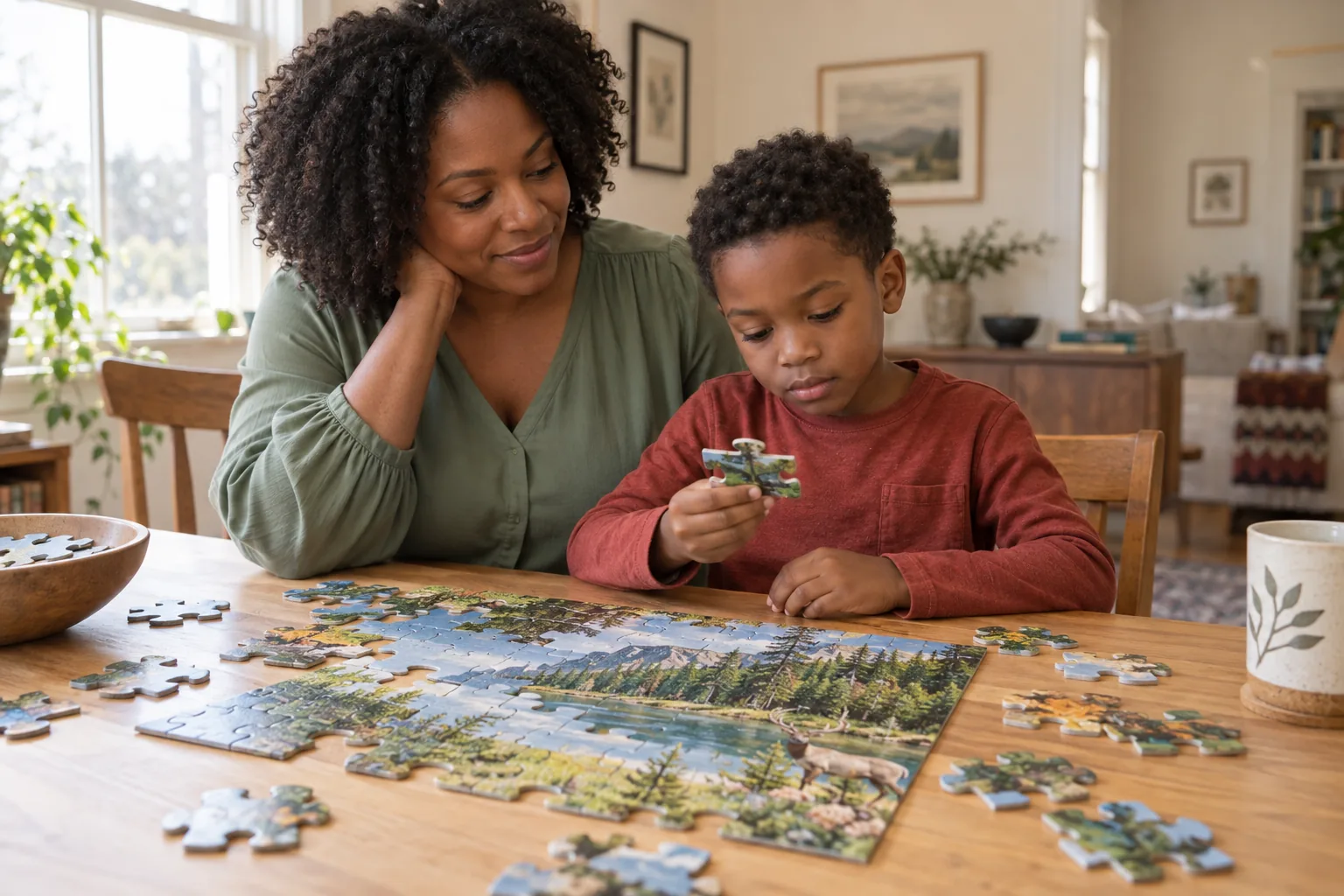
Clear away materials that are not currently needed and try turning off background television. The aim is not a perfectly silent home, but a clearer signal about what matters now. Start with a manageable part of the activity, so the child can experience beginning rather than facing an undefined demand to finish everything.
You might divide a longer task into a small section followed by a brief movement break. Set the arrangement around observed needs rather than another child's performance. Explain the return: “We will stretch together, then come back to these two pieces.” This is a practical experiment, not a prescribed clinical schedule.
Three playful ways to practise
Build something by taking turns
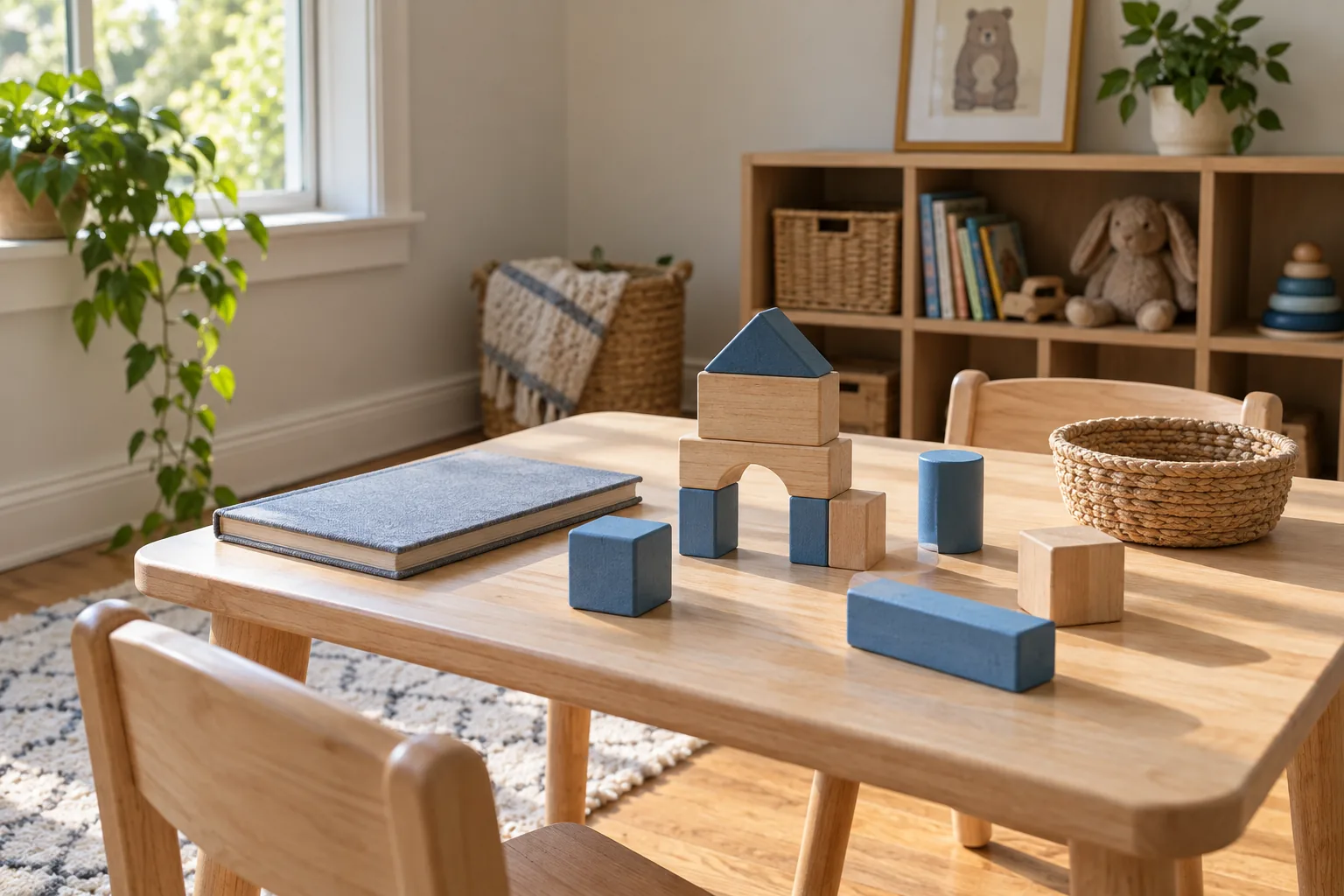
Use large age-appropriate blocks and add one piece each. Begin with one rule. When participation is comfortable, try a second small challenge, such as choosing matching colours. Reduce complexity if the game stops being manageable; making it easier is not cheating.
Follow a stop-and-start signal
In a clear safe space, walk while a parent claps and pause when the clapping stops. There is no need to run or eliminate anyone. Let the adult make an occasional mistake and restart calmly. This keeps the focus on noticing a cue rather than catching the child out.
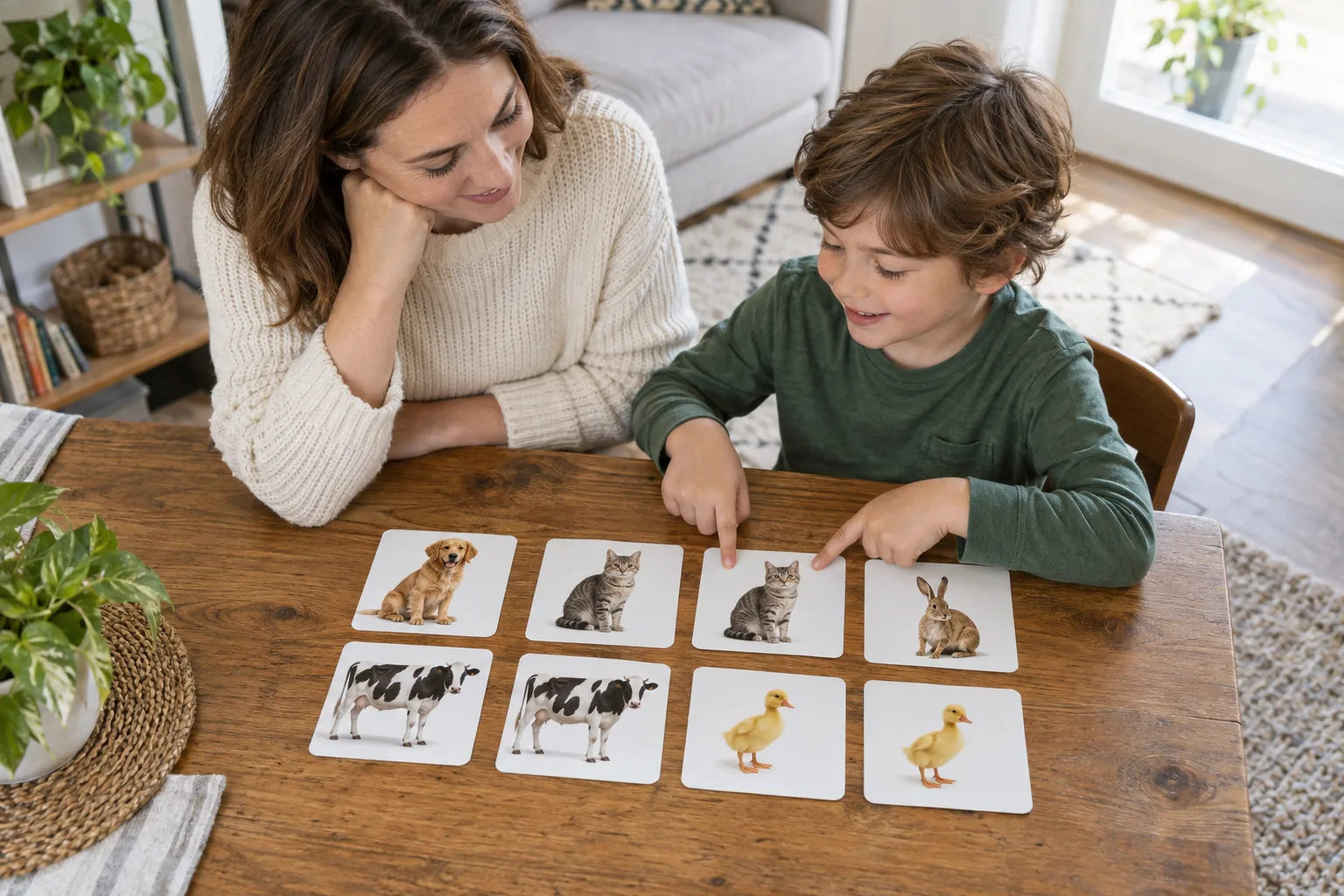
Remember a small set of pictures
Start a matching game with a few large picture cards. Add more only if the child is interested and ready. Play can offer practice in attention, working memory and self-control. It should not be presented as proof that a particular game treats ADHD or guarantees better school results.[3]
Did you know?
Strong engagement with a favourite activity does not cancel difficulty in other settings. Equally, leaving a dull task does not establish a disorder. Persistence, context and effects on everyday functioning matter. Ask a teacher for examples of tasks and transitions rather than relying on the broad label “poor concentration.”[1]
Frequently asked questions
How many minutes should a preschooler focus?
There is no single minute target that applies to every task and child. Interest, difficulty and adult support change the experience. Begin with brief shared activities and observe how participation develops rather than treating a stopwatch as a diagnostic tool.
Does concentrating on a screen prove attention is fine?
Watching a screen and organising a multi-step task make different demands. That contrast alone cannot establish or exclude ADHD. Look across play, daily routines and learning, and bring persistent concerns to a professional.[1]
Do we need a daily attention-training session?
Everyday play already offers practice. Tidying a few objects together, waiting for a turn and following a short instruction can be useful opportunities. Avoid turning family time into repeated testing or continuing a task solely to meet a target.[2][3]
Must we buy specialist toys?
No. Safe blocks, large picture cards and simple turn-taking games can be enough for a shared activity. Expensive products and apps are not substitutes for individual assessment. Choose materials suitable for the child's age, including avoiding small choking hazards.
Should I stop every movement during an activity?
Consider the task and safety rather than treating all movement as failure. Some games can be done standing up or moving between objects. In school, discuss reasonable arrangements with the teacher so expectations and supports are clear.
What should I tell the teacher or doctor?
Explain when the concern began, which activities are difficult and what changes have helped. Mention sleep, hearing, vision or developmental concerns. Information from different adults and settings is important in assessment; a short set of specific examples is useful.[1]
Can a supplement or special drink fix attention?
This guide does not recommend a drink or supplement as an attention treatment. If a nutritional deficiency is suspected, discuss it with a clinician. Do not start medicines or supplements on the basis of a marketing promise or a comparison with another child.
When should we request an assessment?
Seek advice when difficulties persist and interfere with learning, relationships, daily tasks or safety, especially across settings. You do not need to exhaust every home game first. A healthcare professional can consider the child's needs and appropriate next steps.[1]
Notice progress beyond sitting still
Getting started more easily, asking for help or returning after an interruption may be useful changes to record. Compare the child with their own earlier experience rather than a sibling. A sudden marked change or loss of previously acquired abilities warrants medical advice rather than being casually labelled distractibility.
Related reading
- Helping your child find their voice in Istanbul: Turkish and the language of home
- How to Nurture Your Baby’s Interest in Maths Through Everyday Play
Sources
- CDC — Diagnosing ADHD
- Harvard Center on the Developing Child — Executive Function Activities Guide
- Harvard Center on the Developing Child — Brain-Building Through Play
Sources checked on 26 September 2026. This article offers general information and does not replace an assessment of your child.
Bir yanıt yazın