My child is constipated: practical support and signs that need medical care
Your child stiffens their legs, avoids the bathroom or cries when passing a stool. You may be counting days and wondering when to worry. Frequency matters, but stool consistency, pain, withholding and the child's overall condition matter too. A longer gap does not mean the same thing for every age or feeding pattern. [1][4]
This guide helps parents observe symptoms and seek appropriate support. It does not provide a medicine, dose or individual treatment plan. Newborns and young babies need particular care: advice written for a toilet-trained child should not be applied automatically to an infant.

Recognising constipation
Hard, dry or lumpy stools, painful bowel movements, straining and deliberate avoidance may suggest constipation. Infrequent stools alone do not always establish the problem. Some exclusively breastfed babies pass soft stools after longer intervals and remain comfortable. Age, feeding and accompanying symptoms need to be considered together. [1][4]
Why children hold stools in
After a painful bowel movement, a child may fear another and try to hold on. Not wanting to leave a game, feeling uncomfortable in a school toilet or experiencing pressure during toilet learning can contribute. Holding can make the next stool harder and more painful, reinforcing the cycle. Calling the child stubborn does not address the discomfort or fear. [1][2]
A helpful way to speak
Try: “It looks as though having a poo has been uncomfortable. We will get some help and make this easier.” Avoid turning accidents into a public discussion or a test of obedience. The aim is to understand what makes toileting difficult and support the child without shame.
When to seek medical attention promptly
Persistent or severe abdominal pain, marked swelling, vomiting, blood in the stool or rectal bleeding, weight loss or a child who seems unwell need prompt medical assessment. Swelling together with vomiting is particularly important. Seek emergency help for a severe or rapidly worsening situation rather than waiting to try extra fibre or drinks. [1][3]
Constipation beginning in the first weeks of life, a term baby passing their first stool more than 48 hours after birth, or new leg weakness are examples of information clinicians take seriously. These details do not tell a parent what the diagnosis is. They indicate that the situation should not simply be assumed to be ordinary functional constipation. [3]
Contact a clinician if symptoms last more than two weeks or do not improve with support. Two weeks is not a required waiting period: pain, repeated withholding, soiling or an earlier concern can justify asking for help sooner. Earlier care may prevent the cycle from becoming more difficult. [1][2]
Everyday support without pressure
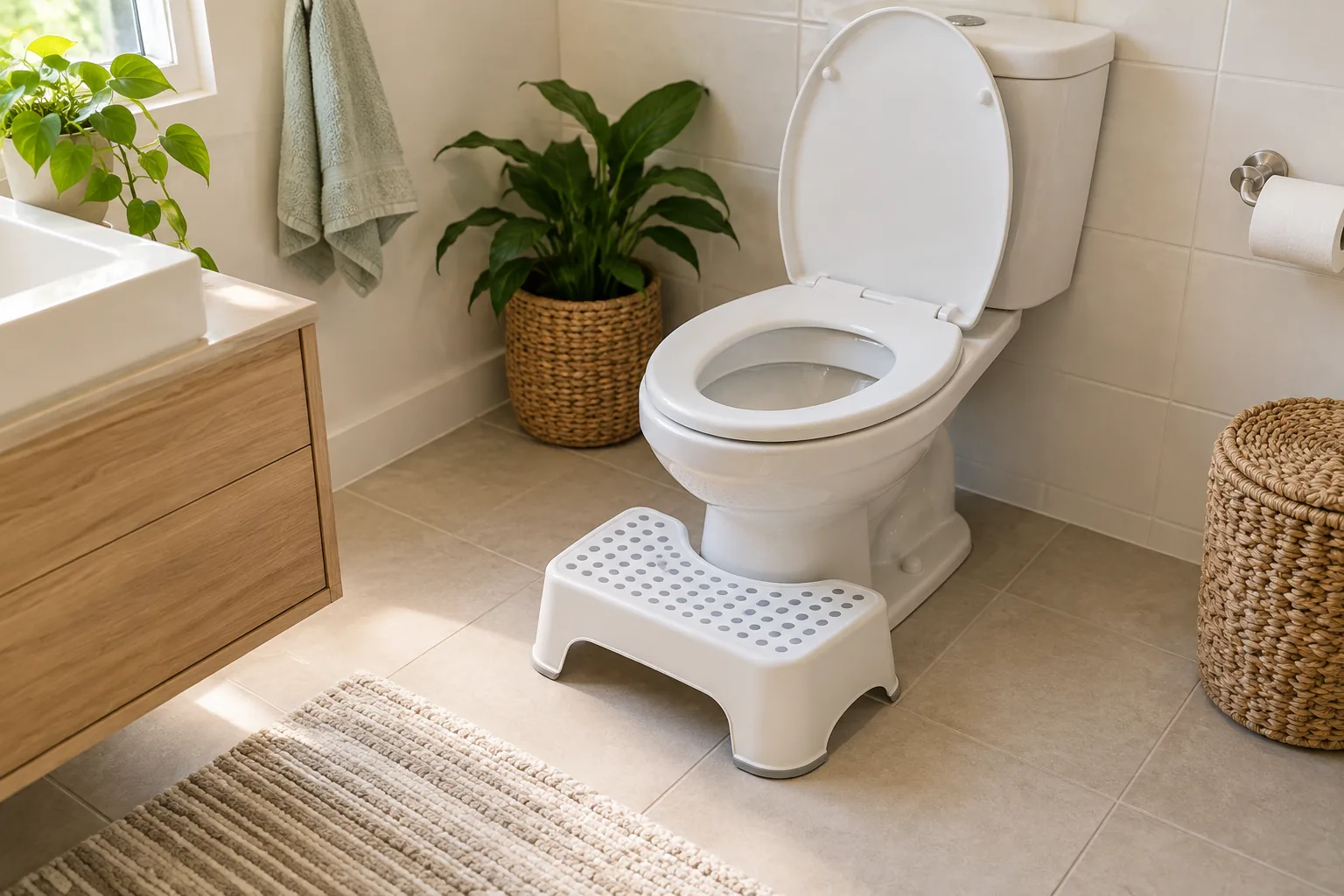
For a child who uses the toilet, stable foot support and a comfortable sitting position can help. Offer brief, relaxed opportunities after meals rather than making the child sit for a long time. Recognise cooperation and trying, instead of rewarding only the production of a stool as though the outcome were entirely under voluntary control. [2][3]
For school-age children, ask whether the toilet is accessible, whether requesting permission feels embarrassing and whether privacy or cleanliness is a concern. A discreet arrangement with the teacher may help. A home plan can struggle if a child spends the school day avoiding the toilet.
Food and drinks are part of care
Offer an age-appropriate variety of vegetables, fruit, pulses and whole grains, with adequate fluids. For older children, keeping water accessible during the day is a practical step. There is no single litre target suitable for every child; needs vary with age, circumstances and health. Established constipation may need more than a dietary change. [2][3]
Do not dilute formula or change the stated preparation ratio. Decisions about water, juice or herbal drinks for a young baby should be discussed with a health professional, not used as a casual constipation remedy. Removing cow's milk or other major foods is also not an appropriate first experiment without suitable professional advice. [3]
Why treatment can take time
A clinician may recommend medicine to clear retained stool and prevent it accumulating again. The product and dose depend on the individual child. Stopping treatment after the first soft stool can allow the problem to return. Some children need treatment over several months, with follow-up and planned adjustments. This is different from assuming that the child will always have the problem. [2][3]
Do not use an adult laxative dose, an improvised enema or a home-made remedy. If a medicine has already been prescribed, ask how long to continue it, what response to expect and who to contact if the plan does not work. Those questions are more useful than changing treatment repeatedly without advice.
Did you know?
Small amounts of soft stool in underwear can be overflow soiling around retained harder stool. It may look like diarrhoea even though constipation is involved. The child may not be doing it deliberately. Responding with punishment can add shame while leaving the underlying problem untreated. [1][2]

Frequently asked questions
Does a child need to pass a stool every day?
No. Patterns vary by age and individual. Soft, painless stools are different from hard and painful stools even when the number of days is similar. Record pain, withholding, soiling and general wellbeing alongside frequency when preparing to speak with a clinician.
At what age is constipation common?
It is often encountered around toilet learning, commonly at two to three years, but can occur at other ages. Starting school or changing routines may contribute to withholding. This is not an age limit, and symptoms in babies need their own assessment. [2]
Will extra water solve it?
Adequate fluids matter, but forcing more than a child needs does not replace treatment. Established constipation may require medication and changes in toileting routines. Ask a health professional before introducing extra drinks for a baby; an older child's routine is not an infant feeding plan. [3]
Should we pause toilet training?
If pain and pressure are increasing, review the approach with your child's clinician. Avoid turning learning into a competition. Reducing pressure and first making stools easier to pass may be appropriate, but the next steps depend on the child's needs rather than a universal timetable.
Can I use a suppository or laxative?
Get an individual recommendation about the product, dose and route. Do not adapt an adult treatment or improvise a rectal remedy. If the child already has a prescription, ask before changing it and make sure you understand the follow-up arrangements.
Is childhood constipation permanent?
Many children improve with suitable care, but the time required and likelihood of recurrence vary. The first improvement does not always mean the process is complete. Persistent symptoms despite treatment, or signs suggesting another cause, need reassessment rather than repeated unsupervised remedies. [2][3]
Can family stress or separation be responsible?
Changes in routine and emotional circumstances can affect toileting for some children. They do not justify a simple conclusion based on family structure, and blaming parents is unhelpful. Consider pain, withholding, food, school conditions and medical symptoms together. [1]
What should I bring to an appointment?
Note the child's age, when symptoms began, stool appearance, pain, soiling, medicines and usual food and fluids. If difficulties began in infancy, mention early feeding and first-stool information if known. A short factual record can make the consultation easier without turning daily life into constant monitoring.
Related reading
Sources
- NIDDK — Symptoms and causes of constipation in children
- NHS — Constipation in children
- NICE CG99 — Constipation in children and young people
- Assurance Maladie — Recognising childhood constipation
- German federal health portal — Constipation in children
Sources checked on 26 September 2026. This article offers general information and does not replace an assessment of your child.