A Salt Room Visit with Children in Istanbul: Questions Before Booking
A salt room can look inviting in a photograph, yet a family still needs practical information before booking. Is salt actively dispersed into the air? What happens at the entrance? Who helps children during play, and where should parents stay? For English-speaking families in Istanbul, getting clear answers to these questions can be more useful than reading a long list of advertised benefits.
This guide focuses on planning an ordinary family visit to Filifu Cafe. It separates information supplied by the business from general health guidance and from details that still need to be confirmed for your own booking. It does not recommend a salt room as treatment, set a session schedule or assess whether exposure is appropriate for an individual child.
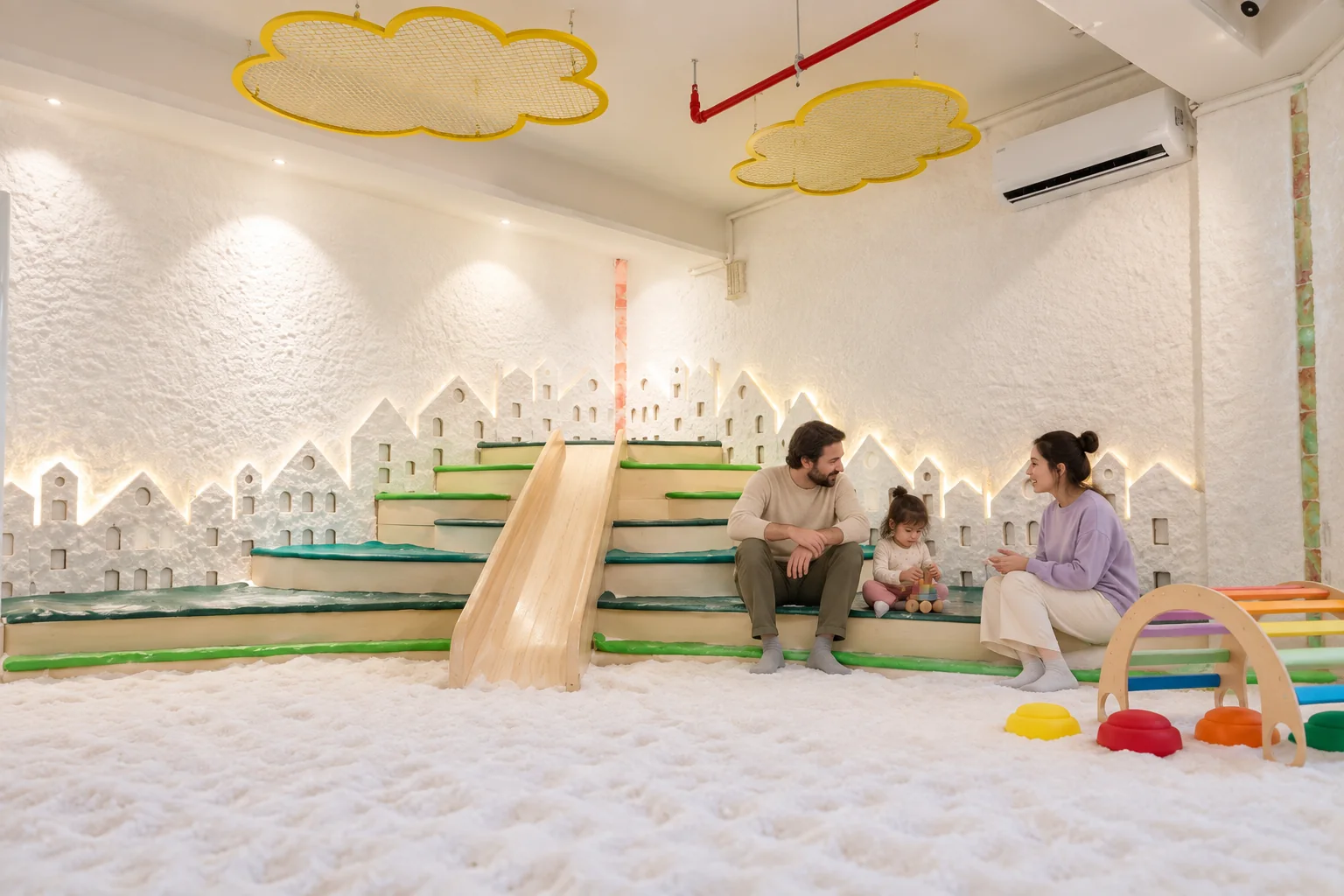
Find out what kind of salt room is being described
Rooms decorated with salt and rooms using a halogenerator should not automatically be treated as the same experience. A halogenerator disperses fine dry salt particles. Filifu’s owner confirmed on 22 September 2026 that the venue has such a device. This statement does not provide the device model, measured particle levels or a clinical assessment of the room. Ask the business about current operating arrangements rather than trying to identify equipment from a photograph.
For anyone considering the experience because of a respiratory condition, the distinction matters. Asthma + Lung UK describes mixed evidence for salt therapies and notes that inhaled salt can irritate airways and trigger symptoms in some people. Discuss individual suitability with the relevant healthcare professional, particularly when a child has a respiratory condition. A café booking should not involve changing prescribed care.
Ask about the visit you are actually planning
A question such as “Is it good for children?” can lead to a broad answer that leaves important details unresolved. Tell the venue which day you are considering, how many people would come and what practical information you need. Keep health decisions separate. Staff can describe the environment and rules, but they should not be expected to interpret a diagnosis or make a clinical decision for your family.
A useful opening message
“We are planning a first visit with our child. Could you explain the entrance process, parent arrangements and how the salt room operates at our proposed time?” This sample message invites a description of the actual process. It is more specific than asking for a promise that every aspect of the visit will suit every family.
Understand the entrance routine before arriving
Filifu’s owner says that socks are provided free of charge when entering the salt room. Knowing this can help with packing and with explaining the transition to a child. Confirm the current procedure directly, including where shoes and belongings are kept and whether there are rules for moving between different areas. Do not assume that a practice seen in another venue applies here in exactly the same way.
If several children are coming, decide which adult will handle the booking conversation and which will keep belongings together. This is ordinary family organisation, not a requirement set by the café. A short explanation of the next step can be easier for a young child to follow than a long description of the whole afternoon. Leave room for questions and for a slower first arrival.
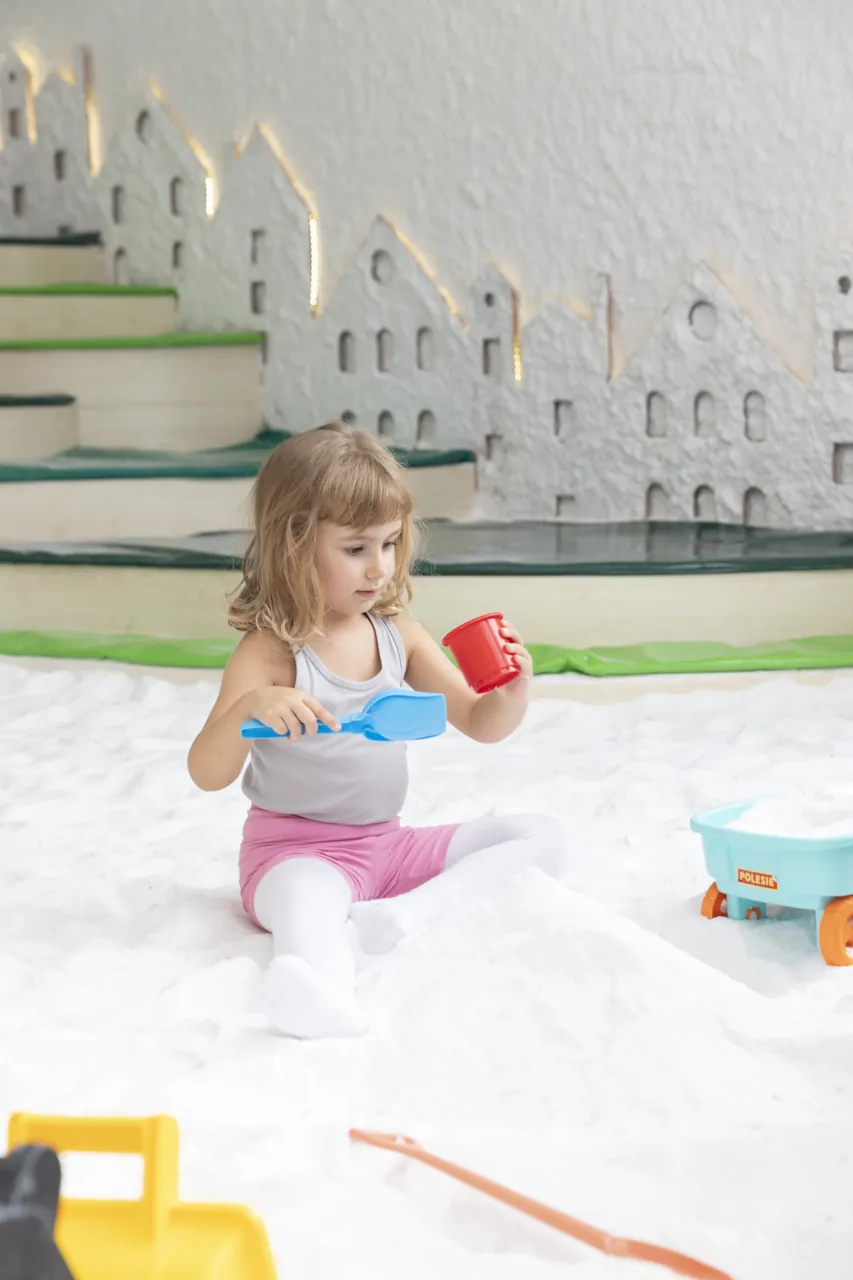
Keep packing linked to real needs
Ask about the venue’s rules before bringing outside toys or food. Pack personal items that your family actually uses rather than buying a special kit based on a generic online list. If a child has an individual health plan or needs particular equipment, prepare according to the guidance already agreed with the relevant professionals. This article cannot define that preparation for every family.
Clarify the role of play attendants and parents
The business reports that play attendants, commonly called “oyun ablaları” in Turkish, are present in both the salt room and the ball pool and engage with children. For a first visit, ask how this works in practice. Useful questions concern where parents should remain, how staff communicate with them and what happens when a child wants a pause or needs help finding their adult.
The presence of attendants does not by itself tell you the staffing ratio, qualifications or whether one-to-one supervision is available. It also does not establish that parents can leave the venue. Avoid filling these gaps with assumptions. If an arrangement is important to your booking, ask for a clear explanation before making plans that depend on it.
Give relatives the same practical information
When grandparents or visiting friends join a family outing, different adults can easily assume someone else is responsible for a task. Agree who is the main contact and share the confirmed venue rules. Keep that message brief: arrival time, meeting place and the questions already answered. It is not necessary to circulate a child’s full medical history to organise a meeting at a café.
Use an agreed handover sentence
For example: “I will speak with the reception desk; please stay with the children until I return.” A direct sentence is clearer than a gesture made across a busy room. This is a general communication example, not a description of Filifu’s staffing procedure. The venue’s current arrangements should be explained by its own team.
Ask about hygiene as a process
Free socks are one feature of the entrance routine, but they are not a substitute for cleaning shared surfaces or for hand hygiene. The relevant question is not whether one material looks clean; it is how different parts of the space are maintained. You can ask about shared toys, frequently touched surfaces, the salt floor and the way an item is handled if it needs attention during a visit.
Filifu’s owner reports regular disinfection using a silver-ion product. The product name, label, approved uses and application conditions have not been independently checked for this article. An ingredient name alone does not establish hospital-level disinfection, complete sterility or protection from every infection. A useful answer from a business describes the actual procedure rather than relying only on a reassuring adjective.
Keep questions neutral and specific
You might ask: “How are shared toys managed between uses?” or “Who should we tell if an item needs cleaning?” These questions help you understand the process without assuming either that a room is unsafe or that salt makes it germ-free. If a response does not address your question, ask for clarification. A photograph cannot verify a cleaning schedule or a product’s effectiveness.
The CDC explanation of cleaning and disinfection in settings used by children distinguishes removing dirt from using suitable products against germs. Product instructions and the type of surface matter. This is general guidance; it is not an inspection report on Filifu, and United States product approvals should not be presented as evidence of a product’s status in Turkey.
Plan the transition from play to a café break
Families often think about arrival but not about the moment when everyone is ready to sit down. Before the visit, decide whether you are planning a short drink, a meal or simply a meeting with relatives. Confirm any reservation requirements and current menu details with the business. Do not rely on an old article for prices, packages or the availability of a particular item.
Allow time for handwashing before eating and help children when they need assistance. CDC guidance on hand hygiene around children explains the role of soap and water and adult support. Socks, salt flooring and a tidy appearance do not replace this ordinary routine. Follow the appropriate instructions for any personal hygiene product rather than letting young children use it unsupervised.
Use photographs to prepare questions about seating
The Filifu café area page can help you recognise the setting and think about where your group might sit. The salt room page shows the play environment. Ask about the current arrangement if a detail matters, since a photograph records one view at one time and may not show every route or table.
A short visit can be a complete plan in itself. You do not have to combine the salt room, ball pool, a meal and a large gathering in one afternoon. Choose the parts your family actually wants to discuss with the venue. A flexible ending also makes it easier to respond if someone is tired or the group’s plans change.

Read benefit claims without turning them into promises
Searching for salt room benefits may bring together personal experiences, small research studies and promotional copy. These have different purposes. A person saying they enjoyed a visit describes their experience; it does not demonstrate a treatment effect. The American Lung Association’s discussion of halotherapy highlights the limitations of the evidence and the need to discuss health-related use with a clinician.
For a family booking, you can keep two separate lists: what the venue has confirmed about the visit, and what you need to ask a healthcare professional. Do not expect the first list to answer the second. A business can explain socks, booking and staff arrangements without claiming that the experience treats asthma, prevents infections or changes an underlying condition.
Keep the first visit ordinary and respectful
A child does not need to appear excited in every photograph or participate in every activity. Ask before taking or sharing pictures of other people, and follow the venue’s rules. If an illustrative image is used in an article, it should be labelled clearly rather than presented as a record of a real event. The images accompanying this guide distinguish actual venue photographs from an AI-created scene.
After the visit, a useful note might be as simple as a question to clarify next time. There is no need to score the child’s participation or compare the day with another family’s experience. If you have a health concern, contact the appropriate professional rather than interpreting the visit as a test of whether salt therapy “worked.”
Frequently asked questions
Does Filifu have a halogenerator?
The owner confirmed that it does on 22 September 2026. Ask directly about current operating arrangements. This confirmation does not establish an individual health benefit or provide technical measurements of the environment.
Are socks included when entering the salt room?
The owner states that socks are provided free of charge. Confirm the current entrance and area-change rules with the venue. This is a practical service detail, not a guarantee of infection prevention.
Can parents assume attendants provide one-to-one care?
No. The reported presence of play attendants does not specify that arrangement. Ask about the scope of support, where parents should stay and how communication works during your visit.
Does salt mean the room is sterile?
No such conclusion should be drawn from the presence of salt. Shared spaces still need appropriate hygiene procedures. Ask about those procedures rather than relying on a universal germ-free claim.
Should we stop or change medication before a visit?
Do not change prescribed care because of a café article or a salt room booking. Discuss individual suitability and any health-related questions with the professional responsible for the child’s care.
Business information supplied by the owner and sources checked on 22 September 2026. General information, not an individual medical assessment or an independent hygiene inspection.