A Family Screen-Time Plan: Healthy Digital Routines for Children
“How many minutes of screen time is right?” has no single answer for every child. Age matters, but so do the content, sleep, movement, school needs, family routines, and what a device is being used for. A useful first step is to look at the role screens play across the whole day instead of counting minutes in isolation.
What is a family media plan?
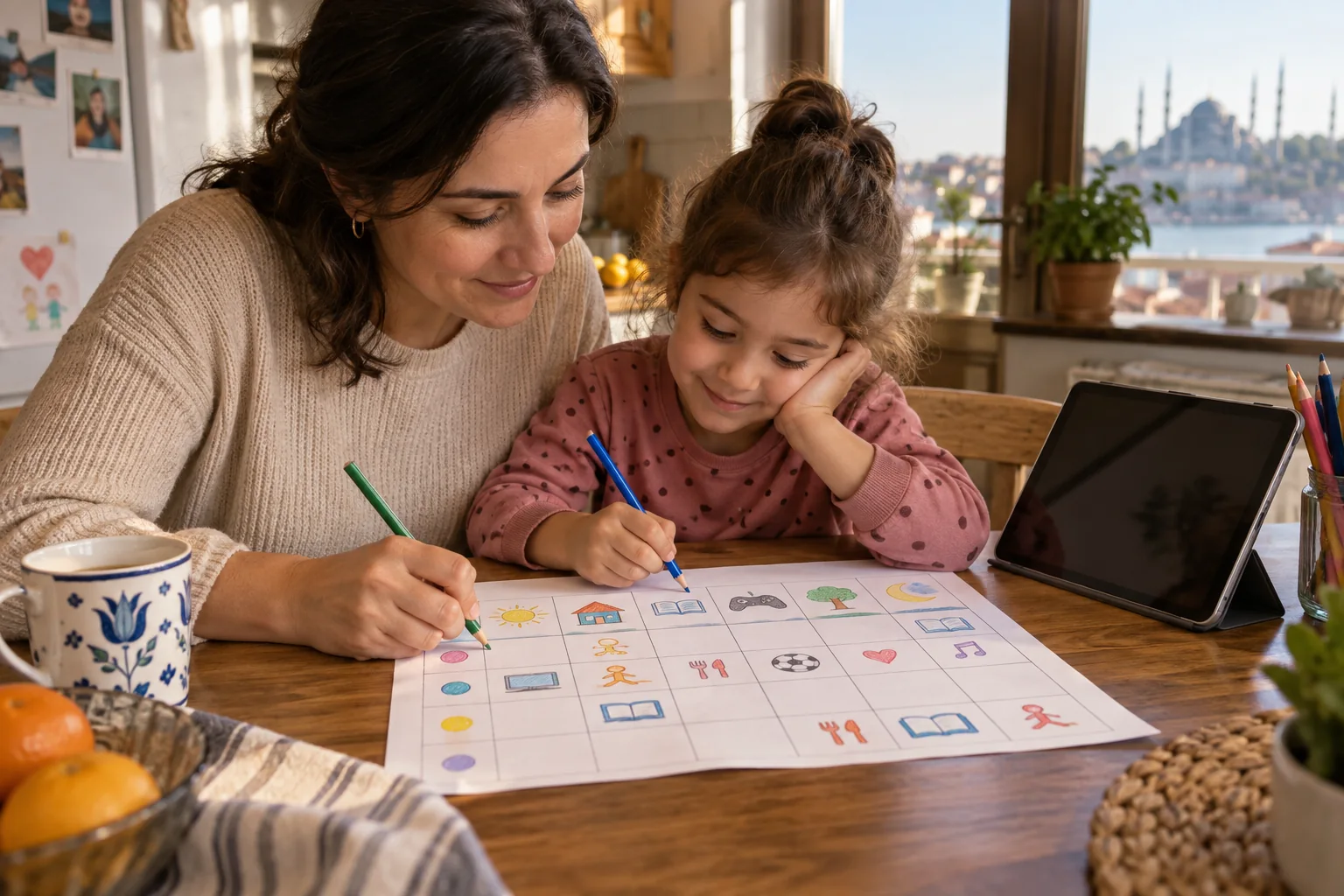
It is a flexible agreement about when, why, and how televisions, phones, tablets, and games fit into family life. It is not a punishment chart. The aim is to protect sleep, school responsibilities, movement, play, rest, and face-to-face connection while leaving room for useful learning and entertainment.
The American Academy of Pediatrics suggests setting screen-free times and places, turning off autoplay and unnecessary notifications, choosing age-appropriate content, and revisiting the plan as children grow. For children under five, WHO guidance considers screen-based sedentary time alongside sleep and physical activity over the full day. These are planning resources, not a personal diagnosis or treatment plan.
Build the plan around real routines
Start with the essentials
Agree on a general rhythm for sleep, meals, schoolwork, active play, and family time. If screens begin to displace these basics, adjust the routine. A “one screen at a time” agreement may also reduce background distractions.
Make rules specific and collaborative
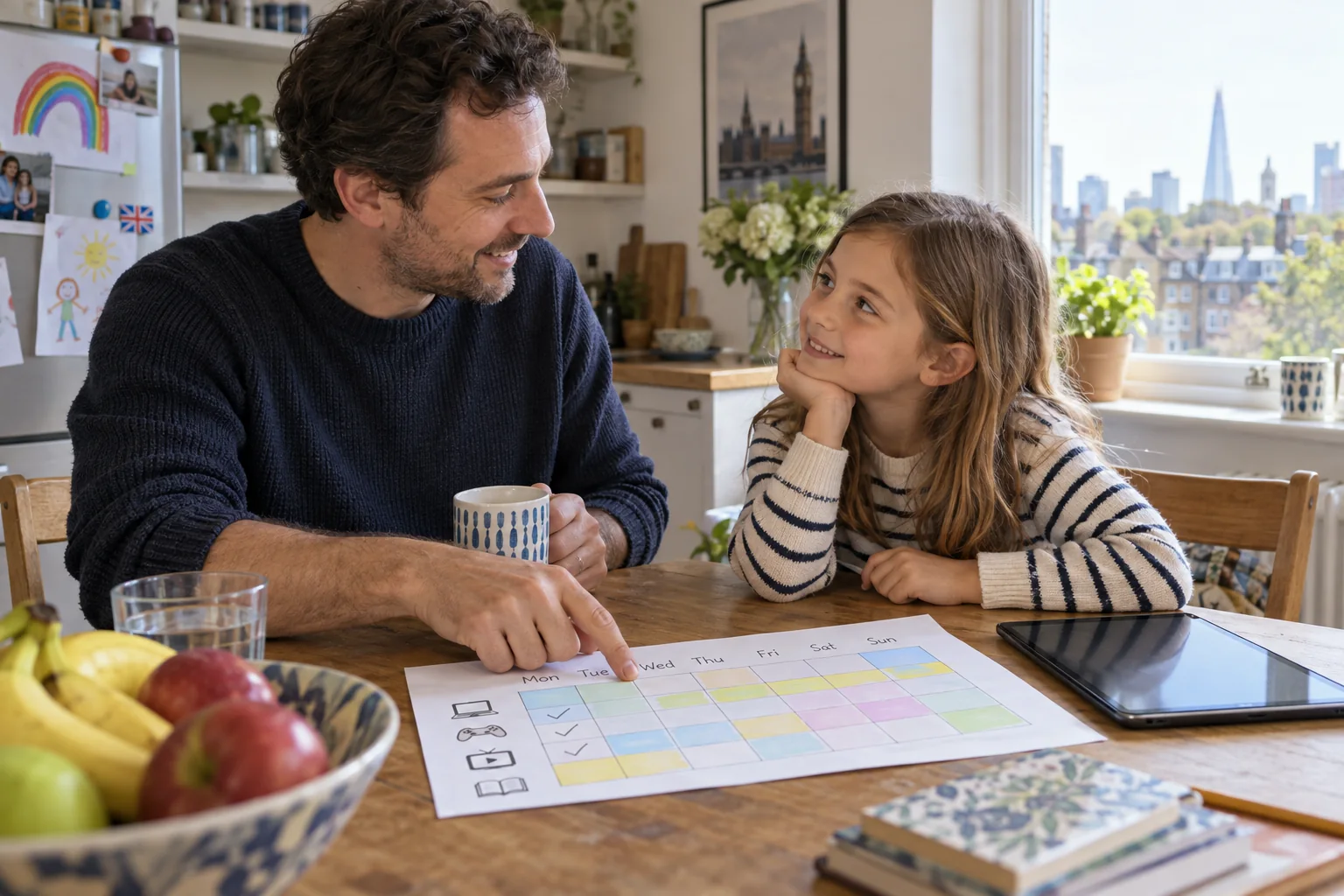
Replace vague rules such as “less screen time” with clear ones: “phones stay off the dinner table” or “we give a five-minute warning before a game ends.” Younger children can choose between two acceptable ways to stop. Older children can help make separate weekday, weekend, and holiday plans. Include school-required device use and accessibility needs.
Look at content and online safety
Time alone does not tell the whole story. Is the content suitable for the child’s age? Does the app contain advertising or autoplay? Does it request location or personal details? Can strangers contact the child through a game? Explore these questions together. Co-viewing gives adults a chance to discuss ads, emotions, and the difference between fiction and real life. Agree that children should not share passwords, their address, school, or live location, and that they can tell a trusted adult if something feels uncomfortable.
Give transitions a little warning
Turn off autoplay, offer a calm reminder before the end, and suggest two easy offline choices. Adults can model the same rule by putting phones away at meals. If screens are being used to soothe every difficult feeling, help the child name boredom, frustration, or waiting and practise another way to cope.

When should the plan change?
Review the routine if screen use regularly interferes with sleep, school, in-person relationships, or activities a child once enjoyed. If arguments grow or a child withdraws from offline activities, try to understand what is difficult rather than only removing a device. Contact a pediatrician or mental health professional if concerns persist. For related reading, see our guides to readiness for a child’s first phone and choosing children’s screen content.
Did you know?
A family media plan works best when it includes adults’ habits too. Screen-free meals or a device-free wind-down period can make shared expectations more consistent. Families can revisit the plan at the start of a school year, during holidays, or whenever routines change.
Revisit the agreement as children grow
Update the plan when school routines, sleep needs, or family schedules change, and involve children in choosing practical adjustments.
Frequently asked questions
How many minutes of screen time should my child have?
There is no universal number for every child. Consider age-based guidance, sleep, activity, school, content, and your family’s circumstances together.
Should I ban screens completely?
Many families find a balanced plan with clear purposes and boundaries more practical than a total ban. Follow any individual clinical advice you have received.
What if my child gets angry when it is time to stop?
Give advance notice, stay calm and consistent, and offer a limited choice for what happens next. Acknowledge the feeling while keeping the boundary.
Does schoolwork on a screen count?
It can help to track school and entertainment use separately while considering the child’s whole digital day. Breaks and comfortable posture matter for both.
Should meals be screen-free?
Families may choose meals as a screen-free time. A shared rule can protect conversation and attention to eating.
Why watch videos together?
Co-viewing creates a chance to discuss what a child sees, notice advertising, and answer questions. Short conversations afterward can also help when watching together is not possible.
Can evening screen use affect sleep?
If bedtime drifts later or mornings become difficult, try keeping devices out of bedrooms and using a predictable wind-down routine. Seek advice if the problem continues.
When should I ask for professional help?
Talk with a pediatrician if device use persistently disrupts sleep, learning, relationships, safety, or family life.
Sources
- American Academy of Pediatrics: How to Make a Family Media Plan
- American Academy of Pediatrics: Parents of Young Children and Screen Habits
- World Health Organization: Guidelines for children under five
This article is for general education and does not replace advice from your child’s healthcare professional.