My child hits: What to do in the moment and teach afterwards
A playdate changes in seconds: a toy is taken, your child hits, and another child cries. You may feel pressure to deliver the perfect lesson immediately. Start with a simpler job: stop further harm. Understanding anger does not mean allowing hitting. Once everyone is safe and calmer, you can teach a more useful response and help your child repair what happened.

Protect first; investigate later
Create safe distance between children, move dangerous objects away and check for injuries. Use a short limit: “I will not let you hit. We need some space.” If another adult is available, one can care for the hurt child while the other supports your child. Keep both supervised. The AAP recommends close supervision, clear rules and adult intervention in physical conflict. American Academy of Pediatrics: Aggressive behavior
A confession is not required for safety
You can stop another blow before deciding who started the disagreement. Do not let the hurt child disappear from attention while all adults lecture the child who hit. Avoid forceful holds, pressure on the neck or chest, or pinning a child down. If violence is beyond what you can safely manage, seek immediate assistance. Serious injury or immediate danger requires emergency help; in Türkiye call 112.
Keep the boundary short and usable
A distressed child may not process a lengthy explanation. Try “You are angry. Hitting hurts. Ask for help.” A child with limited speech might use a gesture or picture instead. Agree on similar wording across home and childcare so the boundary is recognisable. Consistency is part of NHS guidance on difficult behaviour. NHS: Child behaviour problems
An example after a toy dispute
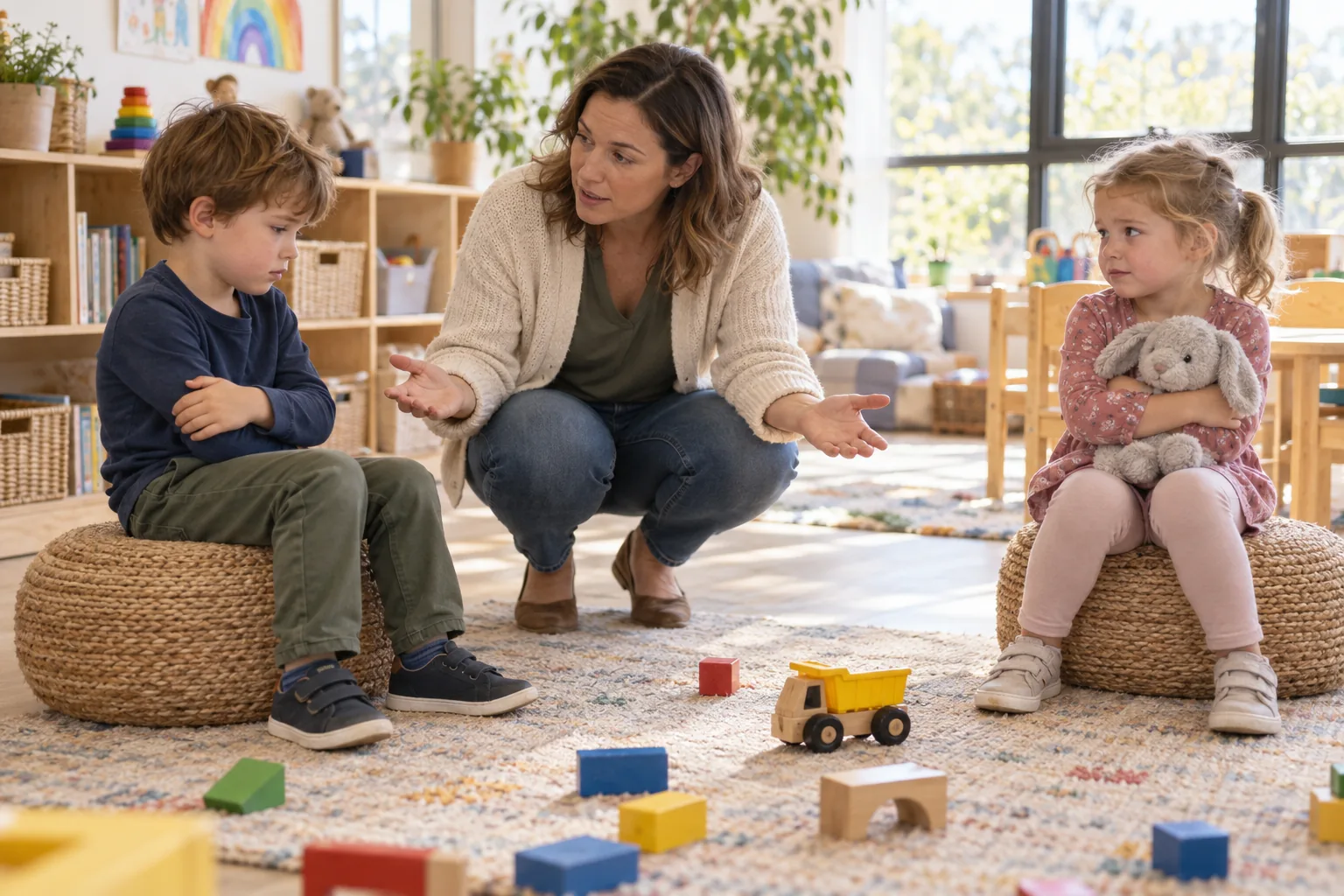
“You wanted the truck. Sam’s arm hurts. We are moving apart. When you are ready, we can practise asking for a turn.” This original script names a feeling, protects another person and points towards a skill. Do not demand a hug or a public apology while emotions remain high. The hurt child may not want physical contact, and that choice matters.
Practise outside the difficult moment
Use two toy animals to act out wanting the same block. Model a short phrase such as “Stop”, “I am still using it”, or “Help, please”. Let your child try without turning the game into a test. Notice specific progress later: “You stopped your hands and called me.” The aim is not to remove anger but to widen the actions available when it appears.
Talk about early body signals when your child is relaxed: tight hands, a faster heartbeat or a rising voice. The NHS suggests identifying triggers and physical signs of anger. Together, test a slow breath, moving to a safe quieter place or finding a trusted adult. These are tools to practise, not guarantees that every upset will end immediately. NHS: Helping your child with anger
Change the conditions that make success harder
For several days, record a few details: time, activity, people present, what happened just before and what helped afterwards. Tiredness, hunger, crowded spaces, transitions or communication difficulties may contribute. NHS guidance recognises that everyday conditions affect young children’s behaviour. A record should help you adjust support, not become a list of accusations. NHS: Child behaviour problems
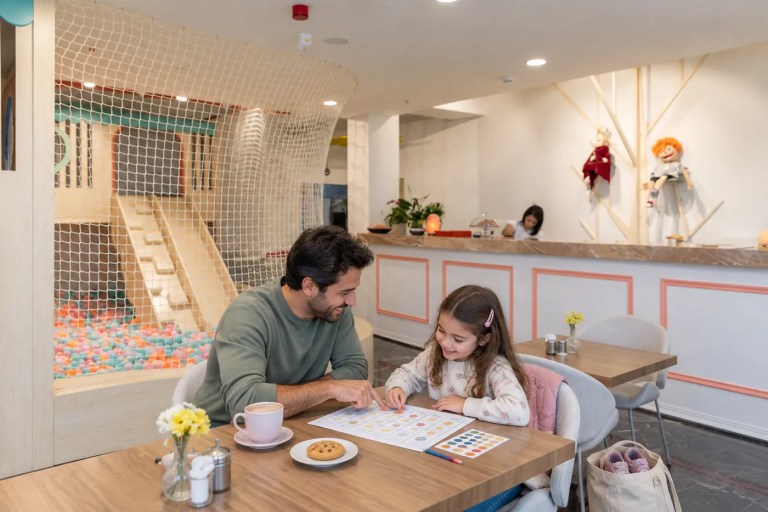
If hitting increases at the end of long playdates, try a shorter visit. If one precious toy repeatedly sparks conflict, agree beforehand to put it away or organise turns. These are practical family experiments, not medical treatments. Being around other children at a café, park or playgroup cannot replace an individual assessment when one is needed.
Work with childcare staff on observable details rather than labels such as “naughty all day”. What was the early sign? Which adult was nearby? Where can your child take a supported break? In multilingual settings, agree on a simple word or gesture for help that all relevant adults understand. A shared plan is easier to use than several competing reactions.
Adult repair and professional support
Hitting a child to teach them not to hit sends a confusing example. The NHS advises against smacking and encourages adults to model the behaviour they want. If you shouted, you can later say, “I raised my voice. I am working on that. The no-hitting rule still applies.” Owning your reaction does not remove the safety boundary. NHS: Child behaviour problems
Ask a paediatrician for help if frequent or severe incidents continue, injuries occur, your child is excluded from school or play, or you fear for safety at home. These are among the AAP’s reasons to seek assessment. Mention sudden major changes, loss of skills or substantial emotional distress as well. You do not have to wait until the whole family is exhausted before seeking support. American Academy of Pediatrics: Aggressive behavior

Did you know?
Naming anger and controlling an action are different skills. A child may know the word “angry” yet still need adult help to stop their hands during an intense moment. Recognising early body signals together is one practical starting point. NHS: Helping your child with anger
Frequently asked questions
Is hitting normal in a two-year-old?
Young children are still developing impulse control and ways to communicate, so hitting can occur. That does not make it something to ignore. Respond safely each time and teach a short alternative. Frequency, intensity and the effect on everyday life matter more than a reassuring label alone.
Why does my child laugh after hitting me?
Laughter alone does not reveal intention. It might reflect tension, surprise or watching your response. Avoid deciding that it proves cruelty or enjoyment. Keep the limit clear and make space: “That hurts. I am stopping this.”
Should I ignore hitting so it loses attention?
Do not ignore behaviour that is hurting someone. Protection comes first. You can later give attention to safe behaviour and useful communication, but withholding attention is not a reason to leave another child exposed to further blows.
Must my child apologise immediately?
First check the hurt child and help everyone settle. Later, discuss repair appropriate to age: offering help, rebuilding something or giving a genuine apology. Do not force a hug. Repair is more than saying the expected word while still overwhelmed.
Is leaving a playdate a punishment?
Ending a session may be necessary when safety cannot be maintained. Explain it without humiliation: “We cannot keep play safe right now; we will try another day.” Plan the next visit with closer supervision and a manageable length rather than making a permanent social ban.
What if another child takes the toy first?
Your child can learn to protect a boundary without hitting. Practise saying stop, moving away and calling an adult. If your child is repeatedly targeted, adults responsible for the setting need a safety plan. Teaching alternatives does not mean accepting mistreatment.
How quickly should things improve?
There is no universal deadline. Earlier help-seeking, fewer injuries or easier recovery can indicate progress. Consider the context as well as the number of incidents. Seek support if the pattern worsens, remains severe or is not responding to your plan.
What if I worry I might hurt my child?
Keep the child safely supervised and ask a trusted adult for immediate support. If you think you or your child may be harmed, seek emergency assistance. Asking for help is protective; you do not have to handle a dangerous level of stress alone.
Related reading
- When a Child Struggles Socially
- Helping your child find their voice in Istanbul: Turkish and the language of home
Sources
- American Academy of Pediatrics: Aggressive behavior
- NHS: Child behaviour problems
- NHS: Helping your child with anger
For general information; this does not replace an individual assessment.