
A child who slept comfortably at home may suddenly dislike the bedroom in a new Istanbul apartment. Street sounds, unfamiliar curtains and a different route to the bathroom can make bedtime feel unpredictable. Start by finding out what feels difficult. A child who is awake and frightened needs a different response from a child having a sleep terror without fully waking.
Three situations that can look similar
Fear before sleep
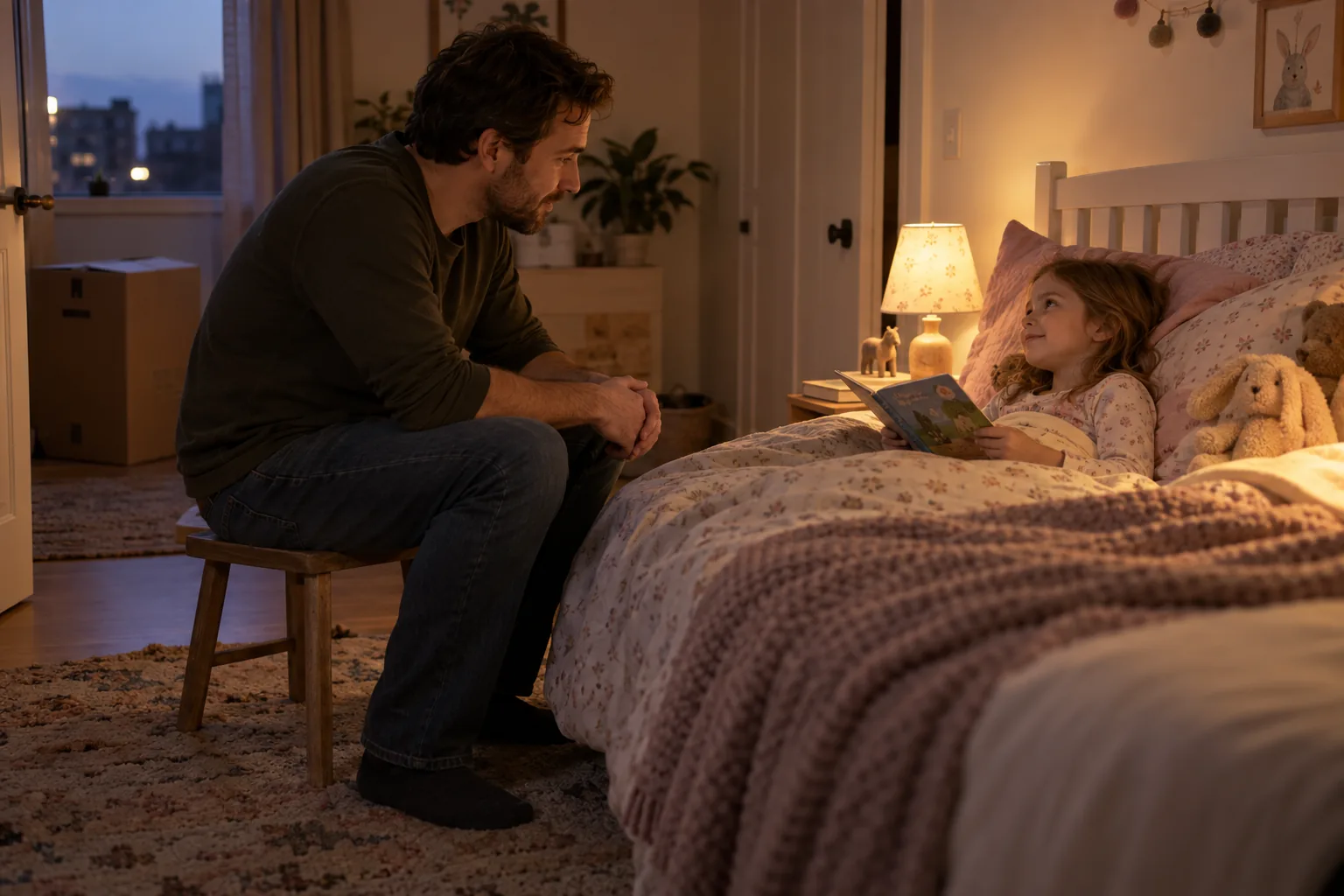
Your child may ask you to leave the door open or say that a shadow looks frightening. Listen without agreeing that an imagined danger is present. “That shadow surprised you. It is the coat on the chair, and I am here” acknowledges the feeling while explaining the room. You do not need to persuade a frightened child with a long lecture about courage.
A remembered nightmare
After a nightmare, children usually wake and can sometimes describe a bad dream. They may seek your comfort. A quiet reminder that the dream has finished, followed by help settling again, is more useful than questioning every detail at night. This approach is consistent with the American Academy of Pediatrics’ guidance. [2]
A night terror
During a night terror a child may scream, sweat or appear to look through you. Eyes can be open without the child being fully awake. Such episodes usually occur earlier in the night; nightmares tend to occur later. NHS guidance advises against trying to wake someone during a night terror. Keep them safe from injury and remain calm. These clues are not a home diagnostic test. [1]
A phrase for an awake child
“You felt frightened. The dream is over. We are in your room now, and I will help you settle.” Keep the sentence short enough to repeat calmly. Offer a hand or a cuddle if wanted. Avoid assuming that physical contact will help a child who is confused and not fully awake.
Make the unfamiliar room understandable
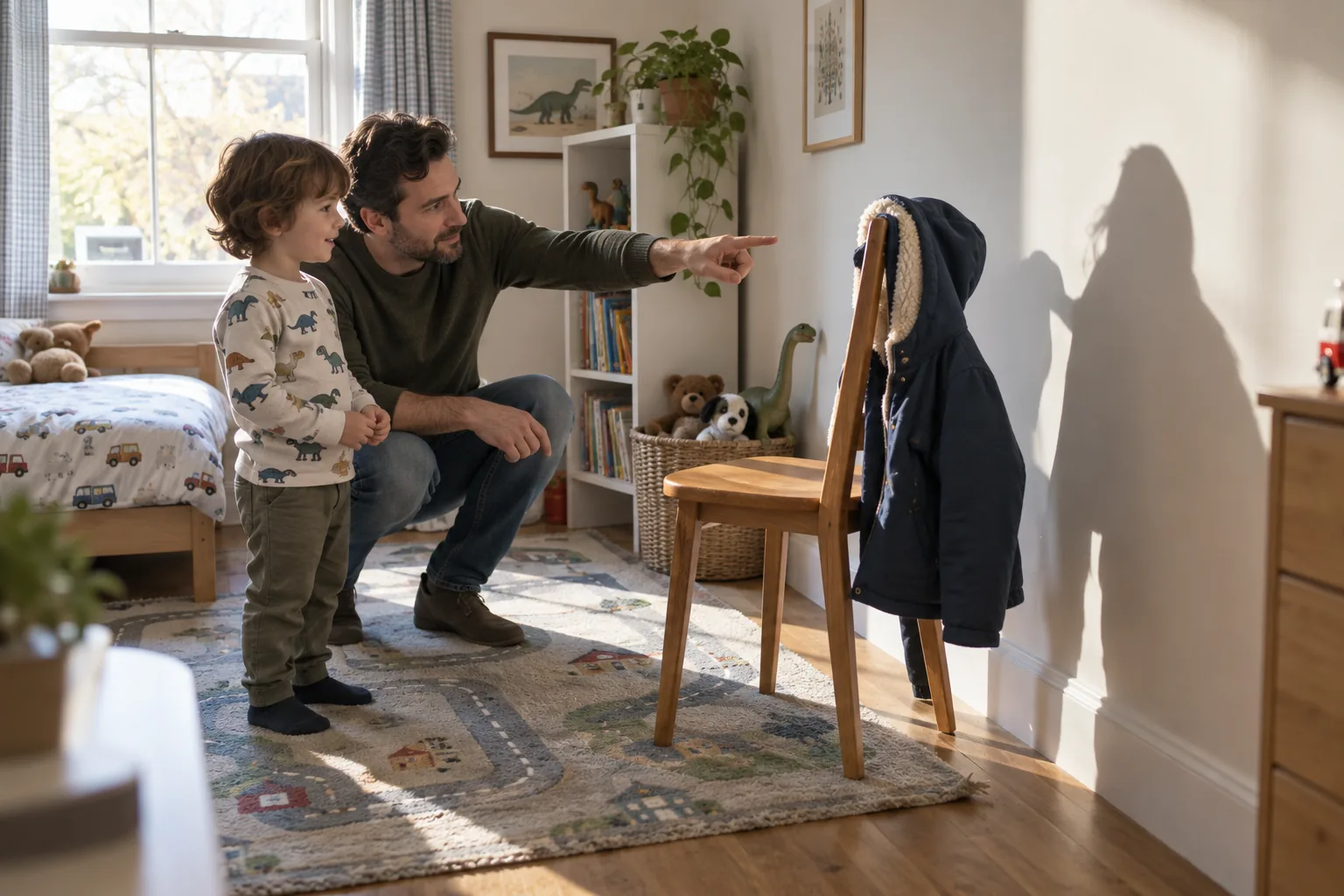
Walk through the room together during daylight. Let your child point out the worrying corner rather than guessing. Show where you will sleep, how to call you and where the bathroom is. A hallway noise might need a plain explanation; a moving shadow might need a curtain adjustment. One practical change is often easier to understand than a nightly search for imaginary creatures.
Keep recognisable elements of the evening: the same story, a familiar song and a clear goodbye. If grandparents or another carer help, agree on the same plan. This matters when the family uses more than one language: use the words the child finds easiest to understand when tired, rather than turning reassurance into language practice.
Build a small, repeatable bedtime plan
Choose a manageable sequence such as toilet, teeth, story and lights. Offer limited choices inside that sequence: which book, or whether the door stays a little open. If you use a nightlight, keep it dim and place cables safely. The aim is comfortable sleep, not winning a contest about sleeping in complete darkness.
If you promise to check back, choose a plan you can actually keep. A predictable return helps more than “I will be right back” followed by a long disappearance. Avoid adding many new conditions every evening. When your child is calm, agree on what they can do if fear returns, such as calling once and waiting for your reply.
Review the day, not only the bedroom
An overtired child, a late evening or an unsettling programme can change the night. Check these possibilities without blaming the child or assuming that one cartoon caused everything. The AAP discusses insufficient sleep, irregular schedules, stress and a new environment among factors that can contribute to sleep terrors. [3]
A simple observation record
Write down the approximate bedtime, episode time, whether your child seemed awake, what helped and how they functioned the next day. A few clear notes are enough. Do not wake your child to collect data or make them retell dreams for a record. Bring the notes to a clinician if the pattern persists.
Did you know?
Looking awake is not the same as being awake during a night terror. This explains why a child may reject comfort they would normally welcome. The distinction can reduce an adult’s urge to demand an answer or insist on eye contact. Respond to the child’s state, not just the volume of the crying. [1][2]
When fear needs additional help
Speak with your child’s clinician if episodes recur, sleep loss affects daily life or you are unsure what is happening. Mention loud snoring, possible pauses in breathing, injuries, unusual movements or nightmares after a frightening event. Persistent anxiety that restricts school, play or family life deserves assessment. Do not wait for a child to describe the problem perfectly before asking for help. [4]
Frequently asked questions
Should we remove the nightlight to build confidence?
Not as a surprise or a test. A nightlight can be a reasonable support. If your child wants to try less light, agree on a small change while everyone is calm. Rest and a sense of safety come before proving bravery.
Is checking under the bed helpful?
A brief, ordinary look at a confusing space can be reassuring. Repeated monster hunts may make the threat seem credible. Explain what is actually there, make a practical adjustment if needed and return to the familiar routine.
Should I ask my child to describe the nightmare?
Let them choose. Some want to talk and others only want you nearby. You can offer another conversation the next day. Avoid turning a late-night waking into an interview about the most frightening images.
Can I cuddle a child having a night terror?
Prevent injury, but do not force a cuddle or try to shake them awake. They may not recognise you. If an episode is unusual or you are concerned about breathing or responsiveness, seek medical advice rather than assuming it is harmless.
Does a scary programme explain every nightmare?
No. Review what your child watches and how they respond, but also consider sleep timing, changes at home and stress. An age rating cannot predict every individual response. Children can be unsettled by a scene adults barely notice.
What if they come into our room?
Decide on an age-appropriate plan the adults can sustain. Infant safe-sleep guidance is a separate issue. For older children, respond kindly and explain how you will help them return to their usual sleeping place if that is the family plan.
How quickly should the plan work?
There is no guaranteed number of nights. Look for smaller improvements: naming the fear, settling with less help or feeling less tired the next day. If the difficulty persists, reassess the cause rather than simply increasing pressure.
Should we try a sleep supplement?
Do not use supplements, sedating products or herbal remedies as the first answer to fear. Suitability depends on the child and the cause of the sleep problem. Discuss products with a qualified clinician rather than copying another family’s routine.
Related reading
Sources
- NHS — Night terrors and nightmares
- American Academy of Pediatrics — Nightmares, Night Terrors & Sleepwalking
- American Academy of Pediatrics — A Lullaby for Good Health
- NHS — Anxiety in children
Sources checked on 26 September 2026. This article offers general information and does not replace an assessment of your child.
Bir yanıt yazın