
You find a backwards letter in a note on the fridge. Your child reads the note to you and asks when you can go to the park. Letter reversals can happen as children learn to write. Look over a few ordinary examples with the teacher, paying attention to what your child can read or write with a model and what changes with instruction.
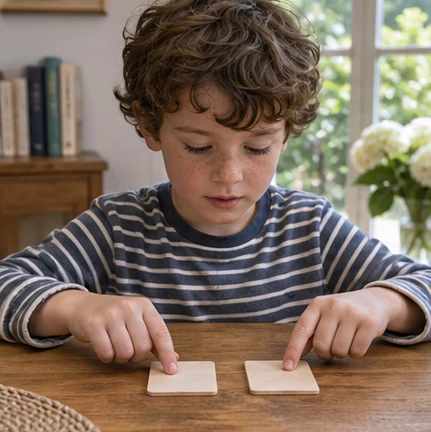
What does a letter reversal look like?
A child might put the loop of a letter on the other side or write a shape in mirror image. Lowercase b and d offer a familiar example because changing the position of the loop changes the letter. Learning the letter includes recognising its shape, matching it to a sound and remembering where the pencil starts. Those skills can develop at different paces.
Compare a short note written from memory with a letter copied from a clear model. You may see that your child knows the shape when they look at it but has trouble recalling the direction while thinking about the sentence. A date and the kind of task are more informative than a tally of reversals on one worksheet.
A five-minute practice you can do together
Ask the teacher which letter style and stroke pattern the class uses. Pick one letter. Show the starting point and form it once. Let your child look, copy it beside the model and compare the two. Try the letter in one familiar word, and finish while the child still feels up for the activity. A sticky note on the table can serve as a reference.
If your child writes you a letter about the park, talk about the park before going over its spelling. You can practise a specific shape separately. Children need chances to write for a purpose as well as to notice details. If the pencil is uncomfortable or writing takes a great deal of effort, tell the teacher what you see.
When to ask about dyslexia or other reading difficulties
Letter reversal by itself does not identify dyslexia. Ask for help if you also see persistent difficulty linking letters and sounds, decoding unfamiliar words, reading accurately or spelling despite teaching and practice. Let the school know if your child avoids reading or writing because it feels overwhelming. Ask how the school will assess current skills, what instruction is available and when you can review progress together.
Frequently asked questions
Can beginners reverse lowercase letters?
Yes. Direction errors can occur in early writing. Consider the type of task and progress over time.
Does reversing letters tell me what my child sees?
No. A written letter alone cannot tell you what the child sees or whether they have a vision problem. Describe specific vision concerns to a clinician.
Should I ask my child to fill a page with the same letter?
Try a brief guided practice with one or two careful attempts. Use the school’s model and give them a chance to compare.
Can they reverse letters and still read well?
Yes. Ask their teacher about reading and handwriting separately, including what happens when they have a nearby model.
Should I wait for the next report card to ask for help?
If difficulties persist or your child is distressed, you can ask now. Bring dated examples and explain which tasks are hard.
Sources
Türkçe · Deutsch · English · Français · 简体中文 · 日本語 · 한국어 · العربية
Bir yanıt yazın