
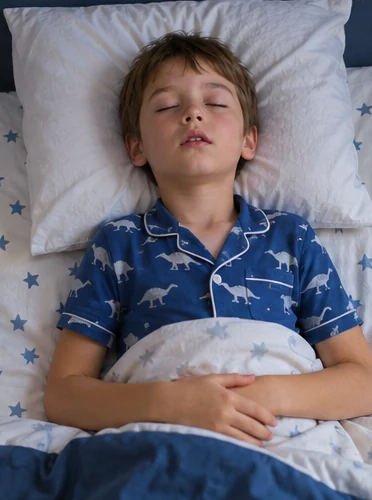
You hear a few words from the bedroom. By the time you get there, your child is asleep, breathing easily, and the room is quiet again. Sleep talking can sound like mumbling, a laugh or a sentence. Children often have no memory of it in the morning.
What to do when you hear it
Check that your child is breathing comfortably and is safe in bed. If the talking passes quickly and they stay settled, leave them to sleep. A child who wakes after a nightmare may know where they are and ask you to stay. Offer reassurance if they are awake and frightened. If they are walking around while still asleep, clear hazards and gently guide them back to bed.
Write down patterns, not what they said
A short sleep diary can help if the episodes keep happening. Note when your child went to bed, roughly when the sound started, whether they got up, and how they felt the next day. Changes such as a new bedtime or a late evening may help you spot a pattern. Protect enough time for sleep and keep bedtime and waking time as regular as you can.
Mention frequent loud snoring, gasping or pauses in breathing to your child's clinician. Daytime sleepiness, injuries or frequent disruptions are also worth discussing. Seek emergency help if your child has severe trouble breathing, turns blue or is unresponsive.
Frequently asked questions
Should I wake a child who is sleep talking?
Usually you can let them sleep if they are settled, breathing comfortably and safe.
Is what they say a clue to something that happened?
The words do not reliably tell you what happened during the day. You can ask neutral questions about their day when they are awake.
Can talking happen alongside sleepwalking?
Yes. Watch for getting out of bed or behaving in a confused way. Keep paths clear and protect access to stairs and exterior doors.
Can a bedtime routine make a difference?
A regular routine helps give children enough opportunity to sleep. Keep notes if the episodes still affect rest.
What should I tell the clinician?
Describe the timing, frequency, any movements, breathing sounds and whether your child is unusually tired during the day.
Sources
Türkçe · Deutsch · English · Français · 简体中文 · 日本語 · 한국어 · العربية
Bir yanıt yazın