
A small cup fills up, tips over and runs empty. A second later your child is trying it all over again. This time they might use a wider cup, lift it higher or wait for the last drip. Water gives a visible response to each small decision. Your child can choose what to repeat and see whether the next result matches the previous one.
Set up one small experiment
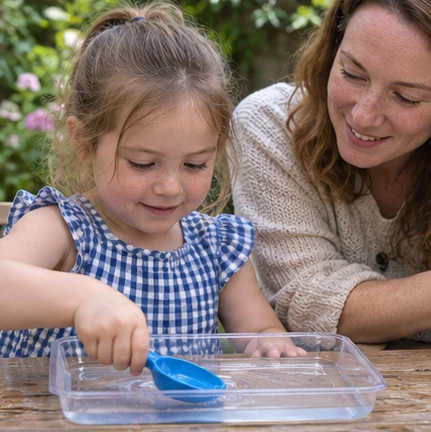
Put a little water in a shallow tray and place two lightweight, unbreakable cups beside it. Stay right with your child. They might decide to find out which cup fills first. If they prefer squeezing a sponge, ask where the drip landed. One observation is enough to start a conversation. NAEYC’s account of learning through play describes adults posing practical problems and inviting children to talk as they use water.
Leave some time for your child to set the pace. You can say “That one reached the rim” and wait to see what they do next. A wider container or a different sponge may change the result, but they can explore those another day. A few familiar items also make it easier to recognise which action made the difference.
Stay close from the first pour to the last
Use very little water. Keep a young child within arm’s reach and supervise without interruptions. The American Academy of Pediatrics emphasises close, constant adult supervision around water. Even shallow water needs attention. Another child, swimming lessons and a shallow tray cannot take the place of the supervising adult.
If you need to leave, stop and empty the tray. Avoid relying on a bath or bucket as a play container. Wipe spills before anyone walks through them, then store the emptied items. “One last pour, then we tip out the tray” gives your child an ending they can see. If you want their help, they can pass you a dry cloth while you handle the water.
Frequently asked questions
Why pour the same water ten times?
They could be comparing the movement, the noise or the amount. Watch their next attempt before you decide what question to ask.
Does a water activity need special equipment?
Two suitable cups and a low shallow tray can work. Choose pieces too large to swallow and keep glass and cleaning products away.
What if they only want to splash?
Move the game to a place where you can wipe spills safely. Set a clear line about where the water stays and stop to clean the floor when needed.
Can I step away for a moment?
Stop the activity and empty the tray first. Make sure the child cannot reach other containers holding water.
Do swimming lessons change the rule?
Children who can swim still need adult supervision around water.
Sources
Türkçe · Deutsch · English · Français · 简体中文 · 日本語 · 한국어 · العربية
Bir yanıt yazın