
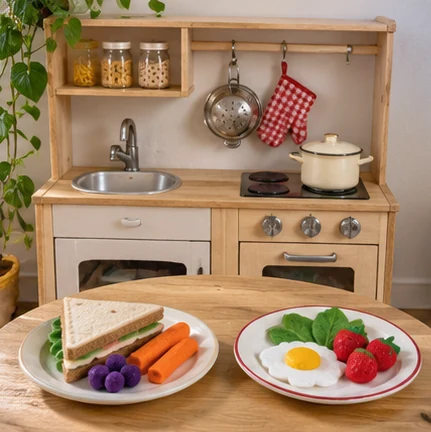
There is a second pretend cup at your child’s tea party. Sometimes the guest is invisible and sometimes it is a teddy with a name and a story. Imaginary companions can be part of preschool play. Your child may use one to invent dialogue, practise taking turns or act out what might happen on their first day somewhere new.
Show interest without giving the game new rules
Ask what happens next in the story or let your child set out an extra toy plate. You can keep ordinary family expectations in place. If the pretend friend knocked the blocks down, move straight to what needs doing now. “The blocks go in the box. Shall I help with the first ones?” Leave the details of the story to your child.
Notice whether the experience is welcome
A child can usually switch to another activity when they want to. If they seem frightened by the companion, say it keeps talking when they want quiet or cannot put the experience aside, speak with their clinician. Also mention marked changes in language, attention, play or relationships. If there is an immediate risk of harm to the child or someone else, get emergency help.
Frequently asked questions
Does an imaginary friend mean my child is lonely?
No. Consider their friendships, family interactions and daily life as well.
Should I play along?
You can take part in their story for a little while if they welcome it.
What if the friend gets blamed for a mess?
Focus on clearing up and the next step rather than questioning the imaginary character.
Is there an age when it should stop?
There is no single deadline. Pay attention to whether the play is enjoyable and flexible.
When should I speak to a clinician?
Mention distress, loss of control, changes in day-to-day behaviour or concerns about development.
Sources
Türkçe · Deutsch · English · Français · 简体中文 · 日本語 · 한국어 · العربية
Bir yanıt yazın