
A fleet of toy lorries has appeared along the skirting board. One is carrying an imaginary delivery and another must wait by the door. Tomorrow the same toys might be ordered by colour. The visible line tells you where the toys went. Watching the play around it tells you more about what your child is doing and enjoying.
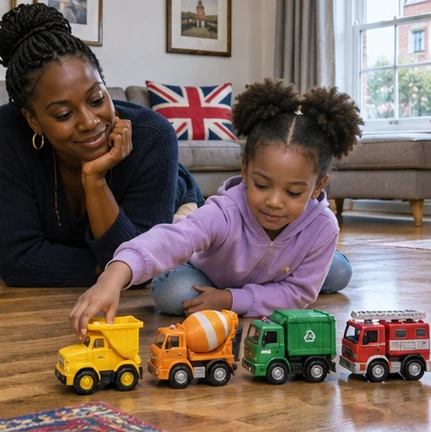
Join at the edge of the game
Try a comment such as “That truck has a long trailer,” then leave a pause. Your child might hand you a vehicle, move on without speaking, or say the road is full. Follow the cue. If your child wants company, offer to make a second road on your side of the rug. There is no need to change their layout to see how they react.
If dinner is about to start, offer a practical ending. “This truck can make its last delivery, then we’ll wash our hands.” A photo before tidying can help if your child wants to rebuild the scene later. For a long project, agree on a spot where part of it can stay. Notice what makes it possible to move on without turning the play into a daily negotiation.
When to bring it up with a health professional
Look at a range of situations. Can your child show you what interests them, with words, looks, gestures or by bringing something to you? What happens when another child offers a different game? Are transitions regularly so distressing that getting dressed, eating or leaving for school becomes difficult? Write down examples and any supports that help. Ask nursery staff what they see, including situations in which your child is comfortable.
The CDC includes lining things up and getting upset when the arrangement changes among behaviours that can occur in autism. Clinicians consider a broader developmental pattern across areas such as communication, social interaction and repetitive behaviours. One play preference cannot establish a diagnosis. If your child has lost words, gestures or skills they previously used, contact their health professional promptly.
Frequently asked questions
Should I stop my child from lining up cars every day?
You can leave room for a favourite game while inviting other activities. If it repeatedly crowds out meals or transitions despite support, share that example with a clinician.
Is it a problem if my child wants to play alone?
The meaning depends on the bigger picture. Observe how they communicate and join in at other times, and whether they can get help when needed.
What if my child cries when a sibling moves a toy?
Acknowledge that the arrangement mattered. Help both children make a plan for sharing the space. How often the distress occurs and what helps them recover are useful details.
Can I use a video to explain what I see?
A brief clip can illustrate a concern if you can record and share it privately with your child’s care team. A written example also works. Seek care without waiting to capture the behaviour.
Does speaking fluently settle the question?
A clinician looks beyond vocabulary to how communication works in daily life, alongside play, social interaction and other patterns. Bring both strengths and concerns to the conversation.
Sources
Türkçe · Deutsch · English · Français · 简体中文 · 日本語 · 한국어 · العربية
Bir yanıt yazın