
A head turn follows a toy, then another turn follows your voice. At bedtime you may notice a less varied movement repeated a few times. These are different observations even if you describe both as head shaking. Timing, range and your baby’s response make the description clearer.
Notice whether the movement changes with the activity
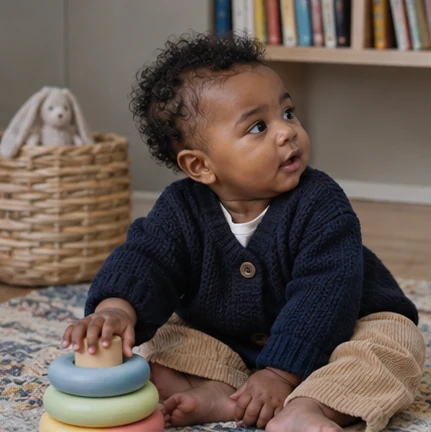
While your baby is awake and playing, watch whether they turn towards a sound, a face and an interesting object. Turn-taking and visual attention are useful clues. Your baby may stop to look at your face or switch to reaching. If the movement is mostly near sleep, record its duration and whether it interferes with settling or sleep. Sleep-related rhythmic movements can occur and are best described in context.
If a baby consistently looks one way, seems unable to turn the other way or regularly tilts their head, ask a clinician to assess them. Sheffield Children’s NHS explains how these signs may appear in torticollis, in which neck mobility is affected. A clinician can assess whether this or another explanation fits.
Observe without fixing the position
Keep young babies on a firm surface for supervised awake play. Move yourself to a different side and watch what your baby chooses to do. Avoid turning the head by hand or trying neck stretches without individual guidance. When putting your baby down to sleep, follow safe sleep guidance and avoid adding pillows, wedges or positioners.
- Write down where it happens. Floor play, feeding, falling asleep and waking provide different contexts.
- Compare the sides. Look for a direction your baby seldom chooses or persistent head tilt.
- Watch the response. Does your baby look at you and return to an activity? Record any unusually repetitive jerks or changes in alertness.
Get prompt advice for pain, persistent one-sided movement, repeated head impacts or disrupted sleep. Brief jerks or stiffening in clusters or an unexpected change in responsiveness warrant urgent assessment. Breathing difficulty or failure to wake normally needs emergency help.
Frequently asked questions
Could it be related to settling for sleep?
Rhythmic movement can happen around sleep. Describe when it appears and whether sleep, feeding or normal daytime play is affected.
If my baby only looks right, should I turn their head left?
Let them move voluntarily. Tell a clinician about a clear preference or restricted turning.
Does head shaking alone indicate a developmental condition?
It cannot establish a diagnosis. Bring broader observations about play, movement and communication to your clinician.
Can I put a cushion by my baby’s head?
Keep pillows and positioners out of the sleep area. Talk to a clinician if head movements worry you.
How can I show what I mean?
A short video that includes the face, upper body and what happens afterwards can help if you can take it safely without delaying care.
Sources
Türkçe · Deutsch · English · Français · 简体中文 · 日本語 · 한국어 · العربية
Bir yanıt yazın