
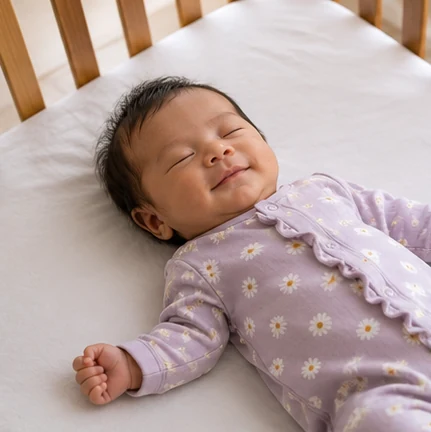
You check the cot, see a tiny smile and wonder what your newborn could be dreaming about. That fleeting expression is one of several movements researchers have seen during active sleep. The smile gives you a glimpse of the baby's face in motion. Its meaning is less clear than a smile directed at you during an awake exchange.
What researchers watched
In observational work on newborns, researchers recorded spontaneous smiles during active sleep. The American Academy of Pediatrics describes this stage as a time when infants may move their eyes beneath closed lids, twitch briefly or shift their expression. These signs can occur alongside one another. A single smile cannot tell you the precise sleep stage or what experience, if any, the baby is having.
Take note of the whole scene. A brief curve at the corners of the mouth, followed by a relaxed expression and ordinary breathing, is different from a new spell in which the baby changes colour or becomes difficult to wake. You can use those observations if you call a clinician.
Save the conversation for an awake moment
When your baby is awake and comfortable, sit where they can see your face. Speak gently, then pause. On another day, try smiling back after they look towards you. The CDC lists smiling in response to somebody's face or voice as an example around two months. Think of that as a way to notice emerging communication. There is no need to test it every time you play.
- Keep the sleep setting simple. Put your infant down on their back on a firm, flat cot mattress with a fitted sheet. Keep pillows, loose covers and toys out.
- Think about what else you saw. Was the movement brief, followed by ordinary sleep, or was it repeated with a change in responsiveness?
- Get help for warning signs. Difficulty breathing, blue lips, failure to wake normally or unusual repeated stiffening warrants urgent help. Do not delay to get a recording.
Frequently asked questions
Does a sleep smile tell me my baby is having a happy dream?
A facial expression cannot establish what a newborn is dreaming. Researchers can observe expressions and measure sleep activity.
Is it a milestone I should be waiting for?
Development checklists focus on awake interaction, such as smiling when somebody smiles or talks. A sleep smile is not required.
Should I wake my baby if they smile or make a small sound?
A brief expression by itself, while breathing comfortably, does not require waking. Seek urgent help if breathing or normal responsiveness changes.
Is it the same as laughing when I play peekaboo?
An awake laugh during a game follows an interaction. Watch who or what the baby is responding to and what happens next.
What should I describe if the movement worries me?
Describe timing, length, whether it came in a series, and any changes in breathing, skin colour or behaviour.
Sources
Türkçe · Deutsch · English · Français · 简体中文 · 日本語 · 한국어 · العربية
Bir yanıt yazın