
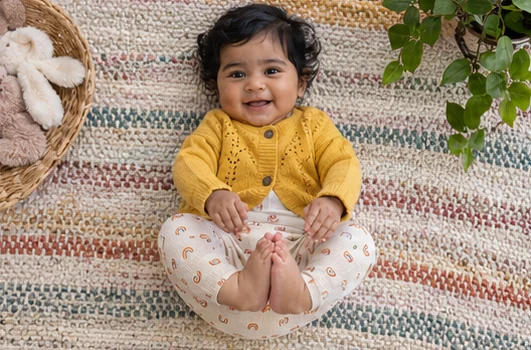
The first time you hear a little swish from the play mat, you might assume a sock has come loose. Then you look down and see your baby brushing one bare foot over the other. Many babies play with their feet as they find new ways to move. The details worth watching are when the rubbing happens, how your baby looks at the time and whether both legs move freely during ordinary play.
Start with what happens either side of the movement
Take an example from a quiet morning. Your baby kicks twice, lets the soles meet, pauses when you speak and goes back to swiping at a toy. The foot contact sits inside a varied sequence of movement. On another day a new movement appears again and again in very similar bursts. Those observations give a clinician more information than the label “rubbing”.
Local NHS guidance includes playing with the feet while on the back in its overview of development around six months. That guide describes a broad stage. It gives families something to look for during relaxed play and a starting point for questions about development.
Run a one-minute clothing check
A sock may feel different once the baby flexes the toes. Turn it inside out and look for a loose thread, a thick seam or a fold at the heel. Look between the toes and around the ankle as well. Choose a comfortably warm room and let your awake baby move on a firm floor mat with you nearby. Change a single thing, such as taking off the socks, and notice whether the pattern changes.
- Watch the face. A baby who remains engaged with you during play provides useful context. Grimacing or crying when the same area is touched deserves attention.
- Look at both feet. Compare skin colour, any swelling and how freely each foot moves. Check for a hair or thread wrapped round a toe if you see an unusual groove or swelling.
- Write down what changed. A note such as “rubs after the bath, feet otherwise look usual” is easier to discuss than an estimate of how often it happens.
Persistent irritated, dry or scaly skin can itch. Ask your child’s clinician about ongoing irritation before trying medicated products.
When to get help
Get medical advice promptly if your baby seems in pain, a foot swells or changes colour, or one leg consistently moves less. Brief, repeated stiffening or jerking in clusters, particularly around waking, needs urgent assessment. If there is trouble breathing or your baby cannot be roused normally, call your local emergency number. A short video can be useful if another adult can capture it safely while you arrange help.
Frequently asked questions
My baby never rubs their feet. Does it matter?
Some babies prefer to grab their toes or stretch their legs. The wider pattern of reaching, kicking and using both sides tells you more than any particular foot game.
Could it mean my baby is about to walk?
Feet touching gives no timetable for walking. Bring concerns about motor development to a routine visit and describe a range of movements.
Why does it happen only after a bath?
Check whether you first noticed it when the feet were bare or when the towel brushed them. Look at the skin once it is dry and note whether there is persistent irritation.
Is a video more useful than a description?
Both help. If it is safe to record, include the face and both legs and note what happened just before the movement.
Do I need to buy a toy to encourage foot play?
A clean, firm floor mat and time to move while awake are enough for observation. Keep small objects and cords away from the play area.
Sources
Türkçe · Deutsch · English · Français · 简体中文 · 日本語 · 한국어 · العربية
Bir yanıt yazın