
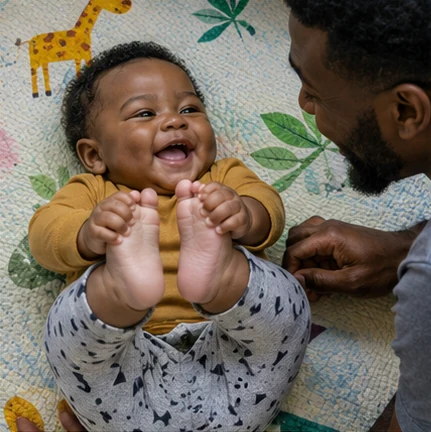
You hand your baby a toy. They put it down, take hold of their toes and look as pleased as if they had found a new toy of their own. Hands, eyes and mouths all play a part in early exploration. A bare foot that has suddenly come within easy reach can get the same close inspection as a safe toy.
What happens during that little sequence?
Watch the movement from the beginning. Your baby looks towards their legs, lifts one or both knees, reaches and then brings their foot nearer. They may miss on the first try or switch from one foot to the other. The movement can tell you more when you watch it alongside regular kicking, reaching and rolling.
A Derbyshire NHS guide notes that babies in the second half of the first year may explore with their mouths and include their own toes. A Norfolk NHS milestone guide gives feet-in-mouth play as one example around six to nine months. These guides describe what some babies do during a broad period. There is no deadline to master the move.
Do a floor-level safety scan
A play area that looks empty from adult height can contain a bead, a loose button or a piece from an older sibling’s toy. Look at the edge of the mat and underneath nearby furniture, especially once your baby can turn or shuffle.
- Look at what the foot brings along. Check for loose threads or detachable decorations on socks and sleepsuits. Remove anything that can come free within reach.
- Keep cleaning simple. Wash feet as part of normal care and clean them after contact with visible dirt or residue. Avoid leaving cleaning spray within reach.
- Give time to move while awake. A firm floor surface and a caregiver nearby are enough. There is no need to pull a baby’s knees up to see whether the toes can reach the mouth.
When an observation becomes a question for a clinician
Mention persistent differences between the left and right sides, pain when the leg moves or a loss of movements your baby used to do. The clinician will want to hear what happens during several kinds of play. If you think your baby has swallowed a loose item, seek advice based on what it was. Trouble breathing or an inability to cry effectively can be a choking emergency. Get emergency help straight away.
Frequently asked questions
Are babies swallowing germs when they do this?
Babies explore with their mouths. Focus on ordinary washing and keeping harmful residues and detachable pieces away from feet and play surfaces.
Is it a sign that my baby is ready for solids?
Foot play does not establish that. Follow the feeding guidance from your child’s health team and ask which signs to look for.
Why does it happen most on the changing mat?
The legs may be easier to see and reach when the feet are bare. For play and movement, use a mat on the floor and stay close.
Should I stop my baby if they prefer one foot?
Notice which leg they kick with and whether they can use both sides in other activities. If one side consistently moves less, ask for medical advice.
Is it safe if the baby is wearing socks?
A sock can slip off. Check that it fits well and has no decoration that might come away. Keep an eye on your baby during play.
Sources
Türkçe · Deutsch · English · Français · 简体中文 · 日本語 · 한국어 · العربية
Bir yanıt yazın