
Your child wants to hear the next chapter, but puts the book down when it is their turn. That difference gives you somewhere to start. They may love the story and need more support with the print. They may also be tired, worried about getting words wrong, or ready to choose a different book.
Find out what happens at the point of refusal
Try reading one page aloud together and see whether your child gets drawn into the story. On another occasion, put out two short books they can read with some independence. Ask which one they want to open. Notice whether they can work out new words, keep track of a sentence and tell you what happened. This is a chance to observe one familiar situation without turning it into a test.
Let your child browse comics, factual books, jokes or instructions for a favourite activity. A guide to animals or a short graphic story may invite more curiosity than a longer book on a topic someone else chose.
Make your next shared reading session small
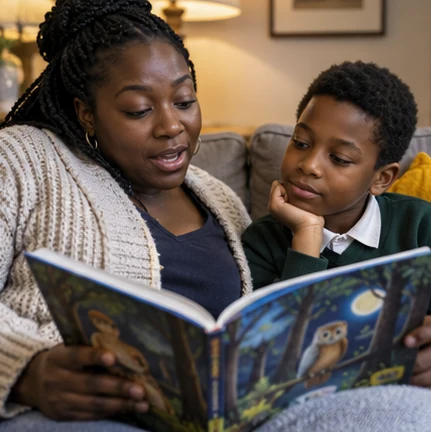
Pick a calm time. Read most of a page and invite your child to take a line, a speech bubble or a familiar word. If they get stuck, pause. Give a small prompt based on the method used at school and help them back into the sentence. Talk about one thing you both noticed before putting the book away.
Try varying the setting too. A book near the sofa or a visit to the library may feel different from extra work at the homework table. Keep beginning readers’ decoding practice accessible. You can read a more challenging story aloud separately to enjoy its ideas and language.
Ask the teacher about persistent difficulties
Share examples if your child often struggles to connect letters and sounds, work out words or understand an age-appropriate passage despite teaching. Mention repeated distress as well. Ask the teacher which skill they are working on and what they would like you to practise at home. Agree on when to compare how things are going.
Frequently asked questions
Do graphic novels count as reading?
Yes. They provide another way into a story. Check that the print and word difficulty suit the kind of practice your child needs.
Is it fine to reread the same book?
Yes. Let the child revisit a favourite and offer a related book when they are ready for something new.
Can audiobooks help?
They can give children access to stories and unfamiliar language. Practise reading printed words too when decoding is the goal.
Should my child read for a fixed time?
Start with a short session you can both manage. Adjust for the text, the time of day and school guidance.
Do I need to correct every error?
Give some time to work it out. Provide brief help for a stuck word and let the story continue.
Sources
Türkçe · Deutsch · English · Français · 简体中文 · 日本語 · 한국어 · العربية
Bir yanıt yazın