
On a school night in Istanbul, dinner often needs to fit between the journey home, homework and getting ready for tomorrow. Soup can make that stretch easier: vegetables cook in one pot, the texture can suit different preferences, and each person can choose a simple topping. The aim is a satisfying family meal that works with ordinary ingredients, without turning dinner into a lesson about nutrients.
These three vegetable soup ideas are designed for families with children aged three and above. They use metric quantities and familiar supermarket or neighbourhood market ingredients. Each makes approximately four modest bowls; appetite and accompaniments will determine whether that serves your household. The timings are estimates, and the recipes are starting points to adjust in your own kitchen rather than claims of kitchen testing.
One nutritional detail helps explain the ingredient choices: broccoli and peppers provide vitamin C, although prolonged cooking reduces it. That makes gentle, purposeful cooking a sensible approach rather than leaving vegetables simmering indefinitely. NIH Office of Dietary Supplements: vitamin C
A simple plan for an easier soup evening
Choose the texture before choosing the toppings
Ask a specific question before cooking: would everyone prefer the soup smooth, lightly textured or with small soft pieces? This is often more useful than asking whether they want “vegetable soup”. For a mixed household, cook everything until tender, remove a small portion with soft pieces, then blend the remainder. A child can also have the topping on a separate plate.
Keep flavour additions at the table. Lemon, pepper, chopped herbs or a little cumin can make an adult bowl different without creating a second dinner. Do not assume every child dislikes herbs or spices, but introduce unfamiliar additions in small amounts and let people choose. A familiar bread alongside the bowl can make a new soup feel less unfamiliar.
The five-minute preparation basket
Before turning on the hob, collect the vegetables, a chopping board, a saucepan and your measuring jug. Put a bowl beside the board for peelings. Wash and chop all the vegetables first, then place the items that cook fastest in a separate bowl. This small routine helps you avoid discovering an unwashed broccoli halfway through cooking.
Shop by ingredient rather than by imported recipe name
If you are new to Istanbul, the Turkish labels can make shopping easier: carrot is havuç, courgette is kabak, broccoli is brokoli, potato is patates, and red lentils are kırmızı mercimek. Save those words beside your shopping list. Choose ingredients that look good and are practical for your budget; an elaborate recipe is unnecessary for a useful weekday supper.
You will see both pumpkin and different winter squashes under names including bal kabağı. Their texture and sweetness vary, so add water gradually and taste the finished soup. Avoid buying several unfamiliar ingredients for the same first attempt. One new vegetable in an otherwise familiar combination is a manageable place to begin.
Carrot, red lentil and lemon soup
This is the most substantial of the three options and a useful choice when you want a smooth soup with a short ingredient list. Carrot provides beta-carotene, which the body can convert to vitamin A. That does not allow us to calculate the vitamin content of an unanalysed bowl. NHS: vitamin A
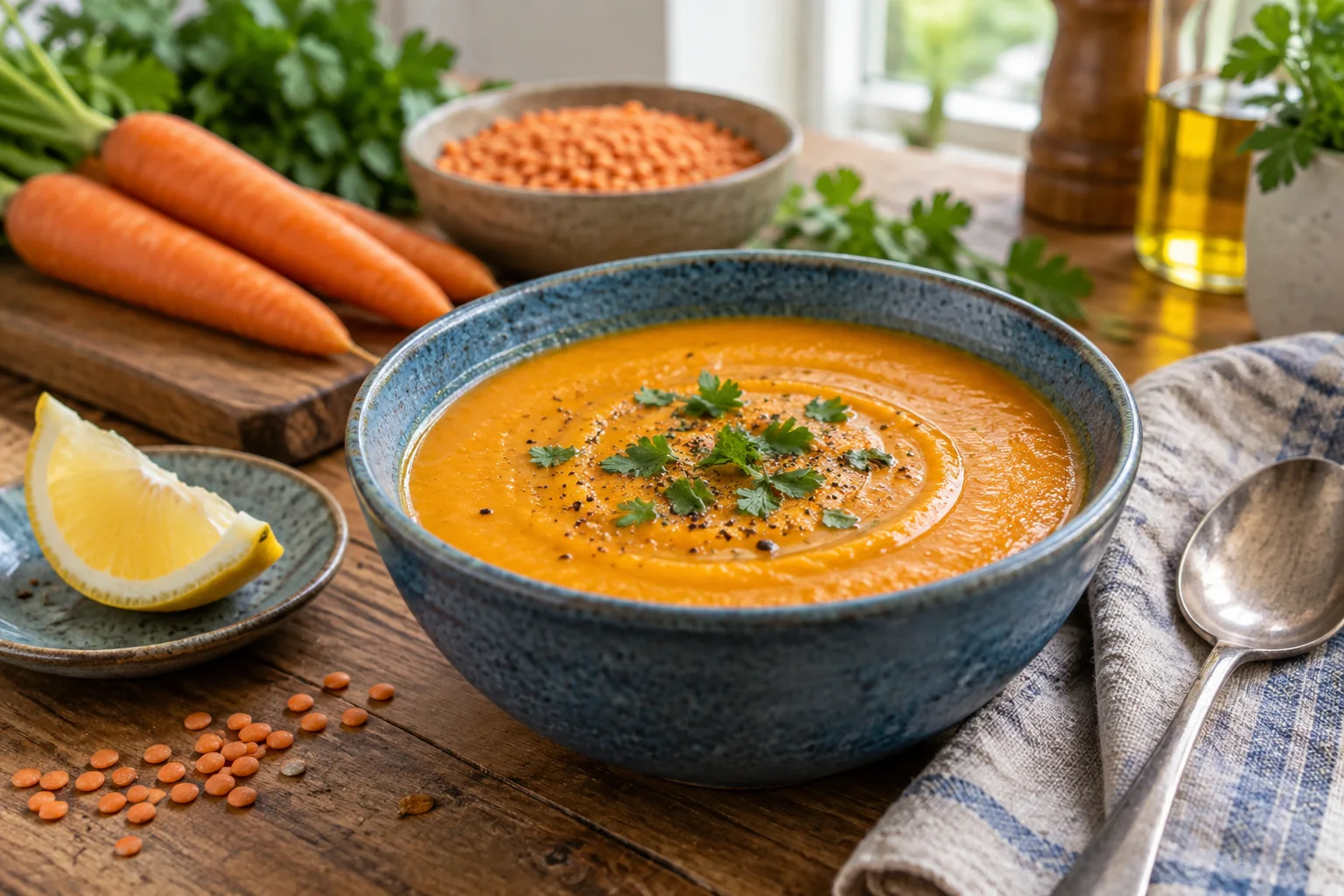
Ingredients for approximately four bowls
- 160 g red lentils, rinsed
- 300 g carrots, peeled or well scrubbed and finely sliced
- 1 small onion, approximately 80 g, finely chopped
- 1 tablespoon olive oil
- 850 ml water, plus a little extra if needed
- 1–2 teaspoons lemon juice, added to taste
- Optional: a small pinch of ground cumin for individual bowls
How to make it
- Warm the olive oil in a saucepan over a medium-low heat. Add the onion and cook for about five minutes, stirring regularly. The aim is softness rather than deep browning.
- Add the carrots, rinsed lentils and 850 ml water. Stir, bring to a gentle boil, then reduce the heat. Simmer with the lid partly on for about 20–25 minutes, stirring occasionally, until the lentils break down and the carrots are very tender.
- Take the pan off the heat. Blend carefully with a stick blender, keeping its head submerged. Add a little extra water if the mixture is thicker than your family prefers.
- Stir in one teaspoon of lemon juice, taste, then decide whether the second teaspoon is useful. Offer cumin separately and allow children’s portions to cool to a comfortable eating temperature.
A realistic school-night shortcut
Slice the carrots thinly rather than leaving large chunks. You can measure the lentils into a dry container earlier in the day and rinse them just before cooking. While the soup simmers, set out bread and prepare any side dish; there is no need to stand beside the hob throughout, although regular stirring prevents lentils catching on the bottom.
If a child dislikes the lemon
Keep the main pot plain and squeeze lemon into the adult portions. The soup should still have a clear carrot-and-lentil flavour. Replacing an unwanted garnish is easier than starting the entire recipe again, and different bowls at the same table can still count as one shared meal.
Broccoli, potato and pea soup with optional yoghurt
This green soup has a mild potato base. Frozen peas are convenient because you can use the amount required without opening several packages of vegetables. Keeping broccoli and peas for the later cooking stage also makes the recipe easy to organise: start the potato first, then prepare the remaining ingredients while it softens.

Ingredients for approximately four bowls
- 300 g broccoli, cut into small florets, with the peeled stem finely chopped
- 200 g potato, peeled and cut into small cubes
- 120 g frozen peas
- 1 small onion, approximately 80 g, chopped
- 1 tablespoon olive oil
- 750 ml water, with more available for adjusting consistency
- Optional: 2–4 tablespoons plain yoghurt, served separately
How to make it
- Warm the oil and gently soften the onion for around five minutes. Add the potato, finely chopped broccoli stem and water.
- Bring to a gentle boil, reduce the heat and simmer for approximately 10–12 minutes. Check a potato cube with a fork: it should be nearly tender before adding the florets.
- Add the broccoli florets and peas. Simmer for another five to seven minutes, or until all the vegetables are tender enough for the texture you intend to serve.
- Remove from the heat and blend. Add water in small amounts until the soup pours easily from a ladle. If you retain some pieces, check that they are soft and suitable for your child’s eating skills.
- Serve the yoghurt in a separate small dish, if using, and cool each child’s portion before serving.
Make the first bowl approachable
Serve a small initial portion, particularly when the green colour is unfamiliar. Let the child ask for more. You can describe the ingredients plainly rather than presenting the soup as a trick or claiming it contains something different. Some children enjoy helping to swirl a teaspoon of yoghurt through their bowl; others prefer an unchanged surface.
An easy adjustment for the whole family
The optional yoghurt can simply be omitted. Check every ingredient against any known food allergy and use separate utensils when your family’s allergy plan requires them. Do not assume a soup is suitable for everyone because its base is vegetable. Bread, toppings and purchased accompaniments also need checking.
Courgette, white bean and red pepper soup
Cooked white beans make this option convenient when time is short. The beans do not need a second long cooking period, and the courgette softens quickly. Pulses provide protein, while variety matters across a child’s overall diet. Use this as one dinner idea within that wider pattern. NHS: food for young children

Ingredients for approximately four bowls
- 300 g courgette, washed and diced
- 1 large red pepper, approximately 160 g, deseeded and finely diced
- 240 g cooked white beans, drained; choose beans without added salt if available
- 1 small onion, approximately 80 g, chopped
- 1 tablespoon olive oil
- 650 ml water
- Optional: a small amount of finely chopped parsley for adult bowls
How to make it
- Gently cook the onion in olive oil for five minutes. Add the pepper and cook for another three minutes, stirring.
- Add the courgette and water. Bring to a gentle simmer and cook for approximately 10 minutes, until the vegetables have softened.
- Add the cooked beans and continue simmering for about five minutes, until the soup and beans are hot throughout.
- Blend all of the soup for a smooth result, or blend about half and stir it back into the pot. Adjust with water and offer parsley separately.
Using canned beans sensibly
Look at the label before shopping and follow the package instructions. This recipe requires beans that are already fully cooked. Dried beans cannot be substituted directly at this stage; their preparation belongs in a separate cooking session. A can or jar of cooked beans is the intended shortcut.
When the texture needs changing
If the pepper skin remains noticeable after blending and bothers your child, use a fine sieve for their portion. For a child who likes visible ingredients, reserve a few very soft courgette pieces before blending. Start with the same pot and make a small practical adjustment rather than treating every preference as a separate recipe.
Turn the soup into a manageable family dinner
Choose accompaniments according to appetite, preferences and what your household has already eaten that day. Bread, a simple egg dish or another familiar food can sit beside the soup. There is no requirement to hide extra ingredients in every bowl or to insist that the child finishes a large serving.
You can also separate cooking nights from eating-out plans. If you are considering a family outing in Maltepe, look at the current Filifu menu, on a Turkish-language page, before deciding where to eat. These home recipes do not describe dishes confirmed to be on that menu.
For a weekend plan that combines time together with play, read Filifu’s children’s play areas page, in Turkish. Check the current details against your children’s ages and your plans. A short, realistic outing can be easier to organise than an ambitious itinerary after a busy school week.
Store the extra portions with tomorrow in mind
Refrigerate leftovers within two hours; use within 48 hours or freeze. Reheat once until steaming throughout, then cool the child’s portion. Food Standards Agency: cooking and storing food
Before packing leftovers, decide how your household will use them. Label the container with its name and preparation date, and divide it into useful serving amounts. If you expect to need only one bowl, a single large container creates unnecessary extra handling. Keep optional yoghurt and herbs separate so the plain soup remains easier to portion.
For future evenings, write down your family’s preferred consistency and adjustments. “Extra water after blending” or “lemon at the table” is a more useful kitchen note than an exact recreation of a photograph. After two or three meals, you will have your own version of each recipe.
Frequently asked questions
Which of these soups should I try first?
Start with the recipe closest to something your child already eats. Carrot and lentil soup suits a preference for smooth textures; broccoli and potato suits a mild green soup. If cooked beans are already familiar, try the courgette and white bean version.
Can I call one bowl a complete source of vitamins?
No. These recipes have not been nutritionally analysed, and ingredient amounts, produce and cooking methods vary. A useful meal plan includes different foods over time. Avoid promises that one soup supplies everything a child needs.
Do I need to add stock cubes?
No; all three recipes use water. If you choose a packaged stock, check its ingredients and salt information and consider how it fits your family’s preferences. Stock can change the flavour substantially, so taste before adding any other seasoning.
Can my child help cook?
Offer a task that matches their abilities under adult supervision, such as rinsing vegetables, measuring lentils or choosing between two toppings. Adults should handle sharp knives, hot pans and blending. Helping is optional; eating dinner does not need to depend on completing a kitchen activity.
What if my child refuses the soup?
Keep the portion small and the conversation calm. Offer familiar foods alongside it and try again another day if appropriate. A single refused bowl does not require an immediate replacement recipe or a promise of a reward.
Can I take these soups on an outing?
Only if you can manage suitable food storage and transport for your circumstances. Check the equipment manufacturer’s instructions and the relevant food safety guidance before relying on a container. For an uncomplicated outing, it may be easier to keep the soup for dinner at home.
Are the soups intended for babies?
No. This article is written for households with children aged three and above. Babies and younger toddlers have different feeding needs. Adapt recipes to your own child’s abilities and follow individual professional advice when required.
Do I need special ingredients from an international supermarket?
No. The base ingredients are ordinary vegetables, lentils and cooked beans. Start with what you can identify and purchase comfortably. The short Turkish shopping vocabulary above can help when an English label is unavailable.
Bir yanıt yazın