Planning a School-Friends Birthday on Istanbul’s Asian Side: A Guest Logistics Guide
A birthday invitation can look beautifully simple and still leave parents with several unanswered questions. Which entrance should they use? Are younger siblings included? Does an adult stay throughout? What happens if a family arrives after the group has started playing? For a school-friends birthday on Istanbul’s Asian side, answering those practical questions early can make the day easier for both the host and the guests.
This guide is for families living in Istanbul whose children’s friends may travel from different neighbourhoods after school or at the weekend. It focuses on guest arrangements rather than decorating a party or comparing venue rankings. You can use the same approach for a small class-friends gathering or a larger family celebration. Venue-specific rules, availability and prices should always come from the venue itself.
Start with the people who will actually come
Your child’s list of friends is a useful starting point, but it is not yet a seating plan. Some children may arrive with one parent, others with two adults or a sibling. Before discussing a room or table, make a working list with separate totals for invited children, accompanying adults and possible siblings. Mark uncertain answers as uncertain rather than quietly adding them to the confirmed number.
Ask for a complete reply in one message
A short response request is often clearer than several rounds of questions. Ask whether the invited child can attend, how many accompanying adults will come and whether the family wants to ask about a sibling. Do not promise that siblings can join until you have checked the venue’s conditions and your own arrangements. A family should be able to understand exactly what its invitation includes.
Keep the guest list private and useful
You do not need to circulate everyone’s phone number, home address or travel plan. A rough starting area and a preferred contact method can be enough for your own planning. If a parent wishes to discuss a dietary or access need, offer a private conversation. Avoid putting personal information into a large group message simply because that is the easiest place to find the other guests.
Choose a location through your guests’ journeys
A place that is convenient for the host may involve a different journey for school friends. Rather than measuring only the distance from your home, look at the broad areas people will start from. A family coming from school might need time to collect another child first. Another may use public transport and walk the final section. These are practical differences, not reasons to ask guests for detailed personal schedules.
Check the last part of the journey
A map pin gets a guest near the venue, but it may not explain the entrance. Ask where people should arrive, whether there is a particular gate or doorway, and how someone with a buggy should approach. If parking is mentioned, confirm the current conditions instead of assuming that a space is reserved for every family. Keep the resulting note short enough to read while travelling.
Let guests check their own live route
Share the verified venue address and a current map link. Avoid saying that a journey will take a fixed number of minutes: traffic, transfers and individual starting points differ. If you include public-transport information, check it with the relevant operator close to the event. It is usually more useful to give reliable destination information than to create one detailed route that only suits some of the guests.
Make the invitation a practical handover
Parents should not need to search through a long message thread to find the details. Keep the date, arrival time, expected finish, venue name and address together. Add the host’s contact and the adult-accompaniment arrangement. If the venue has specific entry requirements, describe only the conditions that have been confirmed. A friendly invitation can still be clear about the information families need before agreeing to come.
Separate the invitation from optional extras
A birthday invitation does not have to carry every detail about clothing, gifts, games and food. Put essential attendance information first. You can send a short reminder later if there is something guests genuinely need to bring. Avoid treating gifts, costumes or matching colours as an unspoken condition of participation. If a themed activity is optional, say so in plain language.
A simple invitation structure
Use this order: the child’s name and occasion; date and agreed arrival time; the venue’s exact address and map link; the expected finish; whether an accompanying adult stays; and how to reply with numbers. Finish with an invitation to contact you privately about practical needs. Fill in the details only after checking them. The structure is a writing aid, not a statement about any particular café’s rules.
Agree who is responsible for accompanying each child
It is easy for host and guest parents to make different assumptions. One may expect to stay for the entire party while another thinks it is a drop-off event. Discuss this before the invitation is sent. The existence of a play area or staff assistance does not, by itself, establish a drop-off arrangement. Ask the venue about its actual rules and explain the agreed plan to families.
Plan changes as well as the usual arrangement
If a different adult will collect a child, the relevant parents should agree on that directly with the host. Do not rely on another guest remembering a message from earlier in the week. Equally, an older sibling should not be assigned responsibility simply because they happen to be present. Keep the arrangement specific to the family and make sure the adults involved know what has been agreed.
Keep emergency contact details proportionate
Have a way to reach the relevant parent during the gathering. This does not require distributing a contact sheet to every guest. Store only the information needed for the event and handle it privately. For a child with an individual care plan, the family should discuss the practical arrangements with the appropriate people in advance. A birthday host or café should not improvise specialist care.
Give arrivals a clear first step
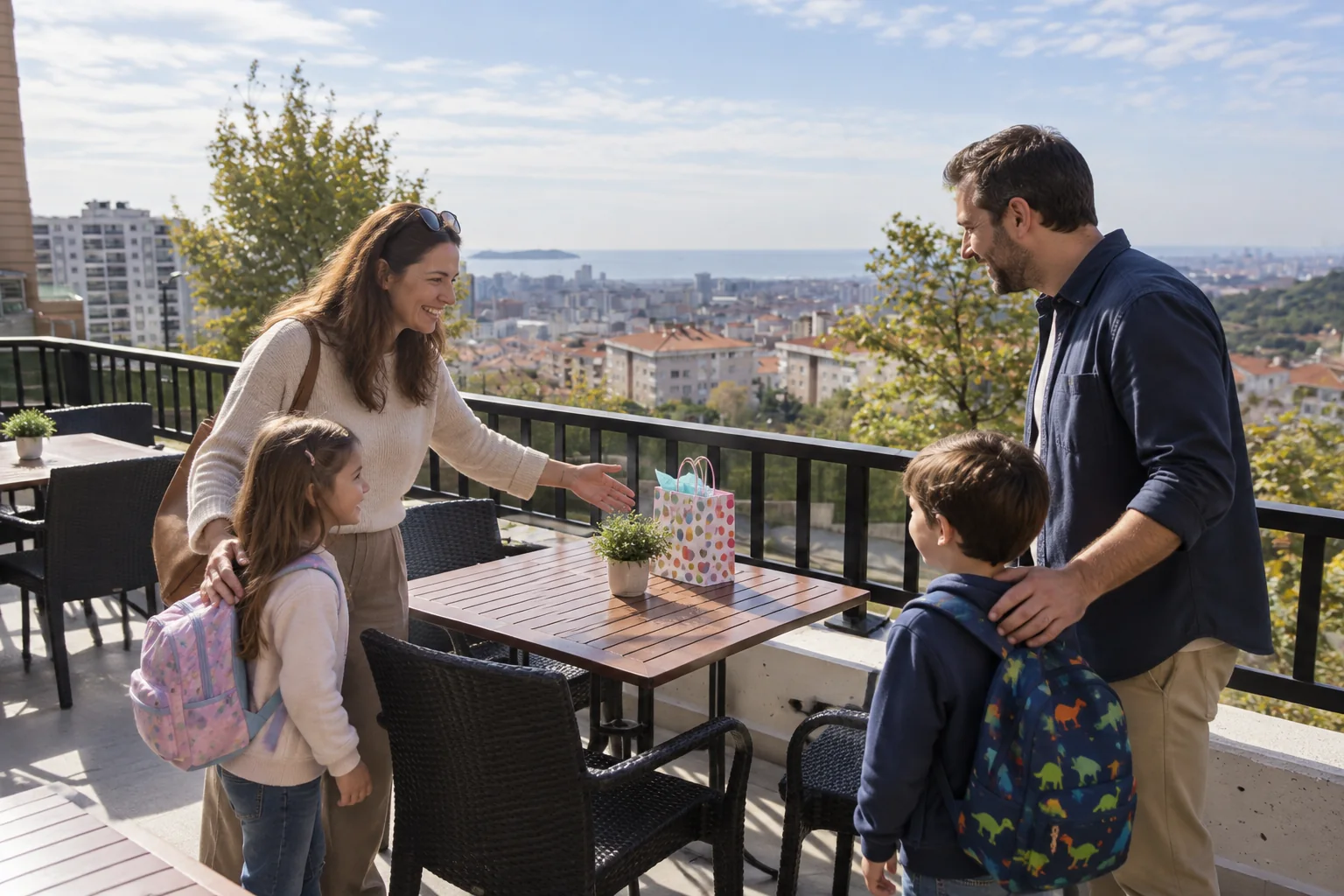
Guests rarely appear at exactly the same moment. Choose a straightforward meeting point and decide who will greet arriving families while someone else stays with the group. This might be a particular table, subject to the venue’s agreement. Avoid relying on a colour of balloon as the only identifying detail: decorations can move, and another celebration may be taking place nearby.
Allow a late arrival to join naturally
A child who arrives after the first activity should not feel that the celebration is already lost. Tell the accompanying adult where the group is and offer a simple way to join. If the child needs a moment to look around, leave that option open. You can keep the food and cake arrangements clear without turning the entire visit into a rigid timetable that cannot accommodate ordinary delays.

Keep belongings and transitions manageable
Bags, coats, presents and water bottles can quickly occupy space around a party table. Ask where the group’s belongings can go and keep walkways clear. The plan does not need elaborate labels or matching storage boxes. A designated area, known to the accompanying adults, may be enough. Children should still be able to find their own things when it is time to leave.
Tell children what comes next
When the group moves from play to food, a brief explanation is more useful than calling everyone repeatedly from across the room. Make sure the adults know where the children are gathering and how they are getting there. Some children may want an accompanying adult beside them. Others may prefer to finish looking at a book before joining the table. Build a little flexibility into the transition.
Have an alternative to joining every game
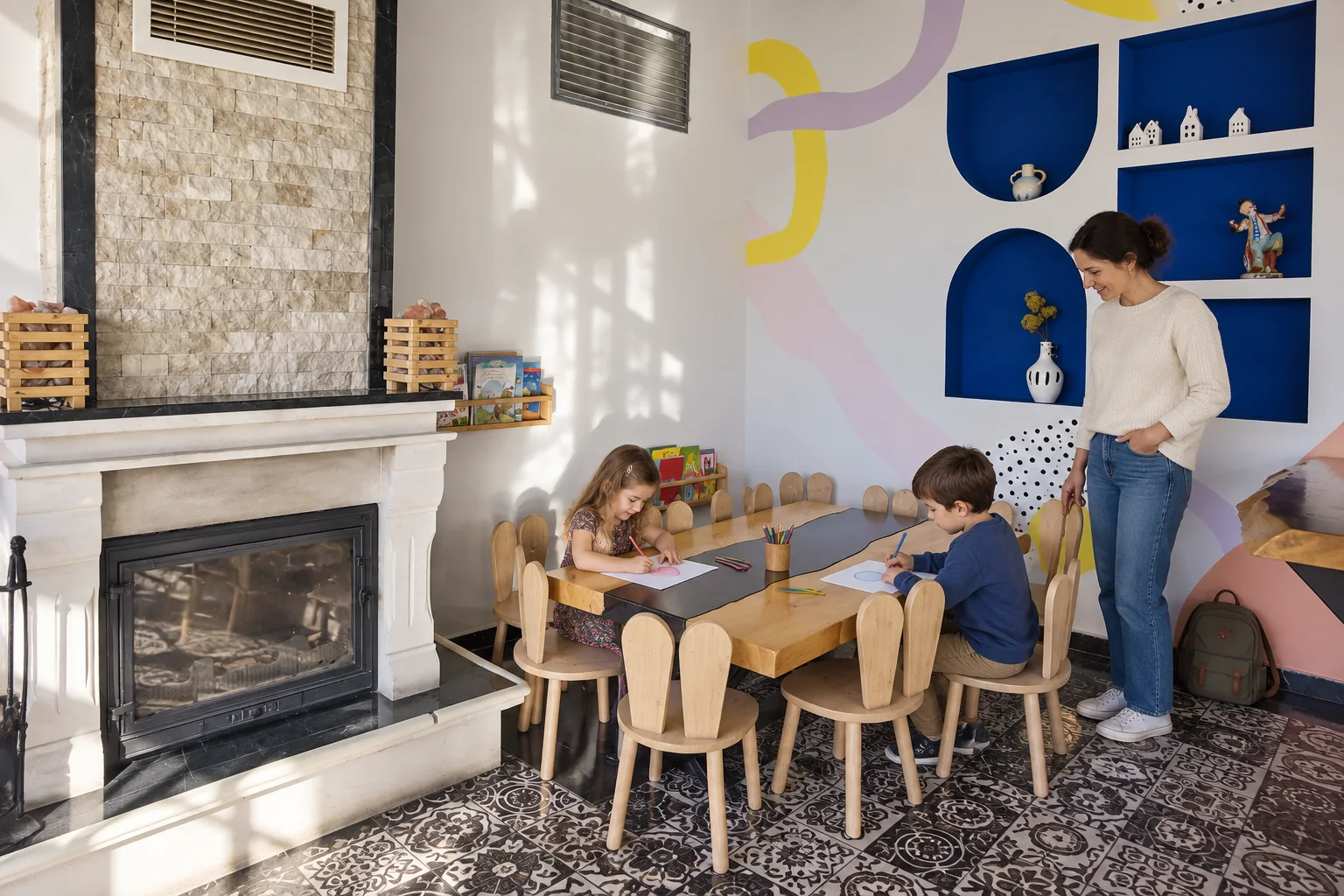
Watching, drawing or sitting with a familiar adult can be valid ways to take part in a birthday visit. Ask before bringing materials and do not assume that the venue supplies a separate quiet space. A child’s decision to pause does not need to become a public discussion. The aim is to make the gathering workable for the actual guests, rather than for an imaginary group with identical preferences.
Using Filifu as a Maltepe venue example
If Maltepe fits your guests’ journeys, you can review Filifu Cafe’s seating-area information, in Turkish to understand the sections described by the venue. Look at the relationship between the seating and play spaces, then ask which arrangement could be available for your own group. A photograph is useful background; it is not confirmation that a particular table is reserved.
The events and celebrations page, in Turkish is a starting point for an enquiry. Use the contact page, in Turkish to check current arrangements and destination information. The questions in this guide do not imply that Filifu provides English-speaking party staff, a private room or any specific package. Those details need direct confirmation where relevant.
Frequently asked questions
Should every family receive a different route?
Usually a verified address, map link and clear entrance note provide a better starting point. Each family can check a live route from its own location. Give additional guidance when a guest asks for it, rather than assuming everyone will travel in the same way.
Is a play-area birthday automatically a drop-off party?
No. Confirm the venue’s rules and the arrangement between the host and accompanying parents. Staff presence does not automatically replace parental accompaniment or establish childcare. Put the agreed expectation in the invitation.
When should I confirm the final numbers?
Ask the venue for its deadline and tell guests a reply date that lets you meet it. Keep adults, invited children and siblings separate. Check how changes are handled before promising that extra guests can simply be added.
What if a child wants to stay with a parent?
Allow the family to find a comfortable way to participate within the venue’s rules. Watching first or taking a short break may suit the child. Participation in every game should not be treated as a requirement for being a birthday guest.
Can I describe an outdoor table as guaranteed?
Only describe the arrangement actually confirmed by the venue. Ask about weather changes, alternative space and when a decision would be made. An outdoor photograph does not establish exclusive use or a guaranteed backup area.
Should I put guests’ dietary information in the group chat?
Offer a private way to discuss relevant needs. The family and venue should confirm ingredients and any required arrangements directly. Do not assume that a general children’s menu meets an individual dietary requirement.