
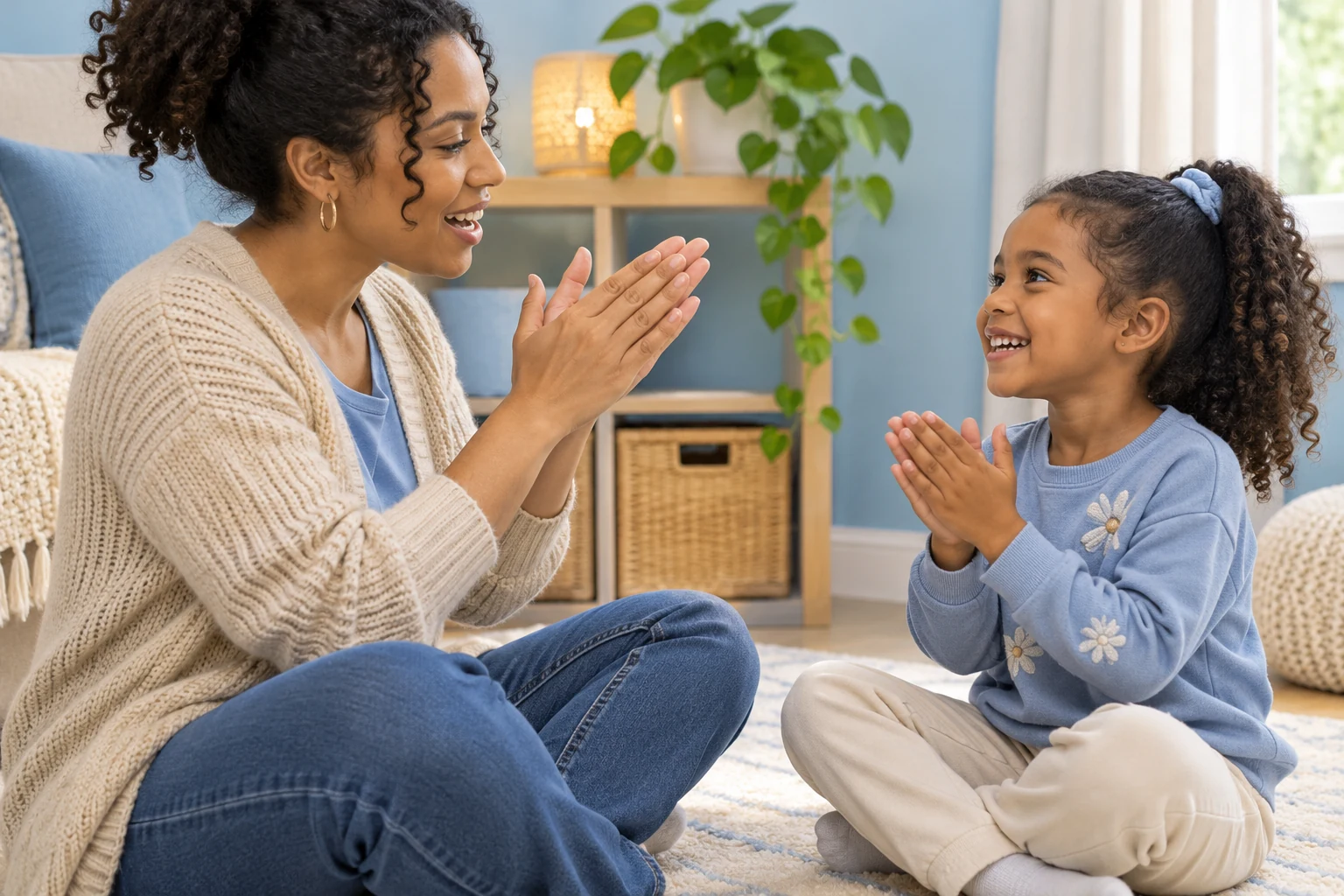
Two soft claps and a pause can begin a musical conversation. In a rhythm echo, the parent listens as well as demonstrates. Matching an impressive beat matters less than noticing when the other player is ready.
Materials and setup
Hands or light knee taps and a comfortable face-to-face seat.
How to play, step by step
- Make two slow claps and wait for a response.
- Invite the child to invent a short pattern for the adult to copy.
- Agree start and finish signals while keeping the sound comfortable.
Adjusting age, pace and participation
Ages and timings here are starting suggestions, not developmental tests. Choose a shorter round when that suits your child; completing a set duration is not the aim.
- A simpler start: For ages 3–4, try one tap and a generous pause rather than synchronised clapping.
- A next step: For ages 5–8, add a silent beat before increasing speed.
- Another way to join: Use soft finger taps or visual gestures if clapping is uncomfortable; sound tolerance is not a goal.
What children get to practise
Listening, attempting a sequence and giving a turn can be explored. Matching a rhythm does not diagnose musical talent.
Expert source and research limits
Kirschner and Tomasello studied synchronisation during joint drumming, not this clapping game's effects.
The source below did not test this exact home version. The educational suggestions are editorial adaptations, not an independent expert review of this article. No increase in IQ, school achievement or psychological health is promised.
An educational approach for parents
A different beat may become a new suggestion rather than a mistake to drill. Slow down together and let the child choose how long the pattern is.
Demonstrate a small part of the game, then let your child try. Resist narrating every move. Offer help at the point where it is wanted, rather than doing the whole task. A useful adult role is to make room for the child's choice, including the choice to lead the next round.
A mistake need not cost points or remove someone from play. Simplifying a rule, trying together or stopping are all options. Looking away does not, by itself, reveal a developmental problem. This activity is neither a score for your child's worth nor a test of how well you parent.
Plan the next round together
At the end, ask which part was enjoyable and which was awkward rather than counting correct answers. Choose one adjustment for next time: fewer materials, a longer pause or a different role. Repeating exactly the same version is also a reasonable choice.
Did you know?
Changing only one feature can make a challenge easier to understand. Increasing speed, materials and rule complexity all at once makes it harder to notice what help is useful.
Frequently asked questions
Do parents need musical training?
No. A short comfortable pattern is enough; technical vocabulary is unnecessary.
Must we clap at exactly the same time?
No. Taking turns to echo a pattern is a simpler starting point.
What if sound is uncomfortable?
Try quiet taps or a silent movement pattern; do not make enduring noise part of the challenge.
Does an accurate beat reveal musical ability?
One game cannot determine talent or future success. Enjoying and choosing the pattern are enough.
How long should we play?
Begin with a short round and extend it if both of you want to continue. There is no requirement to complete a prescribed number of minutes.
What if losing is upsetting?
Acknowledge the feeling first. Try a shared goal or a version without elimination, and leave room for a pause before deciding whether to restart.
Can siblings of different ages join?
Offer different roles within the same activity. The older child need not become the permanent teacher, and everyone can choose when to ask for help.
What if speaking or moving is difficult?
Offer pointing, looking, drawing or a seated version. Ask the child which adjustment works; there is no single correct way to participate.
Sources
This suggestion is not the same as the studied procedure.
Bir yanıt yazın