
Picture the first morning: there's a noisy room, a new adult and a cubby full of unfamiliar belongings. Your child's response to those needs is more informative than whether they know their ABCs. Notice what they already do and where someone might need to lend a hand.
What you can do
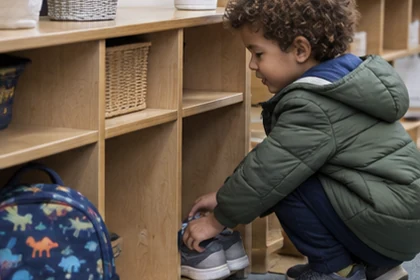
Choose one everyday skill to practise without pressure: opening a water bottle, asking for help with a zip or finding a bag by its picture label. Tell staff which gestures or phrases your child uses when words are hard to find.
Practise the handover without the clock running
Give your child time to open their own lunch container on a quiet weekend. Notice whether they persist, switch grip or ask for help, then share the most useful cue with staff.
Frequently asked questions
Does a shy child need to wait another year?
Shyness alone cannot answer that question. Ask the setting what a supported start would look like, and discuss persistent concerns with someone who knows your child's development.
What if my child needs extra support?
Explain the specific task that is difficult. Ask who coordinates adjustments and how you will review whether they help.
Related guides
- Preschool drop-off tears: What happens after you leave?
- Toilet accidents at preschool: A calmer plan for home and school
- How to choose a preschool: What to look for beyond the tour
- Filifu Child and Family Library (Turkish)
Sources
Other languages
Türkçe · Deutsch · English · Français · 简体中文 · 日本語 · 한국어 · العربية
Bir yanıt yazın