
A family invitation can sound simple: choose a café, send a time and decide who is coming. For a household living with Prader-Willi syndrome, the food environment and the way adults communicate may need much more attention. A considerate host starts by asking what kind of meeting the family actually wants. The invitation should leave room for a different place, a different activity or a decision not to attend.
This guide is for English-speaking relatives and friends in Istanbul, including people who are new to the city. It explains how to prepare a conversation with the family rather than design a diet or supervise somebody else’s treatment. The examples are practical suggestions for organising a meeting. They are not a clinical protocol, and a café is not automatically an appropriate setting.

Understand the condition before offering advice
Prader-Willi syndrome is a genetic condition that can affect several aspects of health and development. Low muscle tone and feeding difficulties may occur in infancy, while intense hunger and food-seeking can become prominent later. Growth, hormones, sleep and learning may also require professional assessment. Needs differ between individuals. MedlinePlus Genetics provides an introduction to the condition and its genetic mechanisms.
Knowing this background does not make a friend responsible for choosing treatment. It does help explain why comments such as “everyone gets hungry” or “one exception cannot matter” may dismiss the family’s actual situation. The useful question is what the family and their clinical team have already agreed, and what the host needs to know to avoid undermining that plan.
Hyperphagia is not a character judgement
Hyperphagia involves more than enjoying a favourite dish. Describing food-related difficulties as greed, poor parenting or a lack of effort is unhelpful and can be humiliating. The International PWS Clinical Trial Consortium consensus paper on behavioural features discusses food-related concerns and the importance of the surrounding environment. It should not be reduced to a slogan about willpower.
Replace persuasion with a practical question
Instead of persuading a parent that a particular menu is healthy, ask whether the proposed setting works with the existing plan. A salad, soup or homemade cake does not become suitable simply because a host considers it nutritious. Ingredients, amounts, timing and the broader situation may matter to the individual plan; those decisions belong with the family and their professionals.
Send an invitation that can be changed
An invitation can describe a possibility without making it a commitment: “We would like to see you this month. Would you prefer a short meeting, another activity, or a conversation about a suitable place first?” This gives the family information without making them disclose their whole medical history in order to decline. It also avoids announcing a surprise gathering before the relevant arrangements are understood.
If several households are involved, choose one person to coordinate the invitation. Repeated messages from different relatives can create conflicting expectations about the time, food and activities. The coordinator should pass on the agreed practical information accurately, without adding personal rules or claiming that the family has approved something it has not discussed.
Make the alternative a real option
A different meeting format should not sound like a punishment. The group might agree to a conversation at another location, a smaller gathering or a later date. Ask rather than assume which alternative is workable. The family should not have to choose between attending an unsuitable event and being treated as uninterested in friendship.
Separate the clinical plan from the host’s checklist
The clinical plan may contain information that a venue employee or distant relative does not need. A host’s checklist can be much narrower: who confirms arrangements, which proposed features need checking, how changes will be communicated and whom to contact with a question. Keep the two documents separate so that practical coordination does not become unnecessary distribution of health information.
Use the family’s wording for any instructions they want shared. Do not turn a parent’s explanation into a new medical recommendation. If something is unclear, ask before sending it onwards. A translated message also needs checking: a vague phrase such as “special food” can mean very different things to different readers.
Agree on food-related communication before arrival
If the family asks guests not to offer food or change the agreed arrangements, share that request beforehand through the agreed channel. Avoid discussing it for the first time across a crowded table. The aim is predictable cooperation between adults, not public scrutiny of a child. Nobody should be praised or criticised in front of the group for the amount they eat.
What happens when a detail changes?
Suppose the group learns that food will be placed on the table earlier than expected. The organiser should tell the family and ask whether the meeting still works. Quietly hoping that the change will not matter leaves the family without information. A venue’s inability to meet a request is a reason to reconsider the arrangement, not to promise the family that it has been solved.
Ask a venue specific questions
A general question such as “Are you suitable for children?” cannot establish whether a particular visit will fit a family’s needs. Explain only the practical request the family has authorised you to share. Ask whether it can actually be delivered at the planned time, who will communicate with the group and whether the arrangement depends on conditions that could change.
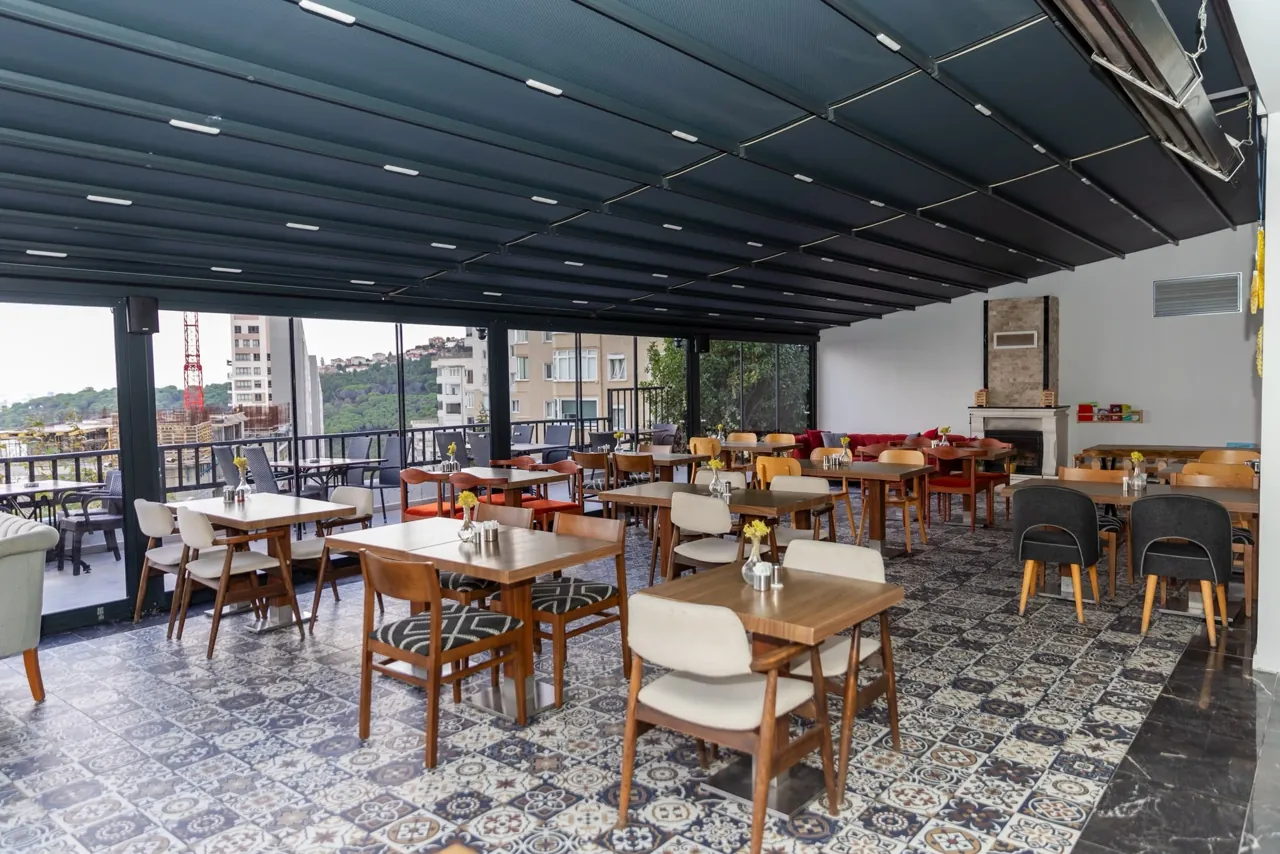
Photographs can help explain the layout, but they do not establish staff training, a specialised menu, clinical supervision or control over every food-related situation. Reviews written by other customers describe their experiences; they cannot determine suitability for someone with a different care plan. A positive reply should still be considered alongside the family’s priorities.
Consider Filifu only as an ordinary social venue
Filifu Cafe can be discussed as one possible place to contact when a family is considering a social meeting in Istanbul. This article does not endorse it as suitable for every person with Prader-Willi syndrome. Food-centred settings may not fit the proposed visit, and no booking should be treated as a therapeutic activity.
The Filifu café area page and the seating area photographs offer general venue information. They are useful starting points for questions about the setting. They do not confirm an individual accommodation or a medical service. Ask about current conditions rather than relying on an older photograph to settle a practical question.
A salt room, play area or supervised activity should not be presented as a treatment for hyperphagia. Nor should an employee be asked to take responsibility for a clinical plan merely because they work with children. Families and venues need a clear understanding of their different roles before deciding whether a meeting is possible.

During the meeting, preserve ordinary conversation
If the family chooses to attend, the gathering does not need to become a seminar about the diagnosis. Ask about interests, recent experiences and the topics the person wants to discuss. Do not photograph food-related behaviour or share a story about the child in a group chat as an example for other parents. Ordinary privacy still applies in a friendly setting.
Check with the family before introducing an unplanned activity, gift or change of place. A host can be flexible without making constant announcements about why the arrangements are different. If a question arises, use the agreed contact person rather than asking several adults to debate the issue in front of the child.
A shorter visit is still a visit
If the family decides to leave, avoid pressure to stay for another course or another photograph. The invitation should not create a social obligation that overrides their decision. A simple acknowledgement leaves the relationship open for another meeting. It is unnecessary to ask for a public explanation or to interpret an early departure as a failure.
Support beyond invitations
A family may appreciate help with a practical task more than another article sent to their phone. Offer something specific that you can genuinely do, such as coordinating the group’s messages or checking a question with a venue after permission. Let the family choose whether the help is useful. Taking over without agreement can create another task for them to manage.
If you are a regular caregiver, the family and relevant professionals should clarify the responsibilities and information you need. This blog cannot train a caregiver or provide an emergency plan. Questions about new symptoms, treatment or nutritional needs belong with the clinical team, not a host, café employee or online discussion group.
Keep treatment news in its proper context
Friends sometimes forward a headline as if it changes every daily arrangement. In the United States, the FDA approved diazoxide choline, marketed as Vykat XR, on 26 March 2025 for hyperphagia in people with Prader-Willi syndrome aged four years and older. The official FDA record identifies that indication. It is not a cure for the syndrome or evidence of automatic availability in Türkiye.
Whether a medicine is appropriate, what monitoring is required and how it can legally be accessed are professional questions. A host should not infer that a new approval means the family no longer needs an agreed food environment. The updated GeneReviews chapter describes broader care considerations. Share a source only if the family wants it, and avoid turning their social time into unsolicited treatment advice.
Frequently asked questions
Should I invite the family to a café at all?
You can ask what kind of meeting they prefer. Do not assume a café is suitable or unsuitable for every individual. The family’s existing plan, the proposed setting and any professional advice relevant to them should guide the decision.
Can I bring a healthy homemade snack?
Ask first and follow the family’s agreed arrangements. A “healthy” label does not establish compatibility with an individual nutritional plan. This article does not recommend any particular food or portion.
Do staff need to see a genetic report?
A practical venue enquiry generally does not require sending an entire medical file. Discuss with the family what information they wish to share and who needs it. Do not circulate reports without their agreement.
Does medication make food-related planning unnecessary?
Do not draw that conclusion from an approval headline. Individual treatment and daily support should be discussed with the relevant professionals. A friend cannot change the plan on the basis of a general news story.
Is a Filifu visit a treatment or a specialised PWS service?
No such service is claimed here. Filifu is mentioned only in the context of an ordinary social meeting whose practical conditions need checking. Play facilities and salt rooms are not presented as treatments for the syndrome.
General information and original examples for social planning. Sources checked on 22 September 2026. This is not an individual care plan or a claim of specialist review.
Bir yanıt yazın