
Wanting to be the person who helps is an understandable part of pretend play. With PAW Patrol, families can consider who should actually respond when a situation is dangerous. This guide separates teamwork from taking risks. Different jobs can inspire a floor-level toy game without making courage a demand to enter a real emergency.
Story and characters
Ryder and a team of pups with different jobs take part in rescue adventures.
Ryder; Chase; Marshall; Skye; Rubble; Rocky; Zuma.
What can a child explore?
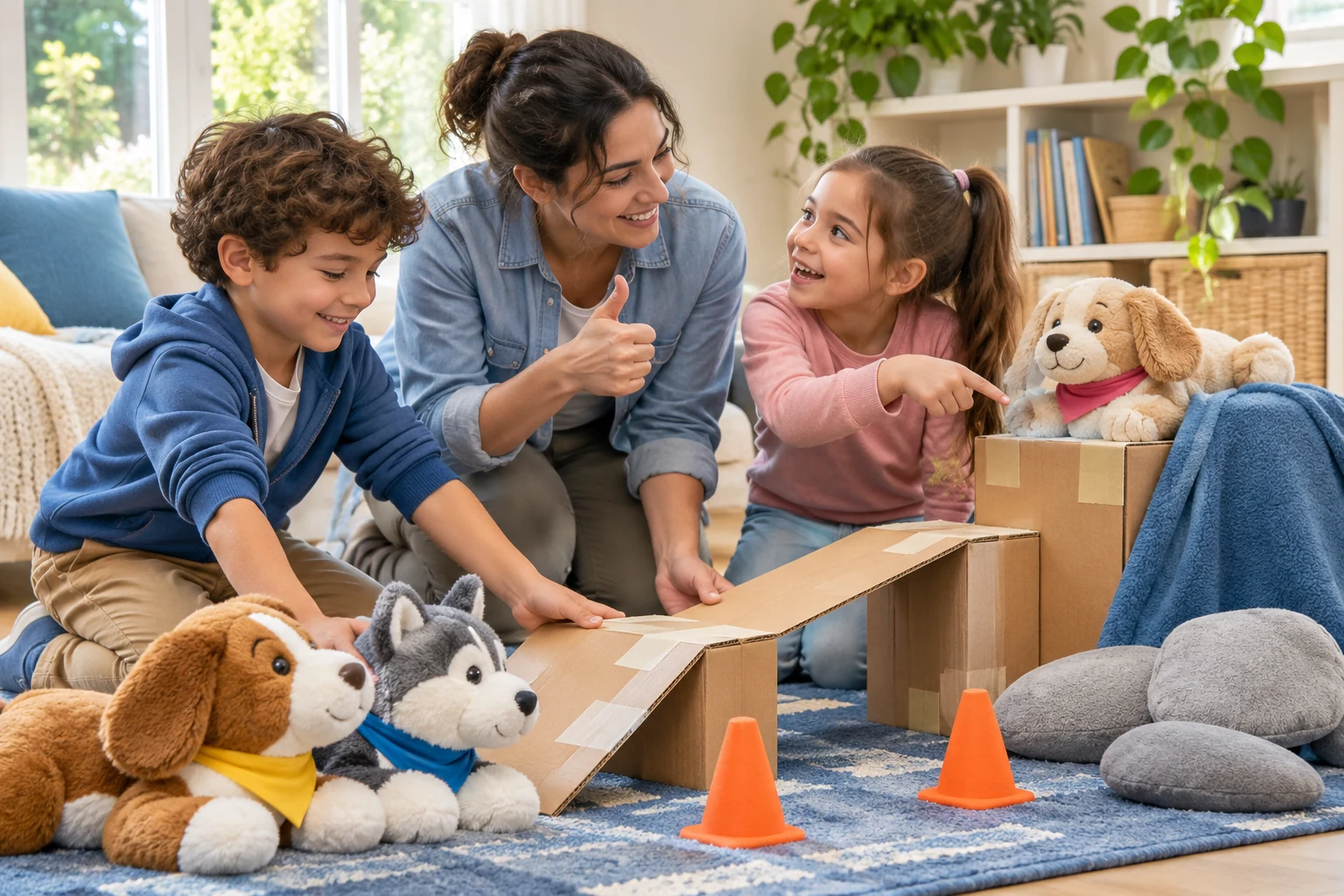
Ask which contributions happen away from the dramatic action: finding something, communicating or waiting. A child can choose a small role without becoming the central hero. Help-seeking is not a failure. Make the difference between pretend and real concrete: moving a stuffed toy along cardboard on the floor is a game; climbing to reach an animal is not a child's task. The activity below is not emergency-response training.
Feelings, behaviour and boundaries
Adapt imitation around vehicles, speed, height and water to a safe setting. Buying every item is not necessary for belonging to the team. Films and spin-offs may have different intensity and duration from a TV episode.
Expertise and the limits of evidence
A programme's educational intention, an adviser’s contribution, an expert opinion and a study with children are different kinds of evidence. The source below is interpreted within its own limits.
AAP’s positive-technology approach supports family conversations about media decisions. AAP: media content and family context.
This is not clinical approval of PAW Patrol or proof of a particular effect on courage, empathy or attention.
An activity away from the screen
- Place a large stuffed toy on a safe floor-level route.
- Assign calling for help, finding materials and clearing space.
- Move the toy together, then identify a trusted adult for real problems.
This is an editorial family-play suggestion, not an official lesson or a therapeutic programme. An adult should choose suitable materials and a safe setting.
A realistic family viewing plan
Choose one episode before pressing play and agree on a stopping point. During viewing, avoid turning every scene into a test. Pause if something is confusing or uncomfortable. Afterwards, ask which detail the child remembers, rather than requiring a correct account of the plot. Moving straight to another kind of play is also a valid choice.
For several days, notice what happens around viewing: how stopping feels, whether bedtime slips and whether there is still space for meals, movement and conversation. One difficult evening is not a diagnosis or a personality description. Persistent distress that disrupts everyday life deserves a conversation with the child's healthcare professional.
Frequently asked questions
What might it teach?
Team roles can provide a conversation topic. A theme in a story is not a measured skill gain in every viewer.
Which pup is best?
Ask what the child enjoys about a favourite; do not use characters to rank children's value or ability.
Are the rescues safe to imitate?
Not all are. Remove risks involving height, vehicles, water and animals; emphasise contacting responsible adults.
Are the toys essential?
No. Safe existing toys can support the same pretend teamwork without a purchase.
What age is it suitable for?
The intended audience is not an individual readiness assessment. Check the current local rating, the particular episode and whether your child follows the story comfortably.
How many episodes a day?
There is no single episode count for every family, and running times differ. Protect space for sleep, movement and human interaction; discuss individual concerns with a healthcare professional.
Is protesting when it ends a sign of addiction?
A single protest is not a diagnosis. Explain the stopping point beforehand and make the next activity concrete. Seek support if the difficulty persistently disrupts everyday life.
Can the programme replace psychological support?
No. Characters can open a conversation, but they do not replace an assessment of a child's distress, communication difficulties or developmental needs.
Sources and method
Sources checked 29 November 2026. This guide uses official descriptions and the research identified below; it does not claim a scored viewing of every season. Dubbing, ratings and access vary by region. The article has not undergone specialist clinical review.
Bir yanıt yazın