
A child who enjoys an ocean rescue may want to help every unfamiliar creature. With Octonauts, the interesting family question is how curiosity differs from intervention. A fictional adventure can prompt a question about a sea animal, while actual wildlife care requires separate knowledge and responsible adults. The aim here is to connect the story with respectful observation rather than a duty to perform rescues.
Story and characters
Barnacles, Kwazii and Peso are familiar members of an ocean-exploration team.
Captain Barnacles; Kwazii; Peso; Dashi; other crew members.
What can a child explore?
Talk about who notices a problem, who looks for information and who asks for help. The loudest character does not have to supply the only useful idea. Afterwards, choose one animal detail to check in a reliable nature source. Drawing a shape or habitat can keep the activity manageable; memorising every species name is unnecessary. A fictional animal's behaviour should not be assumed to describe a real encounter.
Feelings, behaviour and boundaries
Rescue scenes are not water-safety instruction. A child should not enter water or approach an injured animal alone. In real situations, involve a responsible adult and the relevant local service. Preview adventurous scenes if uncertainty is upsetting.
Expertise and the limits of evidence
A programme's educational intention, an adviser’s contribution, an expert opinion and a study with children are different kinds of evidence. The source below is interpreted within its own limits.
Christakis and colleagues studied a preschool media intervention that changed the content children watched. Christakis et al., content intervention, 2013.
The study did not test Octonauts. Its results cannot establish this show's effect on ocean knowledge, empathy or anxiety.
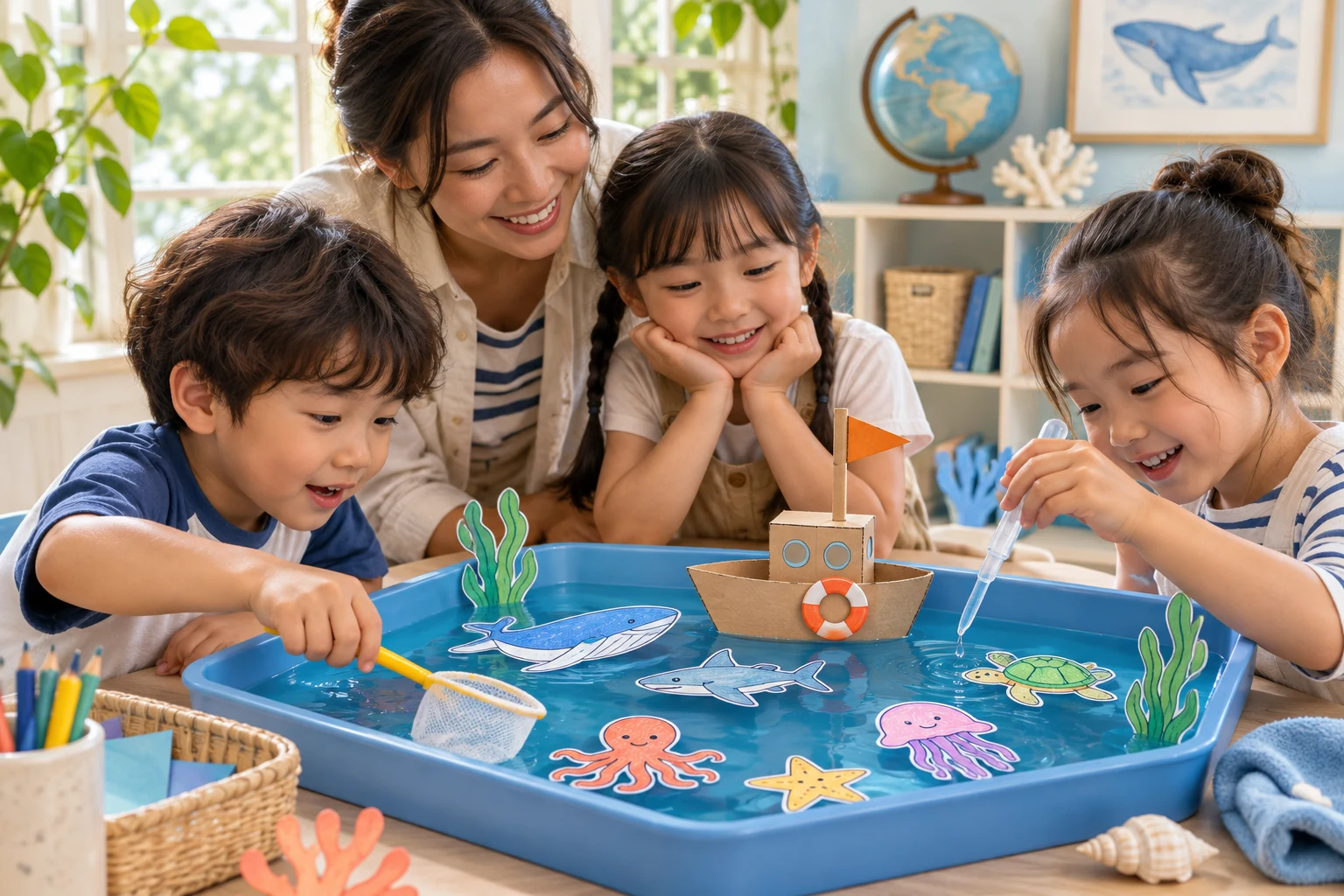
An activity away from the screen
- Choose a paper sea creature and describe one visible feature.
- Check one fact with an adult and a reliable source.
- Draw a rule for observing without touching.
This is an editorial family-play suggestion, not an official lesson or a therapeutic programme. An adult should choose suitable materials and a safe setting.
A realistic family viewing plan
Choose one episode before pressing play and agree on a stopping point. During viewing, avoid turning every scene into a test. Pause if something is confusing or uncomfortable. Afterwards, ask which detail the child remembers, rather than requiring a correct account of the plot. Moving straight to another kind of play is also a valid choice.
For several days, notice what happens around viewing: how stopping feels, whether bedtime slips and whether there is still space for meals, movement and conversation. One difficult evening is not a diagnosis or a personality description. Persistent distress that disrupts everyday life deserves a conversation with the child's healthcare professional.
Frequently asked questions
Is the show sufficient for animal facts?
It can start a question, but a particular fact should be checked against a reliable nature source.
Should a child imitate Peso and help animals?
An injured wild animal is not a child's rescue task. Appropriate adults and wildlife professionals should handle the situation.
Can it remove fear of water?
No show-specific result supporting that claim is presented here. Water safety and fear require separate consideration.
Are all Octonauts productions equivalent?
No. Check the exact series, episode and local rating rather than transferring a decision between spin-offs.
What age is it suitable for?
The intended audience is not an individual readiness assessment. Check the current local rating, the particular episode and whether your child follows the story comfortably.
How many episodes a day?
There is no single episode count for every family, and running times differ. Protect space for sleep, movement and human interaction; discuss individual concerns with a healthcare professional.
Is protesting when it ends a sign of addiction?
A single protest is not a diagnosis. Explain the stopping point beforehand and make the next activity concrete. Seek support if the difficulty persistently disrupts everyday life.
Can the programme replace psychological support?
No. Characters can open a conversation, but they do not replace an assessment of a child's distress, communication difficulties or developmental needs.
Sources and method
Sources checked 29 November 2026. This guide uses official descriptions and the research identified below; it does not claim a scored viewing of every season. Dubbing, ratings and access vary by region. The article has not undergone specialist clinical review.
Bir yanıt yazın