
Two children call out in the night. One wakes up, recognises their parent and describes a scary dream. The other sits up with open eyes and looks frightened but does not respond normally, then settles back to sleep. The first pattern fits a nightmare and the second can occur with a night terror. What your child does after the episode matters as much as the noise that wakes you.
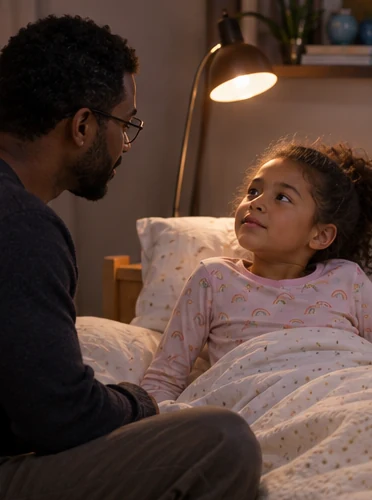
During a night terror, stay nearby and prevent injury
Night terrors usually happen in the first part of the night. A child may sweat, shout or move around while still asleep. Clear the area if they get up, protect access to stairs and steer them away from immediate hazards. Avoid shaking them awake or trying to make them explain what they are seeing.
After a nightmare, offer comfort
A child who has woken frightened may want you to sit with them. Remind them that they are in their room and the dream is over. They can describe it if they want to. Keep a short diary if the events recur. Include time after falling asleep, duration, what they remember and how tired they are the next day. Keep enough time for sleep and aim for a regular, calming bedtime routine.
Talk with their clinician if episodes happen often, interfere with daytime life, cause injury or happen alongside loud snoring or breathing pauses. Get emergency help immediately for severe breathing difficulty, blue lips or a suspected seizure.
Frequently asked questions
Does screaming always mean a night terror?
No. See whether your child has woken and recognises you, and what happens afterward.
Do night terrors always happen early?
They tend to happen early in the night. Timing is one part of the picture.
Should I wake them during a night terror?
Avoid trying to wake them. Stay nearby and act if they might hurt themselves.
What if my child remembers the dream?
If they wake fully and can talk about a frightening dream, you can offer comfort and listen at their pace.
What should I tell the clinician?
Describe how often it happens, the timing, responsiveness, other movements or breathing changes and the effect the next day.
Sources
Türkçe · Deutsch · English · Français · 简体中文 · 日本語 · 한국어 · العربية
Bir yanıt yazın