
A lower number at discharge is common in the first days. The more useful question at the next check is whether the weight trend has begun to change along with feeding.
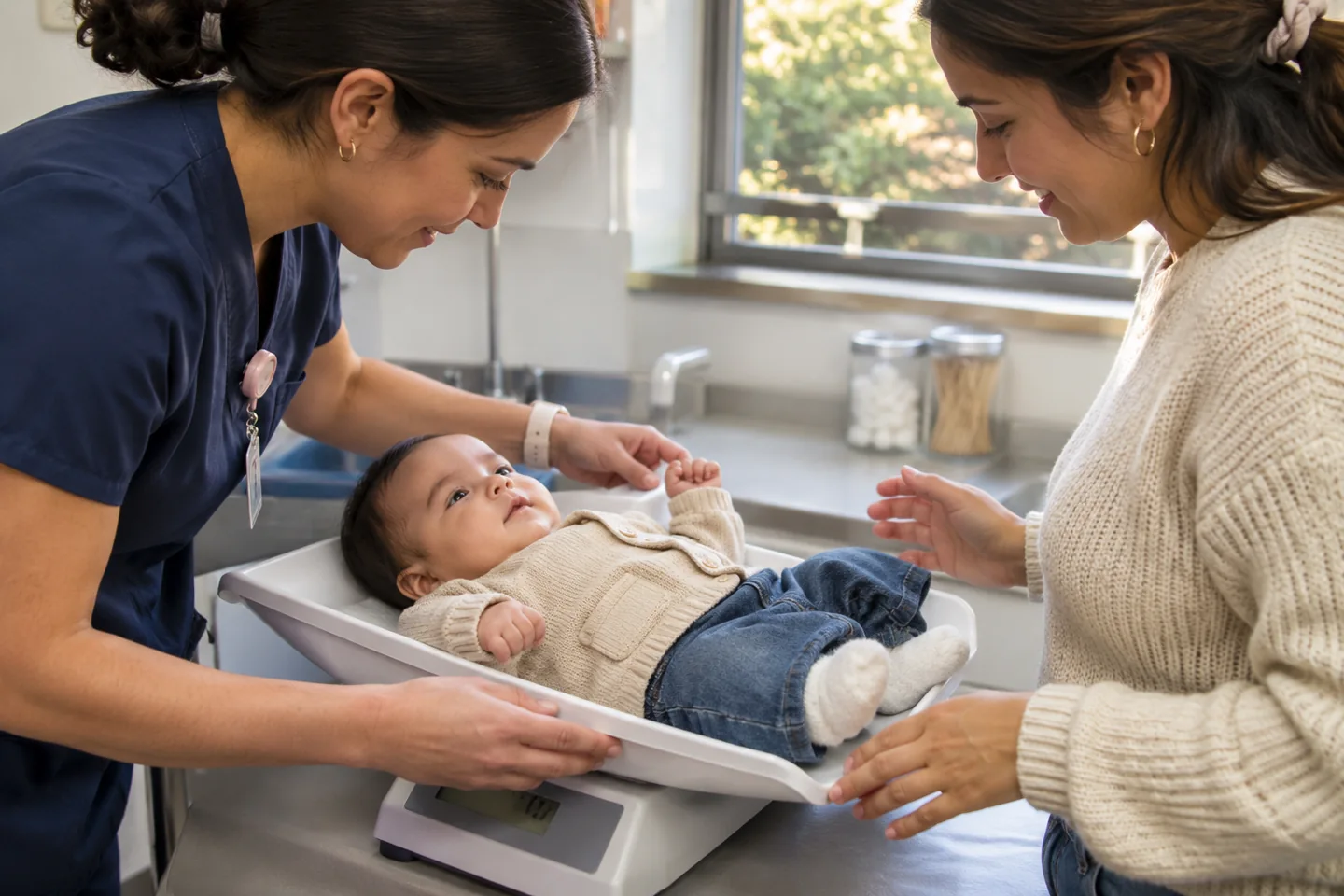
What to do at home
Keep birth, discharge and follow-up weights together with dates. Loss over 10% of birth weight needs clinical and feeding assessment. If your baby has not regained birth weight by three weeks, check in with your care team. Call earlier if feeding drops off or wet nappies become noticeably fewer.
The dates matter as much as the weights
Two numbers could represent one day apart or a full week. Write the baby’s day of life beside each weight, and note whether the check was on the same scale. Bring the discharge record if you have it.
Frequently asked questions
Is one small gain enough to judge progress?
A single measurement has limits. Ask how it fits with earlier weights, feeding and your baby’s age.
Do all babies follow the same curve?
No. Prematurity and medical history may change which chart and follow-up schedule the team uses.
Should I change feeds based on my home scales?
Discuss the result before changing the feeding plan. Different scales and clothing affect readings.
Related guides
- Is My Newborn Getting Enough Milk? What to Watch Between Feeds
- Newborn Jaundice: When Yellow Eyes Need a Check
- Filifu Child and Family Library
“Newborn Weight Loss: When Should the Numbers Turn Around?” için bir yanıt
[…] · English · Français · 简体中文 · 日本語 · 한국어 · […]