

In the preschool years, appetite and food preferences can vary from day to day. Children are learning about tastes, textures and smells; preferring familiar foods or refusing a new one does not by itself mean there is a medical problem. The American Academy of Pediatrics notes that acceptance can take repeated, low-pressure exposure. The goal is not to make a child clear the plate, but to create a safe, predictable table where curiosity can grow.

Why do children become selective eaters?
In the preschool years, appetite and food preferences can vary from day to day. Children are learning about tastes, textures and smells; preferring familiar foods or refusing a new one does not by itself mean there is a medical problem. The American Academy of Pediatrics notes that acceptance can take repeated, low-pressure exposure. The goal is not to make a child clear the plate, but to create a safe, predictable table where curiosity can grow.
Use repeated exposure and role modelling
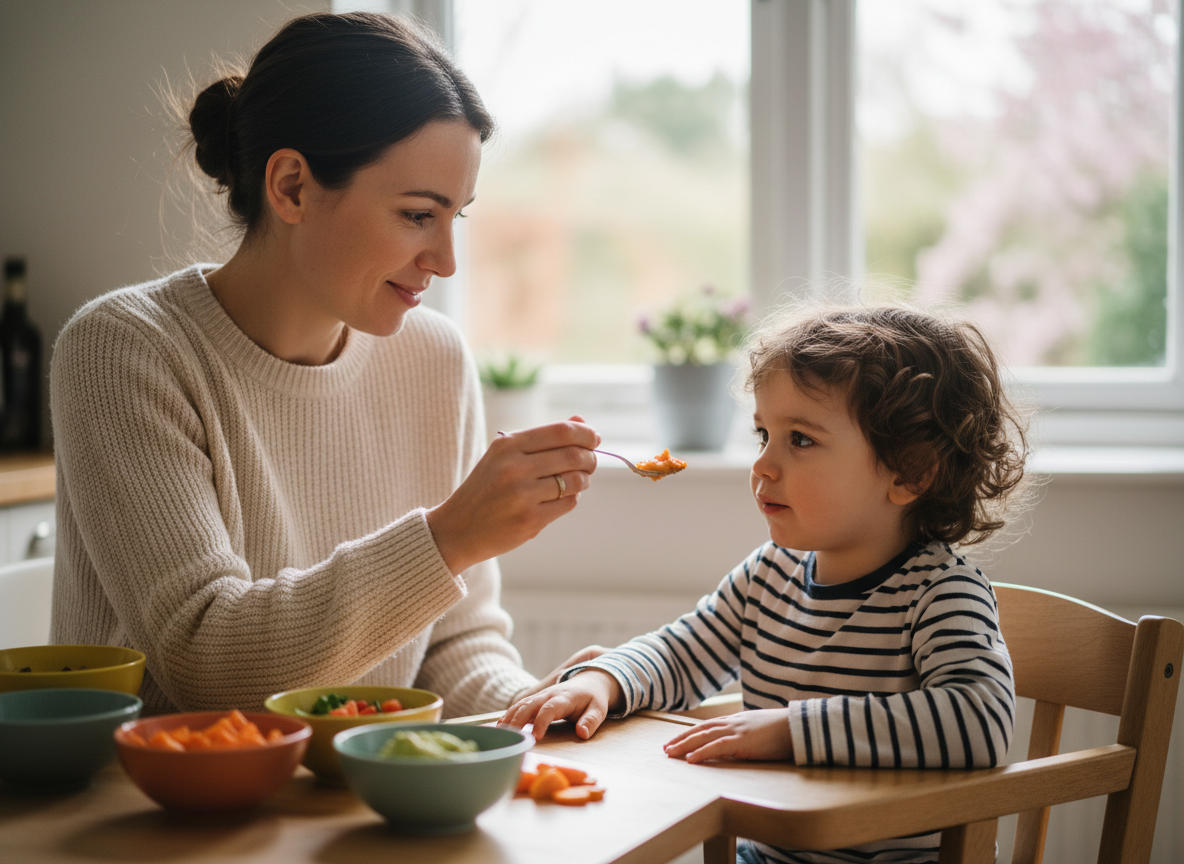
Keep mealtimes predictable and include at least one familiar food. Offer a small portion of a new food and let your child look, smell or touch it without requiring a bite. Eating together gives children a model. Pressure, threats, food rewards and screen-led bites can turn meals into conflict. Adults can decide what, when and where food is offered; children can respond to their own hunger and fullness cues.

Did you know?
WHO describes complementary feeding from 6 to 23 months as an important period for dietary diversity and responsive feeding. Preschool food selectivity is common, but its duration and intensity differ; no single number of exposures guarantees acceptance.
Frequently asked questions
At what age is picky eating common?
Temporary selectivity is common in preschool years, but growth and development matter too.
How many times should I offer a new food?
Offer it calmly again over time; there is no guaranteed number for every child.
Should I make my child finish the plate?
No. Offer regular meals and respect hunger and fullness cues.
What if my child refuses vegetables?
Try small portions and different preparations, and model eating them yourself.
Should screens be used during meals?
A calm, screen-free table can help children notice hunger and fullness.
Should I give vitamins?
Discuss supplements with your child’s clinician first; needs vary.
When should I seek medical advice?
Ask for an assessment for weight loss, poor growth, swallowing difficulty, a very restricted diet or significant mealtime distress.
Is it normal to eat only a few familiar foods?
If it persists or affects nutrition or development, talk with a pediatrician or dietitian.
Sources
- https://www.healthychildren.org/English/ages-stages/toddler/nutrition/Pages/Picky-Eaters.aspx
- WHO: complementary feeding guidance
- Filifu Child and Family Library
- Filifu blog arşivi
This article is for general information. Consult your child’s clinician about growth or nutrition concerns.
Make the advice work for your family
Start with one small step
Review what works after a week
Offer varied foods without pressure to eat a set amount. For concerns about allergies, growth or nutrition, seek advice from a pediatric professional.
Bir yanıt yazın