
Meeting other families in Istanbul can begin with a small invitation rather than a large event. Choose a place you can explain clearly, invite a manageable number of people and make the purpose simple: a chance to talk while everyone remains responsible for their own children. A first coffee meetup does not need to produce instant friendships or a full afternoon of entertainment.
This guide is for international families who live in Istanbul and want to turn a brief school-gate conversation, a neighbourhood introduction or an existing acquaintance into a relaxed meeting. It includes invitation wording, ways to welcome different languages and practical questions for considering Filifu Cafe in Maltepe. It does not advertise an organised social club or promise that the café runs family networking sessions.

Give the meeting a small, clear purpose
A vague invitation can leave people unsure whether they are joining lunch, a playdate or a formal group. Say what you have in mind. “Would you like to meet for a coffee with the children?” is easier to understand than “We should arrange something.” If you hope to eat as well, mention that. People can then decide whether the plan fits their time, budget and family needs.
Start with the people already in the conversation
You do not have to collect a large guest list. One other family may be enough for a first meeting. If someone suggests inviting another household, update the numbers before confirming the venue. The practical unit is the number of adults and children, not the number of families. A change that sounds small in a message can require a different table arrangement.
A message you can adapt
“It was nice talking with you. We are thinking of a short café visit with the children on Saturday. Would that interest you? We would each order what suits our family, and parents would stay with their children. If the date works, I can check a table and send the details.” Adjust the wording to your relationship. The useful parts are the purpose, approximate format and clear expectations.
Choose a venue by the questions it can answer
For a first meetup, reliable practical information matters more than a dramatic backdrop. Can the group sit together? Is the menu suitable for the people attending? What are the arrangements for children? If someone has an access requirement, ask about the specific feature they need rather than accepting a broad description such as family-friendly.
The Filifu Cafe seating overview, in Turkish, can help you prepare a table enquiry. Use the published information as an introduction, then confirm what is available on your chosen date. A photograph does not reserve a particular position, guarantee a quiet conversation or establish that the space meets every access need.
Appoint one person to confirm the table
It is helpful for one adult to collect the final numbers and contact the venue. That person is coordinating a booking, not taking responsibility for everyone’s preferences. Ask each family to raise any essential requirement early. If a personal dietary question needs a detailed conversation, the family concerned can speak directly with the venue while referring to the same booking.
Keep the invitation easy to find
Once confirmed, send one short message with the date, meeting time, address and booking name. Use the original Turkish spelling of the address. Add only the conditions people need to know, such as whether any activity requires a separate payment. Avoid sending several conflicting versions of the plan across different chats.
Make arrivals less awkward
A first meeting can feel uncertain simply because nobody knows where to stand or who has arrived. Agree whether you will meet at the entrance or at the table. If you arrive first, keep an eye on the agreed meeting point without blocking service. A simple introduction that includes the adults’ names is enough; children do not need to perform a greeting or immediately join a game.
Let children settle in their own way
One child may start talking quickly, while another watches from beside a parent. Offer a small shared possibility, such as looking at a picture book, without making participation compulsory. Avoid announcing that two children will become best friends because they are the same age. Give them space to discover whether they want to interact during this particular visit.
A low-pressure introduction
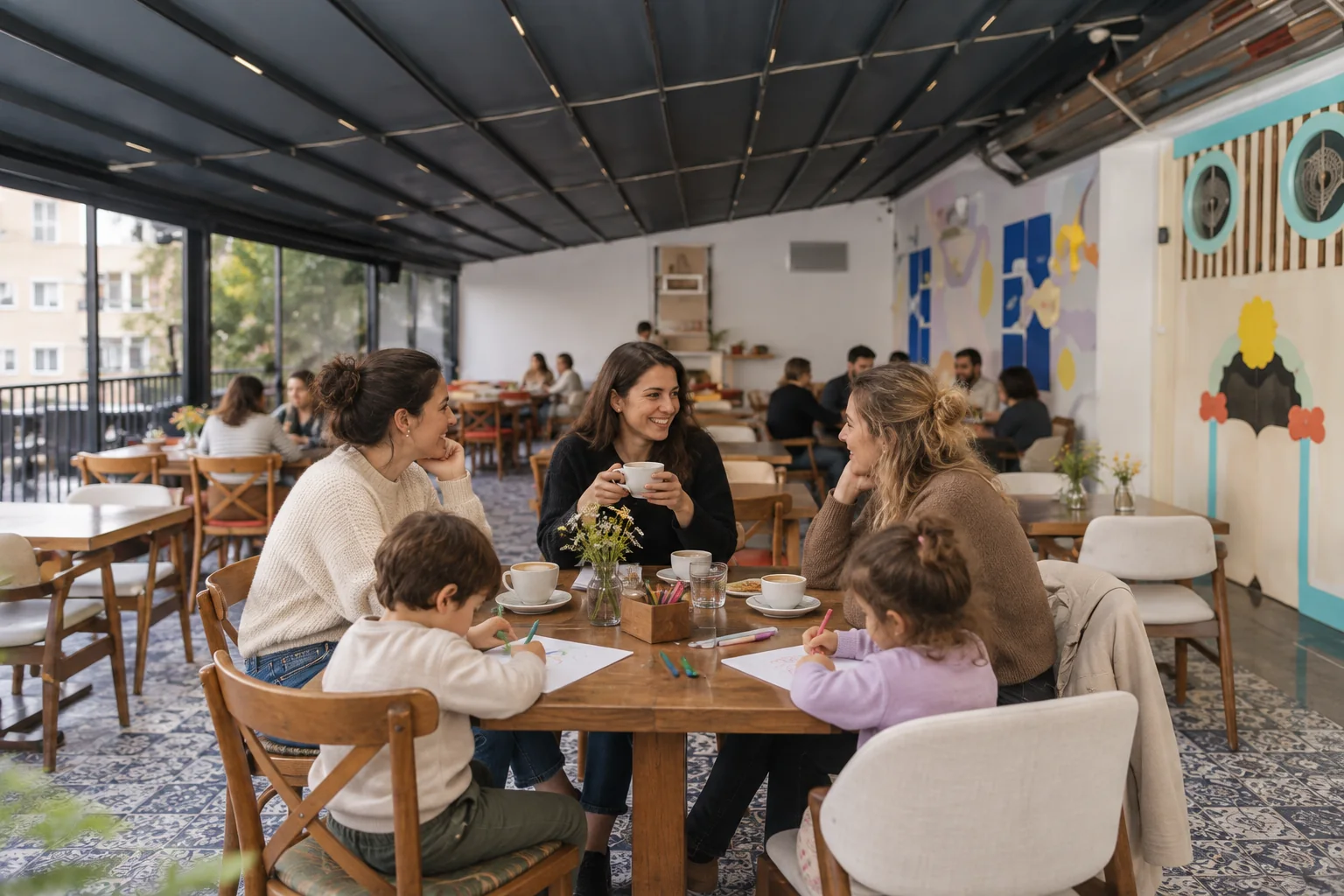
You might say, “This is Maya; she brought a drawing book. You can look together if you both want.” The invitation names an activity without assigning a role. If one child prefers to keep drawing alone, adults can continue their conversation. The meeting does not fail because the children have different interests that day.
Use conversation starters that leave room for different lives
Questions about ordinary local routines can be easier than a full account of someone’s move. Ask what they have enjoyed finding in their neighbourhood, whether they have a favourite family weekend routine or what they are still trying to understand about daily life. Let people choose how much to share. A café table does not require anyone to explain their visa situation, finances or family history.
Share one useful experience without turning it into a rule
You can describe something that worked for your household while making clear that other families may prefer something else. “We found a shorter outing easier last weekend” leaves more room than “You should always keep outings short.” Avoid presenting personal impressions as verified recommendations about schools, healthcare or other decisions that deserve their own research.
When the conversation pauses
A pause is not necessarily a problem to solve. People may be ordering, helping a child or thinking in another language. You can return to a simple shared topic rather than asking increasingly personal questions. Looking at the menu together can also provide a natural break. The aim is a comfortable exchange, not uninterrupted conversation.
Include different languages without making children interpreters
International families may use several languages at the same table. Ask which language makes the conversation easiest and be willing to repeat or slow down. If part of the group switches languages, briefly summarise important practical details for everyone. Nobody should have to pretend they understood the plan for the rest of the visit.
Keep essential questions with adults
A child may know more Turkish than a newly arrived parent, but that does not make them responsible for translating allergy information, prices or booking conditions. Adults should confirm these details clearly with the venue. A written message may help, but it still needs an understandable answer. Staff language availability should be checked directly if it affects whether the visit is workable.
Give people time to finish their thought
Do not automatically supply a word as soon as someone hesitates. Ask if they would like help or allow a moment. A family meetup can be a place to communicate without being tested. Likewise, children who use different languages can share an activity without being asked to demonstrate vocabulary or translate for the entire table.
Agree on food and spending before ordering for everyone
A shared invitation does not automatically mean a shared bill. Clarify whether each household will choose its own order or whether someone is inviting the group. If you want shared food, check who actually wants it before placing the order. This is particularly useful when families have different appetites, budgets or dietary requirements.
You can share the Filifu menu page, in Turkish, before the meeting so each household can prepare questions. Current prices, ingredients and availability still need confirmation. Do not describe an item as suitable for an allergy or a medical diet based on its name or photograph. The family concerned should discuss essential preparation information directly.
Ask how payment can be organised
Tell the venue early if you hope to pay by household and ask whether that arrangement is possible. A plan agreed among parents is not automatically visible to the staff. Keep track of shared extras in a simple way rather than discovering at the end that everyone interpreted the invitation differently.
Leave room for different budgets
Do not pressure another family to extend the outing or add an activity. A short coffee may be exactly what they accepted. If the group considers something extra, explain the likely commitment only after checking the actual price and conditions. Anyone should be able to decline without needing to justify their household finances.
Keep supervision explicit when children move away from the table
A group of adults can accidentally create uncertainty about who is watching a child. If play is part of your visit, review the current rules and state who accompanies whom. Filifu’s play-area information, in Turkish, provides a starting point for questions. The presence of a play area should not be interpreted as an included childcare arrangement.
Do not transfer responsibility silently
If you need to leave the table briefly, ask another adult explicitly rather than assuming they noticed. The other person may already be helping their own child. Clear agreements are especially useful when families are still getting to know each other. Keep the arrangement consistent with the venue’s rules and each family’s comfort.
Let the meeting end while it still feels manageable
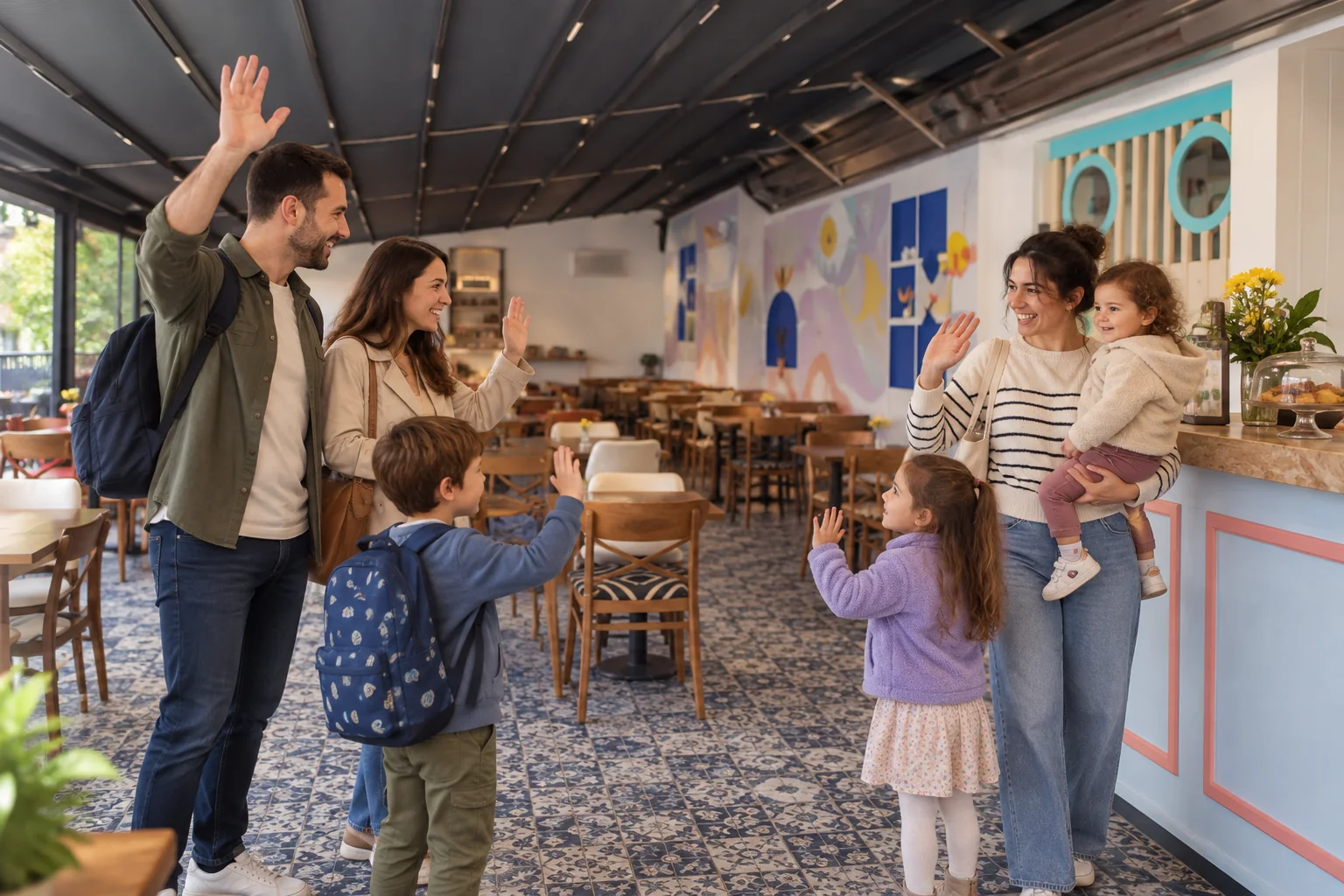
You do not need to wait until everyone is tired. A simple goodbye with an honest expression of thanks is enough. If you enjoyed the conversation, say so without committing the group to a recurring event on the spot. Each family can decide later whether and how they would like to meet again.
Follow up with one specific, optional idea
A short message after the visit can mention something you enjoyed and leave an easy opening for another meeting. For example: “We enjoyed talking about neighbourhood routines. If you would like another coffee sometime, let us know.” Avoid treating a slow response as a verdict on the relationship. Families have different schedules, and one pleasant meeting does not create an obligation.
To check details for a possible visit, use Filifu Cafe’s official contact page. Keep the distinction clear between your own informal invitation and an event organised by the café. A small, well-explained meetup gives people a chance to connect without promising a particular social outcome.
Frequently asked questions
How many families should we invite to a first café meetup?
Start with a number you can coordinate comfortably, even one other household. Confirm actual adults and children with the venue. A bigger group is not automatically a better opportunity to talk.
Does Filifu run an international family meetup?
This article does not verify or advertise such a programme. It describes an informal visit that families organise themselves. Ask the venue directly about any current organised activities.
What if the children do not want to play together?
Offer an optional activity and accept different preferences. They can remain near their own adults or do separate things. Instant friendship is not a requirement for a worthwhile meeting.
Should we use English for the whole conversation?
Ask the people attending what works for them. Keep shared practical information understandable to everyone. There is no need to turn the meeting into a language lesson or assign children interpreting duties.
How can we avoid confusion about the bill?
Explain the intended arrangement before the meeting and confirm what the venue can do before ordering. Shared extras should be agreed rather than assumed.
Can we take a group photograph?
Ask the adults and children whether they want to participate, and discuss sharing separately. It is fine for the meeting to leave no public photograph at all.
What should a follow-up message contain?
A brief thanks and an optional future idea are enough. Avoid pressure to commit immediately. Let the relationship develop according to the interest and availability of both families.
Bir yanıt yazın