
A birthday table does not need a dozen dishes. Start with two savoury options, one simple dessert and water, then adjust for the guests. Before shopping, ask about ages, allergies and whether the party overlaps a main meal. These are home-kitchen ideas to adapt to each child's eating skills.
Choose familiar food first
A familiar sandwich can be more useful than an elaborate centrepiece. Serve modest portions and offer more if wanted. Children who are cautious about new food should be able to find something recognisable without pressure to taste everything.
Soft cheese sandwiches: Spread a thin layer of pasteurised soft cheese between soft bread slices. Remove especially tough crusts and cut pieces suitable for the children attending. Leave out toothpicks and hard decorative picks.
Banana yoghurt pots: Mash a banana into plain yoghurt, divide between small bowls and refrigerate covered until serving. This contains milk and is not a default option for a guest with milk allergy. Ask their family about a suitable alternative rather than assuming a substitute is safe.
Keep the menu written down for your own planning. A clear ingredient list is more useful than describing a snack simply as healthy or homemade.
Make simple vegetable toast bites
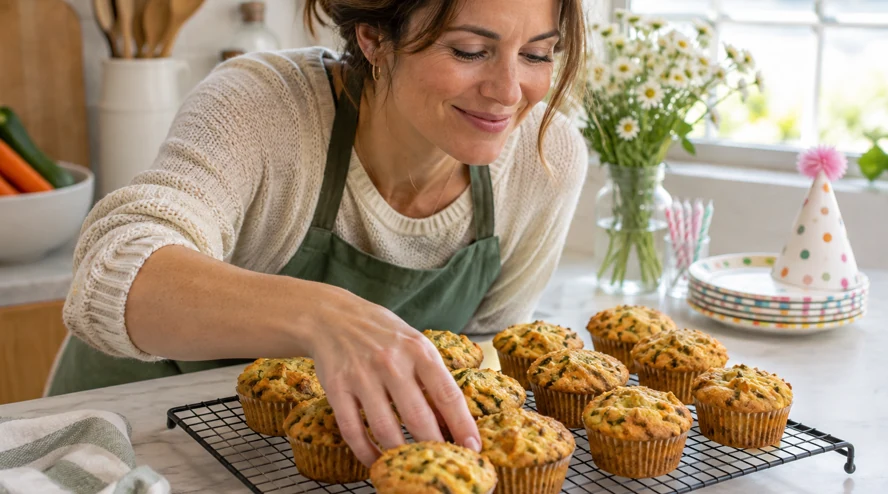
Top soft bread with finely grated courgette and a little grated pasteurised cheese. Squeeze excess moisture from the courgette first. Bake until the vegetable has softened and the cheese has melted, checking that the toast does not burn. Let the centre cool before serving. Cooking time depends on the oven and thickness; check the food rather than relying on a universal timer.
These dishes can contain milk and wheat. Keep packaging so you can answer ingredient questions accurately. If a guest needs food prepared separately, consider shared boards, knives and serving utensils as well as the ingredients. A different label alone does not prevent cross-contact.
What can be done the day before?
Set out clean serving dishes, arrange fridge space and prepare napkins. Keep perishable foods chilled and replenish small platters instead of leaving the entire supply out throughout the party. Clean hands and preparation surfaces. Children should sit to eat with attentive adult supervision.
Did you know? Changing the size and texture of a familiar snack can matter more than fancy decoration. Whole nuts, whole grapes and hard sweets are unsuitable choices for a young-child buffet. Avoid running games while children still have food in their mouths.
Frequently asked questions
How many dishes should I make?
Two savoury choices and one dessert are a manageable starting point, not a nutritional prescription. Adjust for the meal time and guests.
Can everything be made the night before?
Prepare equipment and shopping first. For perishable food, follow appropriate refrigeration and the product's storage instructions.
What should I ask about allergies?
Ask the family which ingredients and contact risks must be avoided. If you cannot provide suitable preparation, agree another option openly.
What drinks should I offer?
Water is a straightforward base. Ask about age-appropriate alternatives rather than assuming every child needs the same drink.
What activity works after the food?
A story or quiet table activity offers an easy transition. Separate active games from eating and avoid pressure to finish a large plate.
Sources
Türkçe · Deutsch · English · Français · 简体中文 · 日本語 · 한국어 · العربية
Bir yanıt yazın