
A wish to discover how an object works can become a wish to take it apart. Curious George gives families a way to discuss that distinction without immediately labelling a child mischievous. A safe alternative, a prediction and a chance to clear up can all become part of exploration. The useful question is what the child hopes to find out.
Story and characters
George and the Man with the Yellow Hat are central to everyday discoveries.
George; Man with the Yellow Hat; neighbours and friends.
What can a child explore?
Separate an understandable intention from an unsafe action. Wondering about a machine does not make dismantling it acceptable. An adult can choose a simple permitted model instead. When an attempt surprises the child, describe what was expected and what actually happened. Repetition is possible; an immediate explanation is not always necessary. Admitting that you need to check an answer also models a realistic way of investigating.
Feelings, behaviour and boundaries
Electrical equipment, blades and small parts are not open-ended discovery materials. A fictional accident that is quickly fixed should not minimise real damage or somebody else's work. Offer joint tidying rather than a character label.
Expertise and the limits of evidence
A programme's educational intention, an adviser’s contribution, an expert opinion and a study with children are different kinds of evidence. The source below is interpreted within its own limits.
WestEd publishes learning research combining digital media with hands-on family activities. WestEd: media with hands-on family activities.
Findings from a package cannot be assigned to television viewing alone. Games, adult participation and other resources matter when interpreting a study.
An activity away from the screen
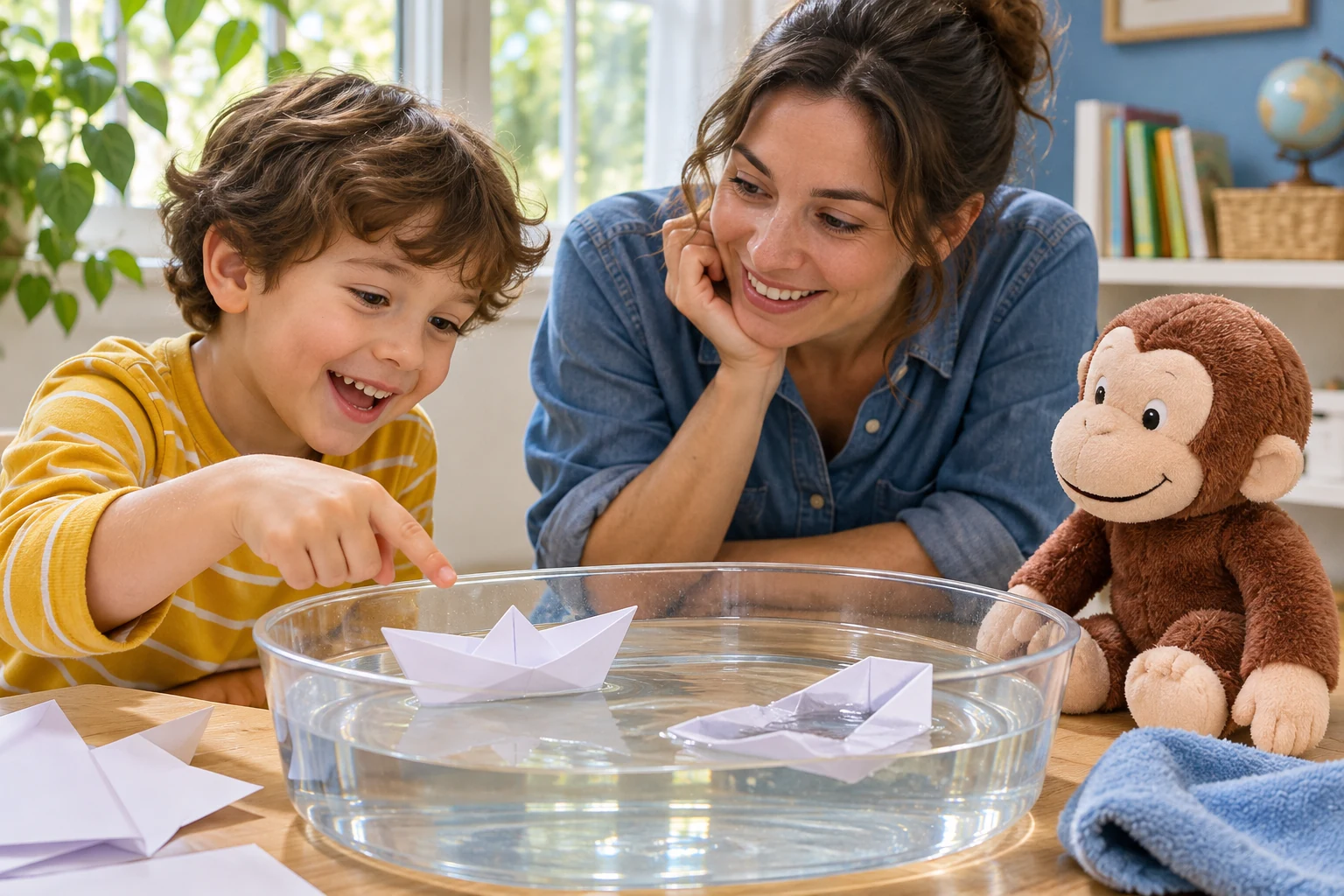
- With adult supervision, float two large paper boats in a shallow basin.
- Predict which will move more easily.
- Change one feature, observe again and tidy together.
This is an editorial family-play suggestion, not an official lesson or a therapeutic programme. An adult should choose suitable materials and a safe setting.
A realistic family viewing plan
Choose one episode before pressing play and agree on a stopping point. During viewing, avoid turning every scene into a test. Pause if something is confusing or uncomfortable. Afterwards, ask which detail the child remembers, rather than requiring a correct account of the plot. Moving straight to another kind of play is also a valid choice.
For several days, notice what happens around viewing: how stopping feels, whether bedtime slips and whether there is still space for meals, movement and conversation. One difficult evening is not a diagnosis or a personality description. Persistent distress that disrupts everyday life deserves a conversation with the child's healthcare professional.
Frequently asked questions
Does it guarantee science or maths improvement?
No individual attainment guarantee is made here. Curiosity themes and measured outcomes should not be confused.
What if my child copies dismantling objects?
Set a clear safety boundary and offer a permitted alternative. Accepting curiosity is not permission for every action.
Do studies measure the show alone?
Methods differ. Some include games, activities and adult involvement; their effects cannot simply be separated by assumption.
How do we discuss an unsuccessful attempt?
Compare the prediction and result. Offer a safe change if the child wants to try again, without labelling the child a failure.
What age is it suitable for?
The intended audience is not an individual readiness assessment. Check the current local rating, the particular episode and whether your child follows the story comfortably.
How many episodes a day?
There is no single episode count for every family, and running times differ. Protect space for sleep, movement and human interaction; discuss individual concerns with a healthcare professional.
Is protesting when it ends a sign of addiction?
A single protest is not a diagnosis. Explain the stopping point beforehand and make the next activity concrete. Seek support if the difficulty persistently disrupts everyday life.
Can the programme replace psychological support?
No. Characters can open a conversation, but they do not replace an assessment of a child's distress, communication difficulties or developmental needs.
Sources and method
- PBS: Curious George programme aims
- Concord Evaluation Group, original evaluation report
- WestEd: media with hands-on family activities
Sources checked 29 November 2026. This guide uses official descriptions and the research identified below; it does not claim a scored viewing of every season. Dubbing, ratings and access vary by region. The article has not undergone specialist clinical review.
Bir yanıt yazın