What Age Should My Child Start Swimming Lessons in Istanbul?
The right time to start swimming lessons depends on the child and the programme, not just a birthday. Families also need to distinguish infant water play from lessons that build practical water skills. A useful starting decision is to find a qualified provider, discuss your child’s readiness and inspect how safety is organised. Lessons are one part of protection; no course makes a child safe around water without adult supervision.
What do the age recommendations mean?
The American Academy of Pediatrics says lessons can begin for many children from age one and that most are ready by age four. It reports no evidence that programmes for babies under one reduce drowning risk. These are readiness-based recommendations, not a promise that a particular child will swim after a fixed number of sessions.
Ask what a course means by “swimming”. Does it introduce comfortable parent-child participation, teach basic water competence or develop recognised strokes? A cheerful photograph of a baby in water cannot answer that question. A provider should explain the goals, methods and realistic limits in language you understand before asking you to enrol.
Readiness is a conversation
Consider comfort and communication
Tell the instructor about previous experiences, fears, health needs and the language your child understands best. Ask how the class responds when a child says no or needs a break. A frightened child should not be surprised with submersion or pressured to continue through distress. If you are unsure about physical or developmental readiness, discuss it with your child’s clinician.
Consider the adults as well
For younger children, a responsible adult needs to remain within arm’s reach in or near water. Ask exactly what the parent does during the session and how responsibility is transferred to the instructor. “Someone is watching” is too vague. Establish who has your child at every point, including arrival, changing, breaks and departure.
Questions worth asking a swimming school
Ask about instructors’ qualifications, lifeguard arrangements, first aid and emergency procedures. How large is the class, and how are children with different abilities grouped? Can you observe a session? What happens if a child does not understand an instruction? How are pool water and changing facilities maintained? The response should describe practical arrangements rather than relying on a general statement that safety is important.
Also ask how progress is recorded. You want to understand what your child can do with support, what they can do independently in that controlled setting and what remains to learn. A certificate or colourful badge should not be interpreted as permission to relax supervision. Avoid providers promising guaranteed mastery by a holiday date.

Fit the programme to family life
Istanbul residents and visiting families
Choose a timetable that leaves room for the journey and recovery. If you are visiting Istanbul, a short stay may allow only an introductory experience, not completion of a learning programme. Tell the provider about future travel so they can explain what is realistic. Check instruction language, cancellation arrangements and the pool’s current operating rules directly.
Plan the moments outside the lesson
Decide who holds the child’s hand near the pool entrance and who supervises while the other adult changes. If the supervising adult must leave, the child goes with them or responsibility is explicitly handed to another capable adult. A mobile phone, friendly conversation or a nearby lifeguard does not replace focused family supervision.
Did you know?
Different organisations may use different starting ages because they discuss different programmes. For example, the German DLRG uses around five as an orientation for swimming instruction while describing water familiarisation earlier. Read the programme’s meaning, not just its headline age. This is one reason a parent-child class and formal stroke teaching should not be compared as if they were identical.
Keep several protective measures in place
The CDC’s drowning-prevention advice combines learning with supervision, barriers and appropriate life jackets. Apply safety planning wherever your child encounters water, including a holiday rental. Inflatable toys are not safety equipment. Adults should learn appropriate first aid and resuscitation; in an emergency in Turkey, call 112 and follow the dispatcher’s instructions.
Talk about the choice in a calm setting
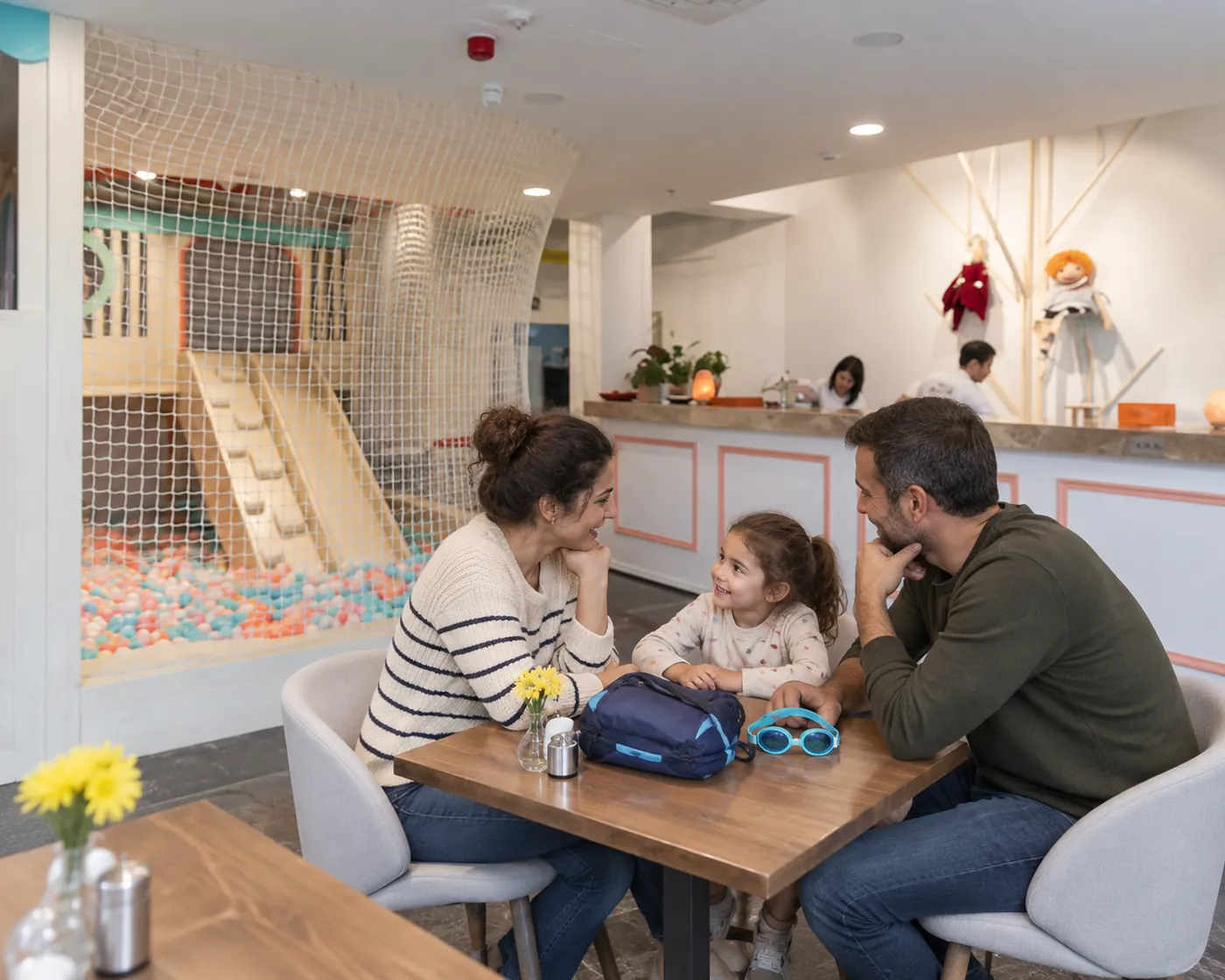
You can compare course questions during family time at Filifu Cafe. View the cafe area and use the Filifu blog for related parenting reading. Filifu is a family cafe; this article does not claim it has a swimming pool or provides swim instruction. Choose water activities through a qualified aquatic provider.

Frequently asked questions
Should I wait until age four?
Not necessarily. Many children can begin suitable lessons from age one, according to AAP guidance. Discuss individual readiness and the actual programme. Starting earlier does not remove the need for close supervision.
Does infant swimming prevent drowning?
For babies under one, AAP reports no evidence that infant programmes reduce drowning risk. A parent-child water-play session should not be marketed or understood as making a baby independently safe.
What if my child is afraid?
Tell the instructor before enrolment and ask about a gradual approach. Observe how hesitation is handled. Avoid forced submersion, surprise releases or pressure to perform for other families.
How many lessons are enough?
There is no reliable fixed number for every child. Ask for individual progress feedback and a plan for continuing practice. The aim is developing skills over time, not collecting a certificate quickly.
Can a sibling supervise instead of me?
A young child needs a capable responsible adult, not another child, supervising closely. Agree on adult responsibilities before entering the water area and repeat the arrangement when plans change.
Does success in a pool mean safety in the sea?
No. Open water adds changing conditions and hazards. Skills learned in a controlled pool should not be assumed to transfer completely. Follow local safety advice and maintain the necessary protective measures.