
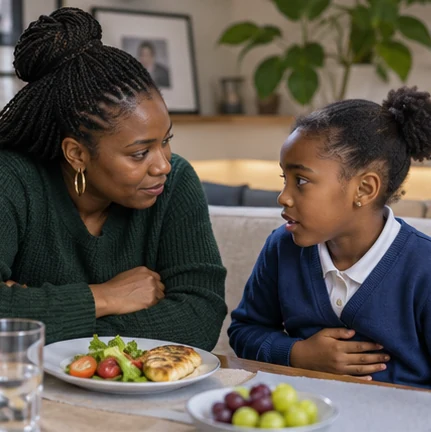
When your child complains of tummy pain during a meal, pause and ask them to show you where it hurts. Notice whether the pain began before the meal, after a few bites or later. Pain during a meal does not establish that a particular food caused it.
Look for a pattern across meals
Record when the pain starts, how long it lasts and whether passing stool changes it. Hard stools, holding in poo, bloating, fever and vomiting matter too. Constipation and gut infections are possible explanations among others. Ask a clinician for advice if pain keeps coming back, affects eating or interrupts sleep or school.
What to do during a meal and when to seek care
With mild pain and a child who otherwise seems well, offer a break and allow water if they can drink comfortably. Avoid insisting they finish. If pain recurs, keep brief notes. Speak with a clinician before removing major foods for a prolonged period.
Sudden severe pain, green or bloody vomit, difficulty waking a child or sudden testicular pain needs emergency assessment. Call local emergency services if your child is very unwell or unresponsive. Ask for same-day medical advice if the pain worsens or settles into one spot.
Frequently asked questions
Is pain after milk proof of lactose intolerance?
No. Note the kind and amount of food, timing and accompanying signs.
Can a child poo every day and still be constipated?
Yes. Hard or painful stool, straining or incomplete emptying can be useful clues.
Should I keep a food diary?
If episodes repeat, note meals alongside symptoms and bowel movements.
Is feeling full after a few bites a reason to ask for advice?
Mention it when it happens repeatedly or appetite, weight or growth changes.
What if my child cannot describe their pain?
Record what you see, such as stopping an activity, moving differently or waking from sleep.
Sources
Türkçe · Deutsch · English · Français · 简体中文 · 日本語 · 한국어 · العربية
Bir yanıt yazın