
An after-school dinner works best when the family makes a few decisions before leaving school: where you are going, what food looks suitable, and when you need to head home. Children may arrive hungry, tired, talkative or ready for quiet. A restaurant cannot control those changes, but a simple plan gives everyone fewer decisions to make at the table.
For international families living in Istanbul, weekday meals also involve school bags, activities and the next morning’s routine. This guide focuses on that ordinary evening rather than a sightseeing day. It includes ways to consider Filifu Cafe in Maltepe, check practical details and combine a meal with play if the arrangements suit your child. Opening hours, table availability and service times should always be confirmed directly.

Start with the time you need to be home
It is tempting to plan from the attractive part of an evening: a meal, a play area or meeting another family. On a school night, start at the other end. Think about your household’s usual evening tasks and choose a departure point that leaves space for them. This is a family planning choice, not a promise that travel or restaurant service will take a fixed number of minutes.
Build a small plan with room to change
Your plan might have just three stages: arrive and settle, eat together, then decide whether there is time for another activity. Avoid making play an unconditional promise before you know the venue’s current rules and availability. If the journey takes longer than expected, the evening can still work as a meal. Explain that possibility beforehand in language your child understands.
A fictional Wednesday example
A parent collects a seven-year-old after school and meets another adult for dinner. They have already checked two possible dishes, but they have not promised either one will be available. At the table they confirm the menu, order and put the school bag out of the walkway. After eating, they review the time together. A short visit counts as a complete outing; it does not need extra activities to feel worthwhile.
Read the menu before a hungry child has to choose
A large menu can feel very different at home and at the end of a school day. Looking at it in advance allows a child to identify familiar ingredients without pressure. You could select one first choice and one alternative together. Keep this flexible: appetite changes, products can be unavailable, and the child may notice something else on arrival.
The Filifu Cafe menu page, in Turkish, is a useful starting point. It lists categories including pasta, salads and a children’s menu. Check the current ingredients, price and availability of the particular item you want rather than relying on a category heading. A photograph also cannot tell you whether a sauce can be served separately or a portion is suitable for sharing.
Separate food preferences from dietary requirements
“My child prefers plain pasta” and “My child has a food allergy” require different conversations. Preferences can be discussed as possible adjustments. Allergies or medical dietary requirements need clear information about ingredients and preparation, including cross-contact where relevant. Do not assume that removing a visible ingredient makes a dish suitable. Follow the child’s individual healthcare advice, and choose another option if essential information cannot be established.
Write one clear message before arriving
If a detail matters to whether the visit is possible, contact the venue before travelling. A short message might read: “We are two adults and one child. We would like to visit after school on this date. Could you confirm your opening hours, whether a table is available, and whom we can ask about ingredients?” You do not need to send the child’s school name or other personal information to explain the booking.
Make arrival the easiest part of the evening
Arriving with bags, coats and a child who wants to explore can make a simple meal feel busy. Give each adult a practical task if more than one adult is present. One can speak with the host while another helps the child settle. A single caregiver can do these steps in sequence; there is no need to handle the whole arrival at once.
Before sitting down, check whether there is a sensible place for the school bag and whether the seating works for everyone. The Filifu seating-area overview, in Turkish, can help you prepare questions. Pictures are an introduction, not confirmation of a particular table. Ask about the arrangement you need and assess it on arrival.
Offer a low-effort waiting activity
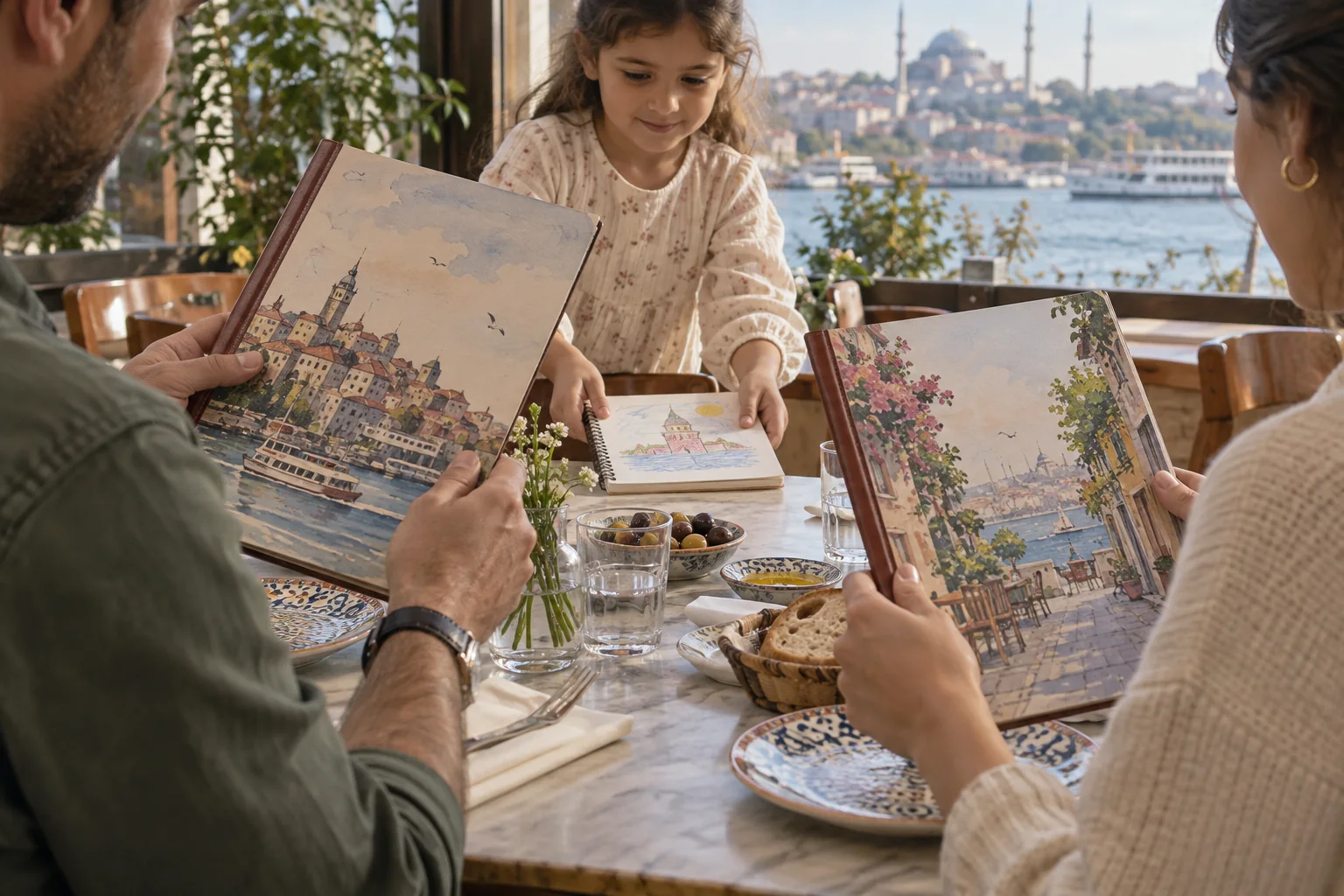
A small drawing book, looking at the menu together or a quiet conversation can fill the wait without a complicated setup. Let the child decline conversation if they need a pause after school. Questions such as “Do you want to tell me something now or after we eat?” allow a choice. Dinner does not have to become a daily report about lessons, friendships and homework.
Choose a clear place for belongings
Keep bags away from passageways and avoid spreading school materials across every place setting. If your child wants to draw, agree where the book will go when food arrives. That small arrangement prevents the arrival of plates from becoming an abrupt interruption. It also makes it easier to notice whether someone has left an item behind when you leave.
Ask about the meal before adding play
For some children, a play area is the reason they are excited to visit. For others, food and a quiet table are enough. Neither response needs correction. If play is part of your plan, find out the venue’s current age guidance, accompanying-adult requirements, operating arrangements and any separate charges. Those details affect both the schedule and the budget.
You can review Filifu’s children’s play-area information, in Turkish before asking these questions. An advertised play area should not be treated as a promise of childcare or a guarantee that your child will enjoy every activity. Clarify staff responsibilities and decide which adult will accompany or supervise the child according to the current rules.
Use transitions that refer to something real
“Later” and “soon” can mean different things to adults and children. A concrete transition can be easier to discuss: “We will finish choosing our food, then check the play-area rules.” If the child is already playing, agree how you will let them know the food has arrived. Try to avoid repeated promises about exact waiting times that depend on the kitchen or other circumstances outside your control.
Keep a meal-only version of the plan
A child who looked energetic at collection may become tired after sitting down. The weather, journey or timing may also change the evening. Keep a simpler version available: eat, gather belongings and go home. Explain this as an adjustment to the day rather than a punishment. You can still acknowledge that missing a planned activity is disappointing without extending the outing beyond what the family can manage.
Ordering for different appetites without complicating the table
A parent may want a full meal while a child wants a smaller amount. Ask about portion sizes, sharing arrangements and available side dishes rather than assuming every person needs the same order. If you plan to share, request suitable plates and make sure everyone understands which dishes are shared. Where dietary requirements are involved, keep the arrangement clear enough to follow them reliably.
Check whether the kitchen can accommodate a simple adjustment before describing it to your child as settled. “We can ask for the sauce separately” is more accurate than “It will come without sauce.” If the answer is no, move to the alternative you discussed earlier. A backup choice saves another long menu search without removing the child’s say in the decision.

Leave space for an ordinary conversation
A meal out does not need an educational objective. You might talk about a book, ask each person to choose a weekend idea or simply eat quietly for a while. For families using more than one language, use the language that makes this particular conversation comfortable. There is no need to turn a tired child’s dinner into a vocabulary test or ask them to interpret important ingredient information for adults.
Plan the return before the table is cleared
Once you know when you want to leave, think about the practical sequence: finish ordering, ask for the bill, collect belongings and use the facilities if needed. Mention a firm departure requirement early, while recognising that the venue may not be able to guarantee a particular service speed. If the timing is too tight, a different day may be a better choice for the full visit.
For Filifu Cafe, use the official contact page to confirm current details. Save the address in its original Turkish spelling for your journey. Check your chosen route with current transport information rather than assuming a previous trip will take the same amount of time. Avoid combining the meal with several unnecessary stops when the main goal is an easy school-night dinner.
Keep a useful note for the next visit
Afterwards, note one thing that helped and one thing to ask next time. “The second food choice was easier” is more useful than labelling the whole evening good or bad. You might discover that your child prefers eating before play, that a smaller group works better, or that another day suits your household. These are observations about your family, not rules that every parent needs to follow.
Frequently asked questions
Where should international families start when planning dinner after school in Istanbul?
Start with the route, the time you need to return home and a menu your family can use. Then check opening hours and table availability directly. A venue that fits your actual evening can be more useful than one chosen only for attractive photographs.
Can we consider Filifu Cafe for an after-school visit?
Yes, you can review its menu and seating information as part of your shortlist. Confirm the hours and arrangements for your chosen date before travelling. This guide does not establish that a particular time slot, table or service is available.
Does a play area mean parents can leave their children there?
Do not assume that. Ask about supervision, accompanying-adult rules, ages and staff responsibilities. Agree which adult in your group will stay responsible for the child. A play area and a childcare service are not interchangeable descriptions.
What if my child changes their food choice at the table?
Return to the small set of options you discussed, or ask the child what ingredient or texture is worrying them. Confirm any adjustment with staff. A menu decision can change without turning the evening into a disagreement about eating habits.
Should homework be done during dinner?
That is a household decision, but consider whether books and school tasks will make the meal more difficult for your family. If there is a firm school task to complete, include it in the evening plan before deciding how long the outing can be.
Will staff speak English?
This guide does not verify language availability at any particular shift. Ask the venue directly if English communication is important. Prepare a short written question when helpful, and confirm essential food information clearly rather than relying on a child to translate.
Can visitors use the same approach during a holiday?
Yes. Replace school collection with the end of your day’s activities and keep the same checks for food, seating and return travel. Avoid promising extra play or a fixed dining time before the venue confirms what is possible.
Bir yanıt yazın